The US has warned that any country maintaining trade relations with Iran will face a sweeping 25 percent tariff on all exports to the US, a move that could significantly disrupt Africa’s growing commercial ties with the country’s capital, Tehran.
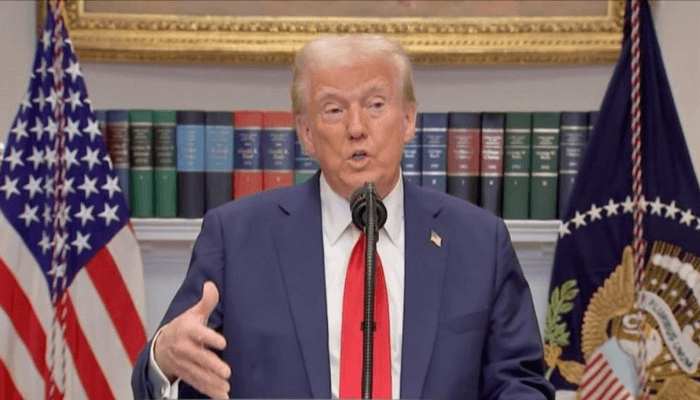
“Effective immediately, any country doing business with Iran will pay a tariff of 25 percent on any and all business being done with the United States of America,” President Donald Trump said on Monday in a post on Truth Social, describing the directive as “final and conclusive.”
The proposed tariff would be imposed on top of existing US trade measures already affecting African exporters, further raising costs for countries that rely heavily on access to the US market.
The warning comes as several African economies are already subject to elevated US import duties following Trump’s “reciprocal tariff” policy introduced in August.

South Africa faces tariffs of up to 30 percent on selected goods, while Kenya and Tanzania are subject to duties of around 10 percent. Most other African countries face a baseline tariff of 10 percent.
If implemented, the new measure would add an additional 25 percent levy on US-bound exports from countries trading with Iran, sharply eroding competitiveness, tightening foreign-exchange earnings, and increasing pressure on local currencies.
Read also: Trump says nations doing business with Iran face 25% tariff on U.S. trade
Africa’s direct trade exposure to Iran remains relatively modest but has been expanding rapidly. According to Iran’s Trade Promotion Organisation (TPO), trade volume between Iran and African countries reached $849 million in the first eight months of Iran’s 2025 fiscal year (March to November), representing a 77 percent increase compared with the same period a year earlier.
Iran’s imports from Africa during the period stood at $45 million, while exports accounted for the bulk of trade flows.

Mohammadreza Safari, director-general of the Africa Office at Iran’s Trade Promotion Organisation, said Iran expects its exports to Africa to reach $1 billion by the end of the fiscal year.
Safari identified Kenya, Ghana, South Africa, Somalia, and Tanzania as Iran’s top five export destinations on the continent over the past eight months.
Iran’s main exports to Africa include iron ingots, steel products, urea, bitumen, food items, motor oil, and cement. African exports to Iran include agricultural products, medical instruments, and coal, while imports from Iran also cover oil, petroleum products, tropical fruits, and carpets.
The US warning comes amid deepening economic and political instability in Iran.
The country has been gripped by widespread unrest triggered by a collapsing rial and inflation approaching 40 percent. Protests calling for the fall of Iran’s theocratic government have spread across major cities, while authorities have imposed near-total internet blackouts, restricting independent reporting.
Reuters, citing the US-based Human Rights Activists News Agency (HRANA), reported that more than 500 people had been killed as of January 11.
For African economies, the timing is particularly sensitive given their reliance on the African Growth and Opportunity Act (AGOA), which provides duty-free access to the US market. While the US House of Representatives has approved a three-year extension of AGOA to 2028, country eligibility is reviewed annually by the White House, leaving trade-dependent economies exposed to shifting US policy priorities.