Nigeria posted its strongest Federation Account inflows in recent years in Q3 2025, with cash transfers to governments surging and reshaping state rankings, even as policy risks remain.
Data from the Nigerian Extractive Industries Transparency Initiative (NEITI) showed that total Federation Account Allocation Committee (FAAC) disbursements stood at N6 trillion in Q3 2025, inclusive of 13 percent derivation payments.
Musa Sarkin Adar, executive secretary of NEITI, welcomed the strong remittance performance and the reduction in states’ debt burden but cautioned about volatility in oil markets and optimistic budget benchmarks, which may pose risks to fiscal sustainability.
According to NEITI, the figure represents a 55.6 percent year-on-year increase, with allocations more than doubling over the past two years.

Read also: EITI pledges support to NEITI, congratulates new executive secretary
Of the total disbursement, the federal government received N2.19 trillion, states got N1.97 trillion, while local governments received N1.45 trillion. Statutory revenue accounted for 62 percent of the pool, value-added tax (VAT) contributed 34 percent, while EMTL and non-oil excess augmentation added 2 percent each.
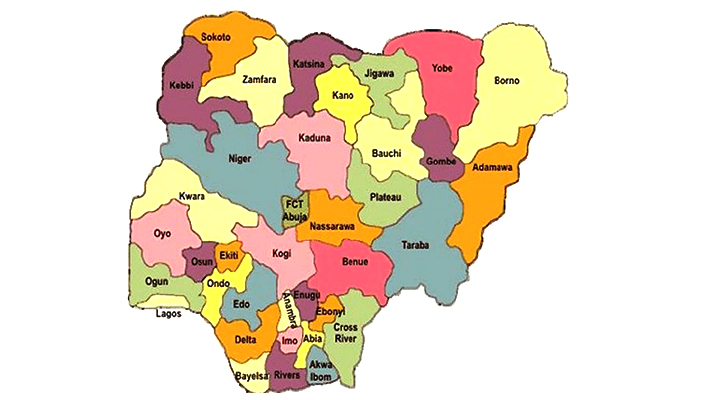
A further breakdown showed that Lagos State received N179.3 billion, equivalent to about N59.76 billion monthly. Kano received N79.2 billion, Rivers N78.8 billion, Nasarawa N42.5 billion, Ebonyi N42.9 billion and Ekiti N43.0 billion.
The spread was wide, with a N136.8 billion gap between Lagos and Nasarawa. Lagos alone earned more than double the allocations to Kano or Rivers.
NEITI said nine oil-producing states shared N424 billion as 13 percent derivation, materially shifting state rankings. Four states stood out, Akwa Ibom, Bayelsa, Delta and Rivers, with Delta leading at N180.68 billion in gross allocation for the quarter.

The agency noted that states’ deductions for debt service and other obligations fell to N225.89 billion, representing a 6.5 percent quarter-on-quarter decline, while the average debt service ratio eased to 9.4 percent.
The highest debt service ratios were recorded in Ogun at 26.8 percent and Lagos at 26.5 percent, with Cross River ranking third. About one-third of states remained below 5 percent, while more than two-thirds were below 10 percent.
“Stronger cash buffers improve sub-national liquidity,” NEITI said, noting that higher inflows support wage bills and improve headroom for capital spending.
The statement added that Lagos retained its scale advantage, with consumer demand and infrastructure spending remaining supported, while oil-producing states gained outsized benefits from derivation, even as fiscal volatility remained high.
Early Q4 signals point to softer oil prices and a weaker exchange rate. Average crude oil output slipped from 1.64 million barrels per day (mbpd) in Q3 to 1.59 mbpd in the first month of Q4, suggesting that lower foreign exchange inflows could trim distributable revenue.
NEITI also noted that solid minerals contributed nothing to derivation, as mining receipts remained negligible, with the last payout recorded in August 2024.
The agency called for tighter fiscal buffers, urging authorities to publish balances and liabilities for key federation accounts. It also recommended consistent application of budget benchmarks, use of the stabilisation account to smooth payouts, and the parking of foreign exchange gains into buffers, alongside regular transfers to the Nigeria Sovereign Wealth Fund.
Other policy priorities highlighted include conservative oil price assumptions, accelerated mining reforms, downstream petroleum reforms and full implementation of the Petroleum Industry Act (PIA) to ensure steadier revenues and lower exposure to shocks.
The report concluded that Q3 delivered a rare windfall, with Lagos topping beneficiaries by a wide margin, oil-producing states gaining the most after derivation, and debt pressure easing. Sustaining the gains, however, will depend on fiscal discipline as oil-related risks rise in Q4.