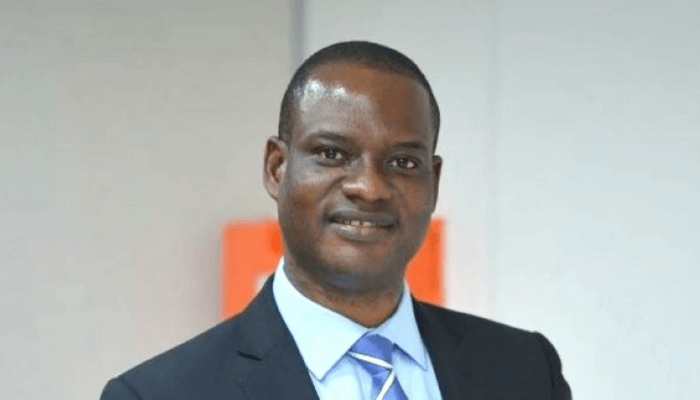
Taiwo Oyedele, Chairman of the Presidential Committee on Fiscal Policy and Tax Reforms, has said that for reforms to be introduced and successfully implemented in Nigerian society, leaders require not only political will but also courage.
Oyedele made this statement at the Hadiza Bala Usman @50 Governance Colloquium, held in Abuja on Tuesday.
He explained that reforms have become increasingly difficult to push through due to citizens’ lack of trust in the government and its policies. Speaking on the recently introduced tax laws, Oyedele said Nigeria’s tax culture remains very weak.
According to him, many Nigerians have little or no understanding of the taxes they are required to pay, even under the old law, and as a result, have not been complying. He also noted that pushing tax reforms in Nigeria is challenging due to the absence of visible or tangible returns from taxation.

Read also: Tax laws do not permit direct bank debits, Oyedele says
He said, “Reforms are hard to get around, and tough reforms are harder because it involves interest, I think it’s even more complex in Nigeria for three reasons. Number one, is that there is a low trust. The trust in government and within government is very low.
“The second reason is that the tax culture in Nigeria is very weak. A lot of Nigerians have no idea what taxes they are supposed to be paying, even under the old law, and they haven’t been paying them. Suddenly, there is a national awareness, and they just say, the people have come with taxes all over the place when actually, what the government is doing is to reduce those taxes they have been paying, and harmonizing them.”
Citing South Africa, Oyedele noted that taxes paid by Nigerians are very small compared to other nations. According to him, Nigeria collected a total of N2 trillion from personal income tax in 2025, this for him was very low compared to an equivalent of over N60trillion collected in South Africa.
“So even if you eliminate corruption 100 percent, you eliminate waste 100 percent, Nigeria is still a poor country today. So if what you collect from personal income tax is N2 trillion, what can you do with that?

“So we have to address both issues together. Transparency and accountability, as well as ensuring that we collect the right amount of taxes, and from the right people. So having said that, I’ll say the qualities that a leader will need to be able to get these kinds of reforms done are, I found out that, and with this is my job, 100 percent political will is not enough.
“You need that courage to push through, you need the courage to take risks, because it’s very risky. There is political risk, there is economic risk, there is reputational risk. You need to see all manner of names they call me now online. There is even threats, death threats. So you have to have the courage to do all of that.
“What we have been doing all along, all my adult life with the tax system, was pain reliever. It hasn’t taken us far. It can’t take us far. Now we’re doing the surgery. It’s going to come with some pain, but that’s the only right thing to do. Overall, my view is that Nigeria is making progress, the sort of progress I haven’t seen in my adult life. And if we can stay the course and see this through, we’ll all be better for it,” he added.
In his remarks, Muhammad Abdullahi, deputy governor, economic policy directorate, Central Bank of Nigeria (CBN), said that usually reforms fail not because intentions are weak but they fail because there is an inability to translate vision into durable systems that can withstand pressure, political cycles and can withstand short-term public anxiety.
He noted that Nigeria is currently experiencing a significant shift, stemming from the reforms introduced by president Bola Tinubu. According to him, the macroeconomic environment in Nigeria has significantly improved, with the micro still growing.
He said, “Over the last two years the reforms that have been implemented in our country have been the deepest and most far-reaching reforms in probably three or four decades and certainly in a long time since many of us have been alive. And that is because those reforms have touched the very core of the chains that have held Nigeria back for so many decades.
“What we can already see, we’re not yet out of the woods but we can see already the economy taking a significant turn. In the last two years in 2024 we had the first credit surplus in a long time. We had the first credit account surplus of 16 million dollars and we’re seeing this in a way that our reserves are gradually increasing from $46 billion today as I speak.”
Abdullahi explained that major difference in what this administration has brought in, is the ability to withstand the short-term public anxiety, to withstand the pressure of the political cycle and to be able to push people with a vision that sees a very long-term combination.
He said that the Tinubu-led administration is made up of people that have that credibility to push through and communicate the vision that the government has.
“Many times we approach reforms without really touching or affecting the deeper structural issues that determine whether or not reforms outcomes can be sustained. The difference with this episode in Nigeria’s trajectory is that there are the deep structural issues that have been changed, that have been affected, that have being implemented in a very holistic manner.
“It is this underlying system that really can ensure that what we have is sustainable, that it has a long-lasting effect rather than just a temporary relief. It’s very easy for a government to come in and announce a number of populist measures, where it’s free for the next one week, and doing free buses, and all of those do not meet the long-term effects of the country.
“What this current administration is doing is taking the root causes and really doing them in a very systematic manner, and having the public services able then to push through and continue to deliver these things in a way that will have long-lasting impact,” he added.