…experts say low public health spend would hit Nigerians’ pockets more
The President Bola Tinubu’s administration has once again failed to fulfil its promise to significantly increase Nigeria’s annual health sector budget to at least 10% of total federal expenditure since taking office in 2023.
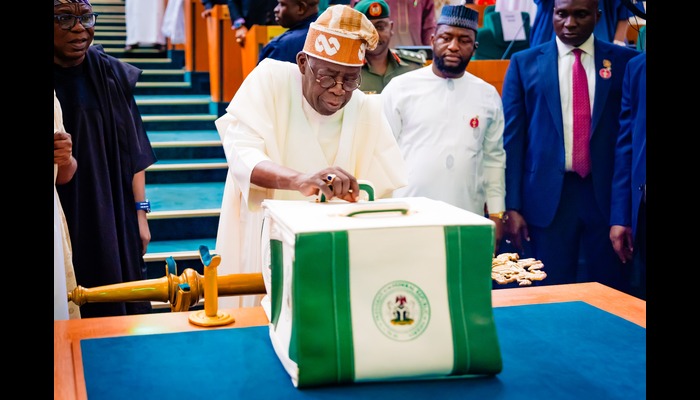
Last month, Tinubu submitted a N58.18 trillion 2026 budget proposal to the National Assembly, out of which N2.48 trillion was allocated to the health sector. This represents 4.2% of the total budget, falling significantly short of the President’s pledge.
Health experts have raised concerns over the proposed 2026 health budget, expressing low expectations regarding its ability to address the multiple health challenges facing the country. They also noted that the low public spending on health means the shortfall will be borne by citizens, while dwindling donor funds and rising medical costs would make accessing care costlier for the average Nigerian.

Read also: FG cuts digital economy allocation to N84.56bn in 2026 budget despite $1trn ambition
In 2023, the year the President Tinubu-led administration assumed office, Salma Ibrahim-Anas, special adviser to the President on Health, publicly acknowledged that Nigeria’s health financing was far below acceptable standards, with annual allocations consistently hovering below 5% of the national budget.
Speaking at a health financing conference attended by stakeholders, including partners from the World Health Organization and the World Bank, she announced Tinubu’s pledge to begin a gradual increase by raising health spending to 10% of the federal budget from 2024, with the possibility of further increases if funds were utilised transparently and accountably.
“The president himself, even before anybody advocated, has said he is going to increase the allocation for health. He will start from 10% of the total budgetary allocation to health, and that is just the beginning,” she said.
Three years on, that commitment has not materialised.
Adobe Onyechi, a public health expert, expressed concern that the current allocation cannot address the multiple health challenges, such as the persisting shortage of medical staff, inadequate infrastructure, dilapidated health facilities, and the persisting gaps in maternal and child healthcare.

She also highlighted the growing burden of infectious diseases and the rising cases of non-communicable diseases, which require urgent and targeted investment.
“We are facing a critical shortage of doctors, and those in the country are always striking because the government can’t pay basic allowances.
Many public health facilities are frequently described as death traps because they lack even the most basic amenities. Unless we more than triple the size of the budget and find other sustainable financing sources, we will only continue to scratch the surface in the health sector,” she said.
Onyechi further expressed concerns that low funding would mean that citizens will continue to pay out-of-pocket for healthcare, amid very low insurance coverage.
“Out-of-pocket expenses account for 70%, some sources say over 75%, and this may worsen if public funding is not significantly boosted,” she said.
The Nigerian Medical Association (NMA) recently criticised the ‘paltry allocation’, describing it as grossly inadequate. They noted that proposed fund amounts to approximately N10,400 per citizen for the fiscal year, and further translates to only about N870 per citizen per month for healthcare services across the country.
An analysis of federal budgets since 2023 shows that, although health spending has risen in absolute Naira terms year after year, its share of total government expenditure has remained below 6%.
In the 2024 budget, health received approximately N1.336 trillion, representing about 4.6% of the total budget.
By 2025, the health sector allocation increased to roughly N2.38 trillion, but its share of the total budget was 5.5%.
Although the health allocation for 2026 increased to N2.48 trillion, its proportion of the total budget declined to 4.2%, making it one of the lowest percentage allocations under the current administration.
Read also: Bridging the gaps in budget implementation
Beyond domestic promises, the Tinubu administration’s health spending continues to fall far below Nigeria’s international commitments under the Abuja Declaration.
Adopted in 2001 by African Union member states, the Abuja Declaration was an agreement aimed at reversing underinvestment in health systems across Africa. Signatories, including Nigeria, pledged to allocate at least 15% of their annual national budgets to the health sector. The declaration was designed to ensure predictable and sustainable funding for healthcare.
More than two decades later, Nigeria has never met the 15% target, and current allocations remain less than one-third of the agreed benchmark.
According to the Africa Centre for Disease Control (Africa CDC), Rwanda, Botswana, and Cabo Verde have consistently met or exceeded this target.
Namibia, South Africa, Madagascar, Cabo Verde, Zimbabwe, and Chad have spent 15% of annual total government expenditures on health at least once since 2001.
But Nigeria consistently falls short, despite being the country with one of the highest disease burdens in Africa.
In addition to low budgetary allocations, health experts and civil society stakeholders have repeatedly raised concerns about poor budget implementation within the sector.
Chika Offor, CEO of the Vaccine Network for Disease Control, told BusinessDay that one major challenge slowing the sector’s progress is the non-release of funds.
For instance, she infomed that funds for vaccines in the 2024 fiscal year were only released in November, when the country was already facing critical shortages. She noted that such delays could reverse gains made in vaccination or worsen diseases.
She urged the government to address partial disbursement of approved allocations, and, in some cases, non-release of budgeted funds if any meaningful impact is to be recorded in the 2026 fiscal year.