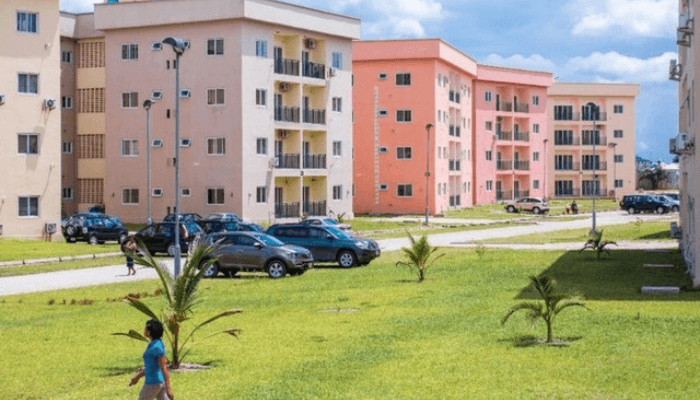
Though the real estate sector in Nigeria had a good showing in 2025, especially in the area of growth and new trends, operators are cautious in their hope that the sector will have a good performance in 2026.
They see steady growth and sustained demand, particularly across residential assets and digital infrastructure, which is increasingly gaining traction. But macroeconomic pressures persist. Inflation is said to be decelerating, but that is yet to have a visible impact on input costs in real terms.
In 2025, the property market was relatively active with development starts and pipeline activity across multiple sectors growing at a notably faster pace. The data centre sector stood out as the fastest-growing asset class.
That sector reportedly has a development pipeline that is 186.37 percent of the estimated total stock, as supply pushes towards 218MW+ by 2030.

“The residential sector paints a similarly positive picture, though the supply response is nuanced. Despite a pipeline of approximately 34,800 units, an estimated market gap of over 2.7 million units still exists,” a recent report by Estate Intel reveals.
The report notes that, while this supply gap creates opportunities for developers, particularly in the middle-income and deluxe-grade categories, developers are increasingly opting to enter the luxury space, where profit margins are more resistant to economic shocks.
These and more formed the basis for the optimism in 2026. The digital infrastructure, for instance, raises much hope, especially with data centres.
Read also: CSOs, Makoko, 2 other communities fault Lagos on forced eviction
Rising internet demand, the proliferation of cloud computing, and fintech growth have made Nigeria attractive for large-scale data centre investments.

Global operators are exploring opportunities nationwide, positioning data centres as a promising growth asset.
Of the various segments of the market, analysts foresee continued activity in the residential market with demand remaining strong, especially in the low-middle-income market, where the country’s estimated 28 million housing units deficit resides.
However, side by side with these opportunities are challenges that tend to cloud the hope that the new year brings. Affordability remains a huge concern, and it is made worse by rising construction costs and limited mortgage access, which keeps home ownership out of reach for many Nigerians.
“There seems to be no end in sight for the crisis in the rental market. Prices in prime locations are projected to climb, while the growth of short-let apartments may attract regulatory scrutiny to safeguard long-term supply,” Sonnie Okonkwo, a property consultant, stated.
He sees the hope for the sector closely tied to federal infrastructure initiatives, including road improvements, enhanced power supply, regional hubs for building materials, and a commitment to constructing at least 500,000 homes yearly.
Akinwunmi Adebayo, an economist, agrees, noting that the pace of recovery for the real estate generally depends on the government’s readiness to address constraints such as land availability, financing gaps, and infrastructure deficiencies.
He affirms that 2026 is expected to present challenges, including affordability constraints, regulatory changes, and election-related uncertainties, stressing that there’s still hope but analysts and operators have to be cautious in their projections.
“Housing demand, particularly for affordable and middle-income units, will continue to outpace supply, while digital infrastructure and mixed-use developments are expected to drive growth in the broader market,” he posited.