Africa’s pre-seed startup ecosystem remained stagnant in 2025, raising just $46.5 million across 281 deals, according to new analysis by Grégoire de Padirac, chief executive of Digital Africa.
This is even as the broader African venture capital market grew by 40 percent over the same period.
Africa: The Big Deal latest report showed that pre-seed funding, the first formal capital startups receive to turn ideas into prototypes and build early teams, accounted for only 1.5 percent of total venture investment on the continent.
This is far below the four percent to six percent typical in the United States, highlighting a critical gap in Africa’s innovation pipeline, de Padirac said.

“The stagnation at the pre-seed stage is alarming. Without robust early-stage funding, promising startups struggle to reach Series A and B, and the continent risks losing its future growth engines before they even take off,” de Padirac noted.
Read also: Cautious optimism trails 2026 projections for real estate sector
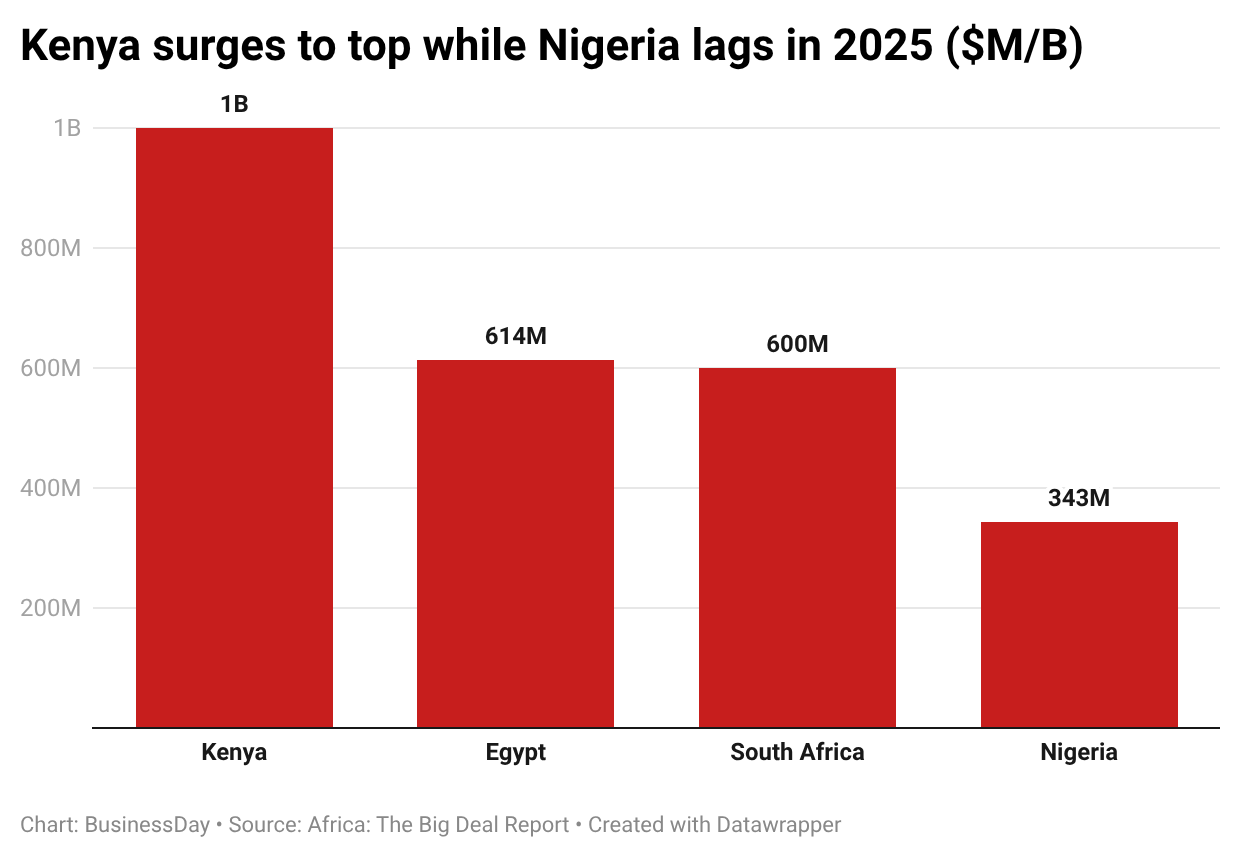
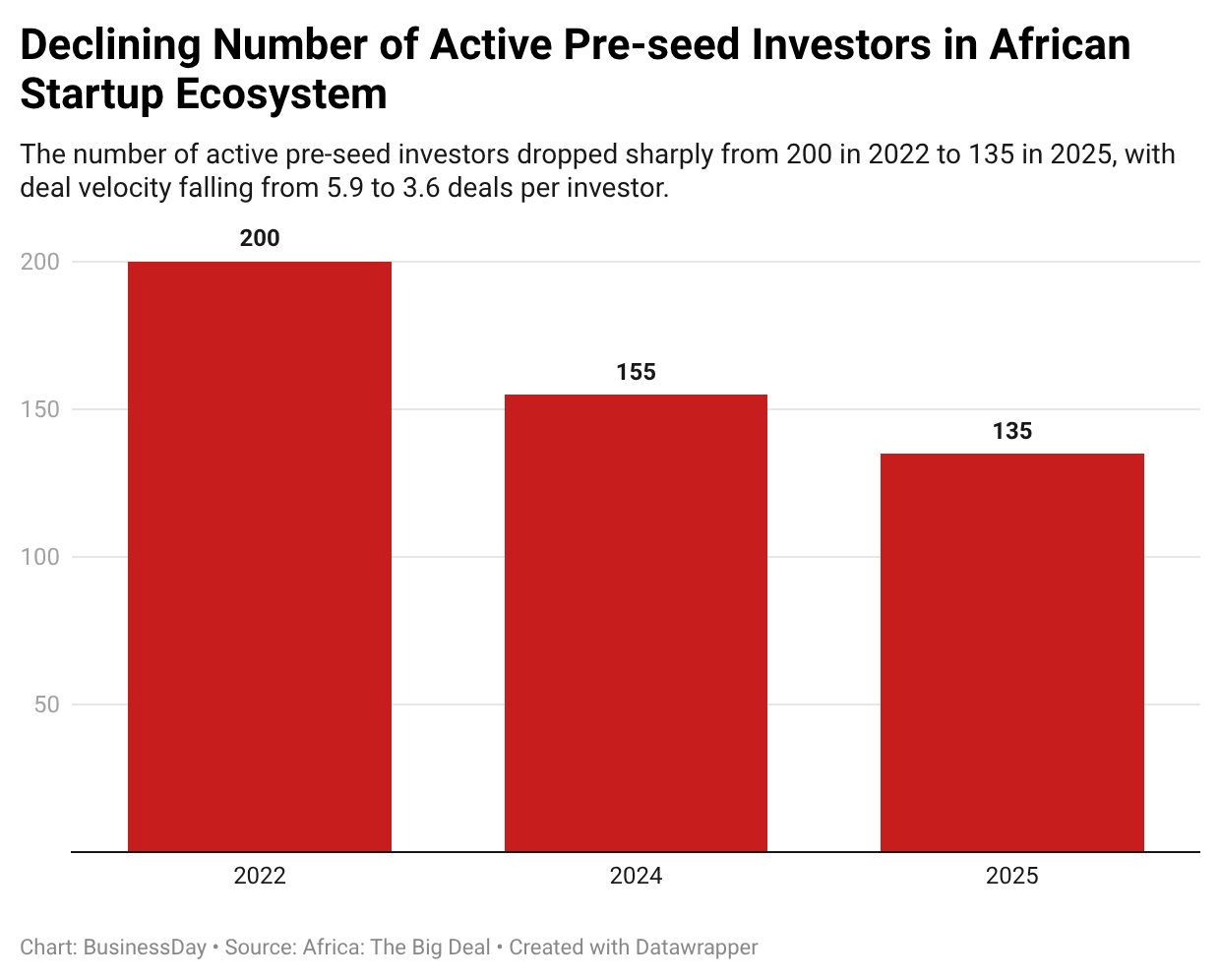
The number of active pre-seed investors fell sharply, from 200 in 2022 to 135 in 2025, while investment velocity dropped to 3.6 deals per investor per year, compared to 5.9 in 2022. Funding also remains heavily concentrated in the Big Four markets: Nigeria, Kenya, South Africa and Egypt, which captured nearly 60 percent of total pre-seed flows.
Sectorally, fintech and agriculture continue to dominate early-stage investments, driven in part by impact-focused funding, while capital-intensive areas such as deeptech, housing and waste management remain underfunded, according to the analysis.
Another worrying trend is the growing reliance on grants. In 2025, grants accounted for 42 percent of pre-seed funding, up from 20 percent in 2021, with countries such as Kenya and Tanzania seeing grants represent 50 percent and 74 percent of early-stage investment respectively. While grants support research and social initiatives, de Padirac warned that over-reliance can weaken market discipline and limit long-term ecosystem sustainability.

The decline in private-sector participation has been exacerbated by the withdrawal or repositioning of historic players such as Techstars, Y Combinator and the Google Black Founders Fund, which collectively reduced Africa’s private pre-seed investment capacity by more than 60 percent between 2019 and 2025.
In response, European public actors have stepped in to partially fill the gap. France, for example, has structured a dual approach: Proparco’s Choose Africa VC targets larger, mature fund investments, while Digital Africa’s Fuzé initiative makes micro-equity investments of €20,000 to €100,000, specifically at the pre-seed stage.
In 2025, Digital Africa completed 28 investments, representing 35 percent of equity deals outside the Big Four by deal count, despite deploying just two percent of total equity funding in those regions.
Read also: Mega-deals propel African startup funding to $3.2bn in 2025
De Padirac stressed that bridging the pre-seed gap will require patient, well-structured capital, managed with private-sector discipline and a focus on commercial returns.
Analysts estimate that to achieve a healthy early-stage pipeline, Africa would need to deploy roughly $120 million annually, supporting about 800 startups each year.
“Pre-seed is the backbone of Africa’s startup ecosystem. If this stage is neglected, the continent risks choking the very companies that could drive its next wave of innovation,” de Padirac said.