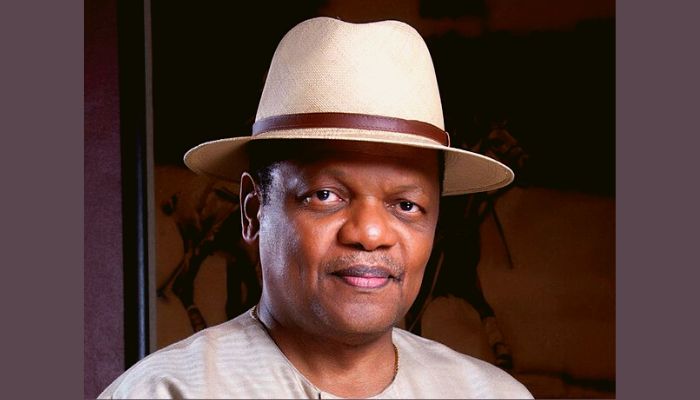
Atedo Peterside, president of the ANAP Foundation and founder of Stanbic IBTC Bank, in this interview says that rising poverty and insecurity were the defining features of 2025 and remain Nigeria’s biggest red flags as the country enters 2026. The economist warns that despite key economic reforms under President Bola Tinubu, worsening living conditions, weak revenue growth and deep inequality could shape political and social outcomes ahead of 2027. INIOBONG IWOK brings the excerpts:
Do you have standout moments for 2025 and can you guide us through the red flags as we enter 2026?
Look, for me, the standout moment in 2025 was poverty and I don’t know if you are close to your home in Nigeria.
I mean where you come from originally, but as an economist, I’m frightened when I come across people all over the country who are severely impoverished and I actually wonder how they manage to stay alive.

I think that poverty, rising poverty is going to be the main thing that will drive what happens in this country. It’s all very well for you’re talking about one party state and all that.
What you mean is that if all the rich people, all the oppressors gather in one place, they’re hoping that they can weaponise poverty and get the poor people not to understand that these people gathered in one place are the oppressors. If you have really clever operators and they have time, they have a whole year, more than a year to begin to galvanise people and explain to them. But guess what? You are the victims. Those guys gathered in one place are the oppressors.
The oppressors are the ones that have the problem. You know the old formula of thinking that you can at the last-minute buy here and there. It may work; it may not work. And then, also, I think the rising or the problem with insecurity has reached such a level that it will also hurt this government.
How do you think those issues you raised from 2025 have gone for President Tinubu? Would he be feeling good after 2025 with good accomplishments that he can put on his record perhaps, beyond just poverty; Or do you think he’ll be worried about what 2026 holds given the apparent slips of 2025 such as increased poverty for instance?
You know, I’ve said it before that it’s all very well. The federal government has taken some important economic actions. You know, they remove fuel subsidy, the exchange rate is largely market determined.

You cannot keep on clapping for yourself for those two policy actions which really were done 18 months ago; what really matters is the living standards, poverty and I believe that staying the cause is going to be very difficult.
You know, we’ve done some of these things before, especially exchange rates, you know, being market determined. The challenge is that the government wants to spend plenty of money. I mean federal and state, but the revenues they’re getting may not be sufficient for the type of spending they’re doing. If you don’t have enough revenue, something has to give. But at the federal level, your choices are you either reduce expenses or you go borrowing or the third and final option is you print money. I think so far, this government has decided they’re not going to print money. So, your choice is either you raise the revenue or you cut down your spending or you go out borrowing. And they’ve been borrowing and borrowing. When I say something has to give unless the revenues go up dramatically, you know, it will be very difficult to stay that cause.
Do you think the president should be worried about what’s ahead for the economy in 2026? I mean, there are reports, for instance, of a reset in the Ministry of Finance following a public admission of a revenue shortfall in 2025?
Look, I think anybody who runs Nigeria should be worried unless they don’t fully understand the country. You have a country of 230 million people, 140 million are very poor and then you are not worried.
More importantly, like I said earlier, the revenue projections, the revenues that you’re hoping will come in, even with the tax reform and all. You see, the problem is that the bulk of the people that have the most wealth are friends of this government. Are they going to be able to raise that revenue from their own friends? If you think you’re going to leave all those people alone and be taxing Charles and Joe down the road, it’s not going to happen. You know what happened in Saudi Arabia at the point when they had difficulty with the economy?
Somebody called all the big guns together into one hotel and said, ‘Hey, let’s sit down and tell ourselves some home truths and decide the way forward.’
So, I don’t think that this kind of revenue that we are hoping to get will come easily. It’s not going to happen. Take the oil and gas sector. The trend has been that some of the oil blocks transfer ownership from an IOC to a Nigerian group. The first thing you notice shortly after is that the volume of taxes they are paying drops or collapses. How do you solve that problem? That’s why I said that the big test is going to be; are they going to be able to raise the revenue to go on spending. If you want to borrow, how much longer can you keep on borrowing? Poverty is rising all the time.
As you look to 2026, would your advice to Nigerians be to hold on tight because there’s worse to come or do you see things moving in a more positive direction for the generality of Nigerians?
No, no. I think, look, let’s be careful. Sometimes, you can have an economy where the big guns are doing very well. Their income is going up in the stock market and all, but I’m referring to the 140 million poor people. That’s where the problem is. And I think Nigeria clearly has an income distribution problem. We have the very wealthy and we have the phenomenally poor. And you cannot have equilibrium when there are so many poor people around you. That’s why I wouldn’t say I’m frightened, but I pinch myself when I see wealthy people believe that everything will be fine forever. And around them there are hundreds of millions of people who are poor. I don’t want to equate poverty with insecurity, nor do I want to equate it with banditry or things like that. But I think it’s obvious that for the bandits, for the terrorists, poor people whom the state is offering next to nothing, some of them can be easily recruited. So, they become the future bandits and the future terrorists potentially. Also, we have 30 million children out of school. People who are not educated are increasingly difficult to integrate into a modern economy.
If they can’t work, do a proper job, they also become targets for bandits and terrorists. So, we have a serious problem on our hands. How can the President sit pretty?
If the pressure from Donald Trump on Nigeria and the Tinubu administration continues through 2026, do you see storm clouds on the horizon?
Yes, I see storm clouds largely because Donald Trump, whatever he does, is going to choose a narrative that suits his own domestic base. And the problem is that, at least, so far, our government has not been good enough to come out with narratives that counter whatever Trump is talking about. But let’s also be careful because I don’t subscribe to the notion that everything Trump is saying is total nonsense. I think it’s about language and choice of words, this whole talk about genocide. I think people have to understand that genocide can also be defined by geography. If you say there was genocide; there was the Holocaust in World War II. It was in Germany, you could say there was genocide in Germany. It’s not true that you can therefore, say that there was genocide in the whole of Europe.
I think people are failing to make that distinction. In Nigeria, we have parts of the North Central where what has happened there is akin to genocide in the sense that, we’re talking about in an enclave.
Now just because the genocide is in an enclave or is in a state or is in the region and the victims are in IDPS does not mean that you cannot say that the whole of Nigeria has genocide. Those are two different things. Genocide, I would say is genocide for the victim. The victim is the one that defines the reason why he is in that predicament. The reason why he lost his relatives, the reason why he lost his life and property has nothing to do with him.
It really has something to do with which tribe it belongs to, which ethnic group or some sometimes which religion. So, in that enclave you can talk about genocide.
I think there’s been lots of experts talking saying there’s no genocide in Nigeria. Genocide can exist in pockets and it’s also true that is it’s wrong to say that everywhere in Nigeria there’s genocide. I’ve not seen genocide in Lagos, but I’ve seen genocide in pockets especially in in the north central in the middle belt as an example. I’ve seen genocide in parts of the Northeast. If Boko Haram go somewhere and wipe everybody out, what do you call that?
What type of opposition do you see emerging in this country going into 2027? Do you see their energy strengthening around perhaps, the ADC and the fact that they have a common political enemy in President Tinubu or do you see that energy dissipating further around the PDP, Labour and the SDP with more divisions emerging?
No, I think the jury is still out on that. There is still plenty of time and like I said, it’s about how clever the politicians are. But one thing is sure, if all that the opposition politicians, the leaders, if all that they want to do is to insist I have to be the candidate is me or nothing else, then of course it’s not going to work. I think the priority has got to be to build something first. You’ve got to first concentrate on the things that unite you before you focus on one thing that may divide you. But in any case, I always ask myself if everybody wants to be president that tells me that something is wrong with all those people, because what makes you think in a country of 230 million people that you alone have a divine right to be president?
I mean there’s a level of arrogance and conceit and probably even delusion out there. How can you look at another human being in the face and tell him that it has to be me or me or nobody else. I think that the opposition have to focus on building something, bringing the rank and file into the fold, selling the story of hardship, poverty and insecurity. In effect, they’ve got to have a message, a rallying point first and then talk about who will lead later. I lead or everything falls apart, I mean there’s still plenty of time. But I think ADC was a rallying point largely because one or two other parties like SDP did not align and on the face of it the talks fell apart eventually. So, ADC by default, you know, became a rallying point.
There is the question of who will lead the ADC and perhaps, by extension the opposition into the 2027 presidential election. I mean, do you see anyone being able to forge the right grip to do that in 2026 going into 2027?
I think if they change their tactics, it is possible.
You know, give people assignments. Everybody goes out and sign up as team member. It’s no use everybody sitting down in his house doing nothing and saying I must be the candidate. They must give people assignments and then you’ll be able to see who performs, who delivers and then begin to see whether there’s a basis. Sometimes, if you give everybody that kind of assignment, you will have to look at who has been most successful and you will realise that somebody has the following. But if you just sit down in a room having meetings of a few big men, you can go on forever and it will lead to nothing. People should go out and do all the work on the field. Go out and sell a message. Go out and get people to go and register to vote.
Explain all the issues and challenges you know what programmes you think you can do better.
In effect, I’m saying that they should get to work when they get to work it’s impossible for five human beings or six human beings to work equally well. If they get to work, you shouldn’t be able to separate the men from the boys.
You mentioned the SDP earlier; you of course joined the SDP in 2022. Where do you stand now politically?
I joined the SDP for a reason. There were 18 political parties; I did not believe the government would register a new party for the last election. I joined the SDP with the intention of helping to provide the role of a catalyst, to make that possible for the party to be receptive or to be the rallying point for many like-minded politicians.
It did not work last time because some of them decided that they should be labour. This time around, there was lots of discussions with SDP. I helped to encourage people to put down their differences and talk and it did not work out. So, I decided to leave the SDP at the first of January this year because it became clear to me that there were obstacles that made it impossible for SDP to be the rallying point. The party had the good building blocks in terms of a good manifesto, some organisation and all but sometimes if it was supposed to be it would be if not somebody else would take it. I think on balance people find ADC more receptive or flexible. I’m not apportioning blame, but it does not matter you got to pick a party somehow but I have left the SDP and I have not joined any party yet.
We recall your Go Nigeria Initiative which was dedicated to strengthening Nigeria’s democracy through what was described as informed advocacy and active citizen engagement. Is that still relevant in 2026? Are you looking at any party?
Go Nigeria’s work should continue, but let me make it clear. Go Nigeria had advocates initially they were 18, now 24 of those 18; there were people from APC some from PDP. I was from SDP and all that, you can have an NGO or a movement that is across party lines because if there are like-minded people who can agree on what is best for Nigeria. Go Nigeria is all about making sure that as democracy is strengthened and that to achieve that you’ve got to ensure that the youths who are the majority come out and register. Why do you think it’s important to tell them to come out and register because many are disillusioned. Now you also have to admit and accept that there are some obstacles that you must tackle simultaneously. Don’t tell somebody to go and register if you cannot show him, you’re doing some things to make sure that this time around his vote counts. Go Nigeria is focusing on telling people to register, not to give up hope. But also, Go Nigeria itself wants to embrace the challenges that we see. The four major challenges which are; Electoral reform, freedom of speech, you can’t have an election if people are citing all these laws on criminal defamation the day before the election, they can lock up all their opponents. It doesn’t make sense. Judicial reform is also number three. And number four, security of life and property. There’s a level of insecurity that is inconsistent with a free and fair election. People are not going to come out and lose their lives in a bid to vote.
The point I’m making is that Go Nigeria’s mandate has to be broadened so that all those who want to strengthen our democracy can buy into that philosophy. It doesn’t matter which party you belong to. We’re talking about making sure we strengthen our democracy and then we have to tackle the major obstacles that our democracy faces.
We know there are many but we pick four critical ones.
My fear is that this time around very few people will waste their time going to court. People would resort to self-help because they don’t have the confidence in the judiciary and we have to correct that.
You criticised the electoral commission handling of the 2023 presidential election. Do you have hope that INEC will do a better job in 2027?
You know, I never give up, but I know it’s a tall order, but the only thing you can do sometimes in life is clear.
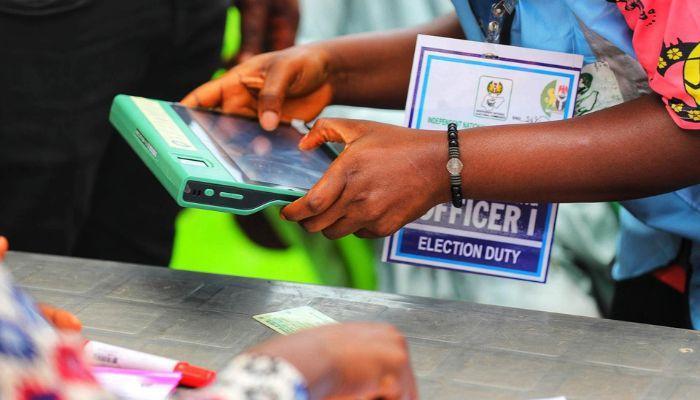
All we can do is to hold their feet to the fire. There’s a new INEC chairman. We have to hold his feet to the fire. Let him come out with rules. Let him tell us whether, like the previous one, he will make rules and break them himself. Let him commit himself to whether there will be no breakdown of communication on the voting day. Let him commit himself to alteration of result sheets and all those games. You know, this is the only country where somebody claims to have won an election and then hides the result sheets. If you won an election, you’ll be the one bringing out all the results sheets to show the whole world and say look at the results polling unit by polling unit unaltered. It’s so obvious that if you’re hiding things and INEC will not bring out certified true copies, the people that won will not bring out the results and all we see is altered result sheets then there’s no confidence in the system. But there’s a new INEC chairman; all we can do is to hold their feet to the fire and put pressure on the government in the area of electoral reform. The opposition has to work together instead of just saying it is my turn to become president.