As Nigeria edges closer to the 2027 general election, a familiar but deepening crisis is unfolding in plain sight. In cities and small towns alike, street corners have become informal waiting rooms for a generation with little to do and nowhere to go. Young men idle around motor parks. Young women hawk petty items or scroll endlessly on phones in search of digital gigs that rarely pay. These are not dropouts or societal rejects; many are educated, trained and ambitious. What they lack is opportunity.
For politicians preparing for 2027, this reality is not just a social tragedy; it is a ready-made mobilisation structure.
Read also: Eight major political events that shook Nigeria in 2025
A nation of youths, an economy that cannot absorb them
Nigeria’s demographic profile is striking. With a median age of 18.1 years, it is the youngest country in the world. About 70 percent of its population is under 30, while 42 percent are children under 15. Each year, millions of young people step into the labour market, but the economy is unable to create enough decent jobs to absorb them.

The formal sector is stagnant, manufacturing is weak, and small businesses, long the backbone of youth employment, are buckling under inflation, high energy costs and other economic shocks. For those who learned trades or acquired a tertiary education, the reward is often prolonged unemployment or underemployment.
In many cases, the cost of working outweighs the benefit. Transport fares, meals and basic living expenses consume earnings before the day ends. As a result, many youths reject poorly paid jobs, not out of laziness, but out of economic logic. Survival, not dignity, has become the benchmark.
Poverty as a political resource
This widespread economic despair has profound political implications. As the election season approaches, unemployed youths increasingly become raw material for electoral manipulation. History shows that in Nigeria, poverty is easily converted into political loyalty, albeit temporary and transactional.
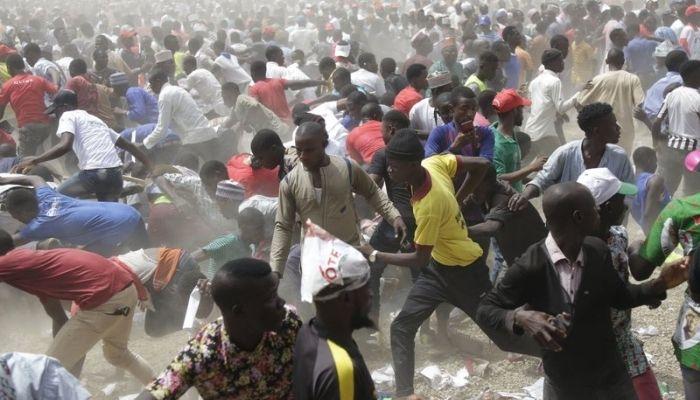
With a few thousand naira, food items, drugs or alcohol, politicians can recruit foot soldiers to intimidate voters, disrupt rallies, snatch ballot boxes or spread fear. These activities are rarely spontaneous. They are carefully organised, often outsourced to young people who see elections as short-term income opportunities.
In neighbourhoods where the state is invisible and social mobility feels like a myth, politicians appear not as leaders but as employers, however cynical that employment may be. Electoral violence thus becomes an extension of economic exclusion.

Read also: Year of defections, real and imaginary hunger, and political abracadabra
Distorted data, deepening distrust
Adding to the crisis is the growing disconnect between official statistics and lived reality. PwC projects that Nigeria’s poverty rate could rise to 62 percent of the population in 2026, about 141 million people, driven by policy gaps, global shocks and the painful costs of ongoing economic reforms.
“Poverty levels are projected to reach 62% of the total population (141 million people) in 2026, reflecting the combined effects of legacy policy gaps, global shocks, and the short-term costs of ongoing reforms,” PwC said in its latest Nigerian economic outlook.
Yet official unemployment figures tell a different story. The National Bureau of Statistics (NBS) has not released fresh unemployment data in over 14 months. The last published figure, 4.3 percent in Q2 2024, down from 5.3% in Q1, triggered public anger, especially among young Nigerians.
The controversy lies in the methodology. Under the revised framework introduced in 2023, anyone engaged in at least one hour of economic activity per week is classified as employed. For youths surviving on irregular gigs, street trading or sporadic online work, the classification feels insulting. It reinforces the perception that policymakers do not fully grasp, or acknowledge, the depth of the crisis.
This erosion of trust matters. When young people feel unseen and unheard, they disengage from formal political processes, making them more susceptible to informal and often violent political engagement.
Electoral violence as economic expression
Nigeria’s electoral violence problem is often discussed in security terms, but its roots are deeply economic. Jobless youths are not inherently violent; they are vulnerable. Without stable income, social protection or hope of upward mobility, risk-taking becomes rational.
Election periods offer brief access to cash and recognition. For some youths, it is the only time their presence is economically valued. Violence becomes monetised, and political thuggery morphs into an informal labour market.
This reality undermines campaigns to promote peaceful elections. Civic education, peace accords and heavy security deployments struggle to counteract the raw force of hunger. Without addressing unemployment and poverty, efforts to curb electoral malpractice remain cosmetic.
Read also: When mandates defect: How political cross-carpeting is stealing Nigerians’ votes
A looming test for 2027
As political activities intensify in the coming months, the danger is not hypothetical. Nigeria risks entering 2027 with a larger pool of economically frustrated youths than at any other point in its democratic history. The stakes are high, not just for electoral credibility, but for social stability.
If current trends persist, elections will continue to be flashpoints of chaos rather than platforms for accountability. The tragedy is that the very demographic that should safeguard democracy, the youth, may instead be used to undermine it.
Breaking this cycle requires more than election-season promises. It demands sustained investment in job creation, credible data, skills-to-market pathways and social safety nets that restore faith in the future. Without these, poverty will remain the most effective campaign tool in Nigeria’s politics.
As 2027 approaches, the question is no longer whether unemployed youths will shape the election, but whether they will do so as voters with hope or as instruments of desperation.