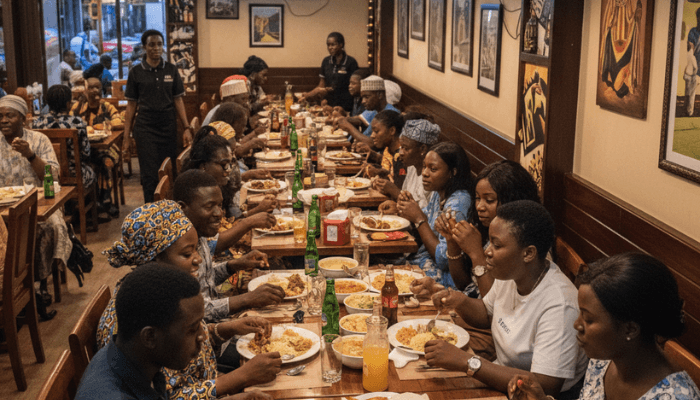
With food prices rising and disposable income under pressure, people are thinking more carefully about where they eat. The question most diners now ask is simple: Is this actually worth my money?
For some, value means generous portions. For others, it is about fair pricing, good service, or whether the experience matches the bill at the end of the meal. Across income groups and even among diners in the diaspora, “worth it” is no longer just a feeling. It is something people actively assess.
Here are seven factors that consistently shape how diners decide whether a restaurant delivers real value.
Portion size relative to price

Portion size is still the first thing many people notice, especially in casual and mid-range restaurants. For diners watching their spending, the basic calculation is straightforward: how much am I getting for what I paid?
But it is not just about how full the plate looks. People pay attention to whether the food is actually filling, whether portions are consistent from one visit to the next, and whether they need to order extra to feel satisfied. A restaurant that serves generous portions one day and skimps the next quickly loses trust. For families, students and young professionals, portion size often determines whether a place becomes a regular option or a one-off visit.
Price transparency
Most diners do not mind paying more when they understand what they are paying for. What frustrates people is uncertainty. Hidden service charges, unclear menu descriptions, and unexpected add-ons are among the most common reasons customers feel short-changed. Even when the food is good, a lack of transparency leaves people feeling uneasy about value. Being upfront about prices is not just good practice. It directly affects how trustworthy a restaurant appears.
Read also: Nigeria’s five most visited tourist destinations in 2025

Alignment between price and quality
People constantly weigh cost against what they receive. Does the overall delivery justify the amount on the bill?
Lower and middle-income diners often focus on how much a meal costs relative to what it offers. Higher-income diners are usually less concerned about the number itself, but they expect consistency and professionalism in return for premium pricing. When price and delivery do not line up, disappointment follows.
Service reliability
Food might bring people in, but service is what makes them come back. Waiting times, how staff handle mistakes, whether they understand the menu, and how customers are spoken to all shape the experience. Many diners are surprisingly forgiving about small portions or higher prices when service is efficient and respectful. On the other hand, poor service can undo even the best kitchen work. For business diners, in particular, reliability, speed and discretion often matter more than ambience.
Dining environment
The environment is part of what customers are paying for, even if they do not always say it outright.
Cleanliness, seating, lighting and noise levels all influence whether a place feels comfortable or stressful. Social diners care about atmosphere. Corporate diners prioritise quiet and functionality. Tourists and diaspora visitors often look for something that feels local but still comfortable. When a restaurant’s setting does not match what it promises, the experience feels incomplete.
Consistency over time
One good visit is not enough. What really shapes perception is what happens over time. Customers notice when portion sizes fluctuate, when service depends on who is on duty, or when prices change without explanation. Even well-liked restaurants lose loyal patrons when experiences become unpredictable. Consistency, more than creativity, is what turns first-time customers into regulars.
Category expectations
Value looks different depending on the type of restaurant. In casual dining, people mainly want affordability and satisfying portions. In mid-range restaurants, they expect balance: decent portions, fair pricing and a comfortable environment. In fine dining, experience becomes the product. Smaller servings and higher prices are acceptable when service, technique and attention to detail are clearly on another level. Problems arise when a restaurant charges like one category but delivers like another.