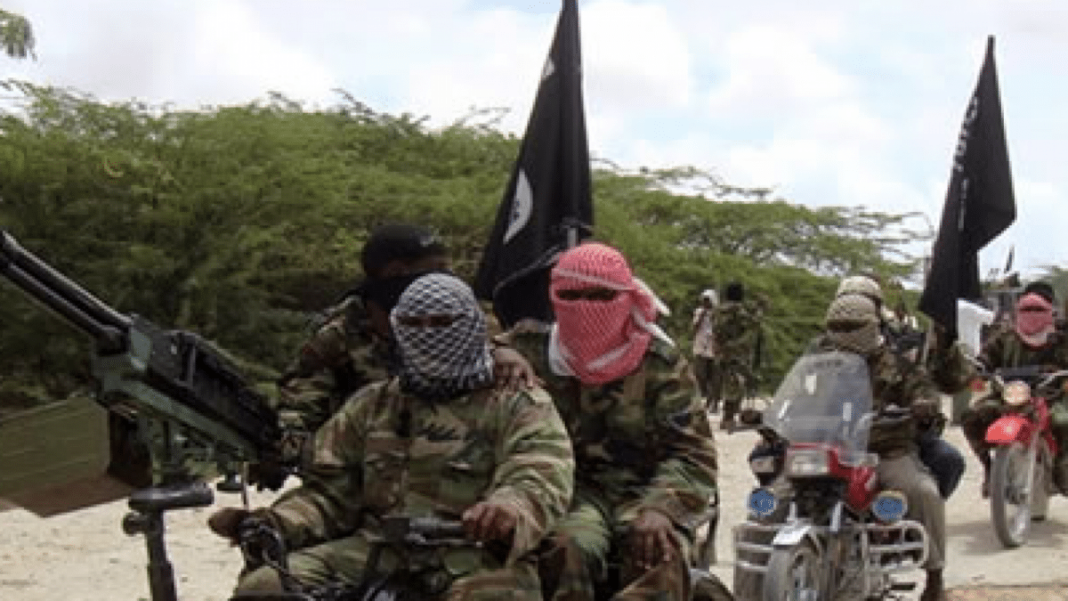
Nigeria’s security crisis is rapidly deepening as terrorist and bandit groups expand into new territories, exploit weak state presence and increasingly target civilians, traditional authorities and government institutions, a report by SBM Intelligence has warned.
In its Security and Political Economy Report for January 2–8, 2026, the research firm said armed groups are “rapidly finding new grounds,” with violence spreading across the North-Central, North-West, North-East and into parts of the South-West previously considered relatively safe.
The report highlighted the mass killing of more than 40 villagers in Borgu Local Government Area of Niger State as a major turning point. According to SBM Intelligence, the attack signals “a sharp escalation in the contest for control of the North-Central western corridor, particularly the forested belt around Kainji Lake National Park,” which has become a convergence zone for bandits and terrorist factions including Boko Haram and ISWAP.
Read also: Trump warns of further airstrikes in Nigeria over alleged killings of Christians
SBM Intelligence quoted a former commissioner for internal security in Nasarawa State as saying the attack was not purely ideological. “Boko Haram and ISWAP have pursued control of gold deposits near Lake Kainji for several years, and the killing of 40 villagers, kidnappings, and destruction of market infrastructure were aimed at clearing civilian presence around mining sites,” the report said.

In the North-West, the report recorded a sharp rise in kidnappings in Kano State, noting that SBM Violence Tracker data showed “a near fourfold increase in kidnappings within a single quarter,” signalling a shift from petty crime to organised, profit-driven abductions. It warned that urban gang violence and rural banditry are increasingly linked, creating what it described as a “regional security vacuum.”
The North-East also saw a resurgence of sectarian violence. SBM Intelligence said ISWAP’s attack on Christian communities in Adamawa State, where a church and more than 100 houses were burned, reflected “a shift toward coercive governance rather than episodic terror,” including demands for conversion.
Alarmingly, the report noted that militant violence has now pushed further south. The killing of five National Park Service personnel in Oyo State was described as “a deliberate shift toward state and security-linked targets,” raising fears of spillover into the South-West’s economic corridor linking Oyo, Ogun and Lagos.
SBM Intelligence warned that without new sector-wide security strategies and sustained deployments, previously perceived ‘safe zones’ are now within the operational reach of mobile terrorists.