Trump says US oversight of Venezuela could last years
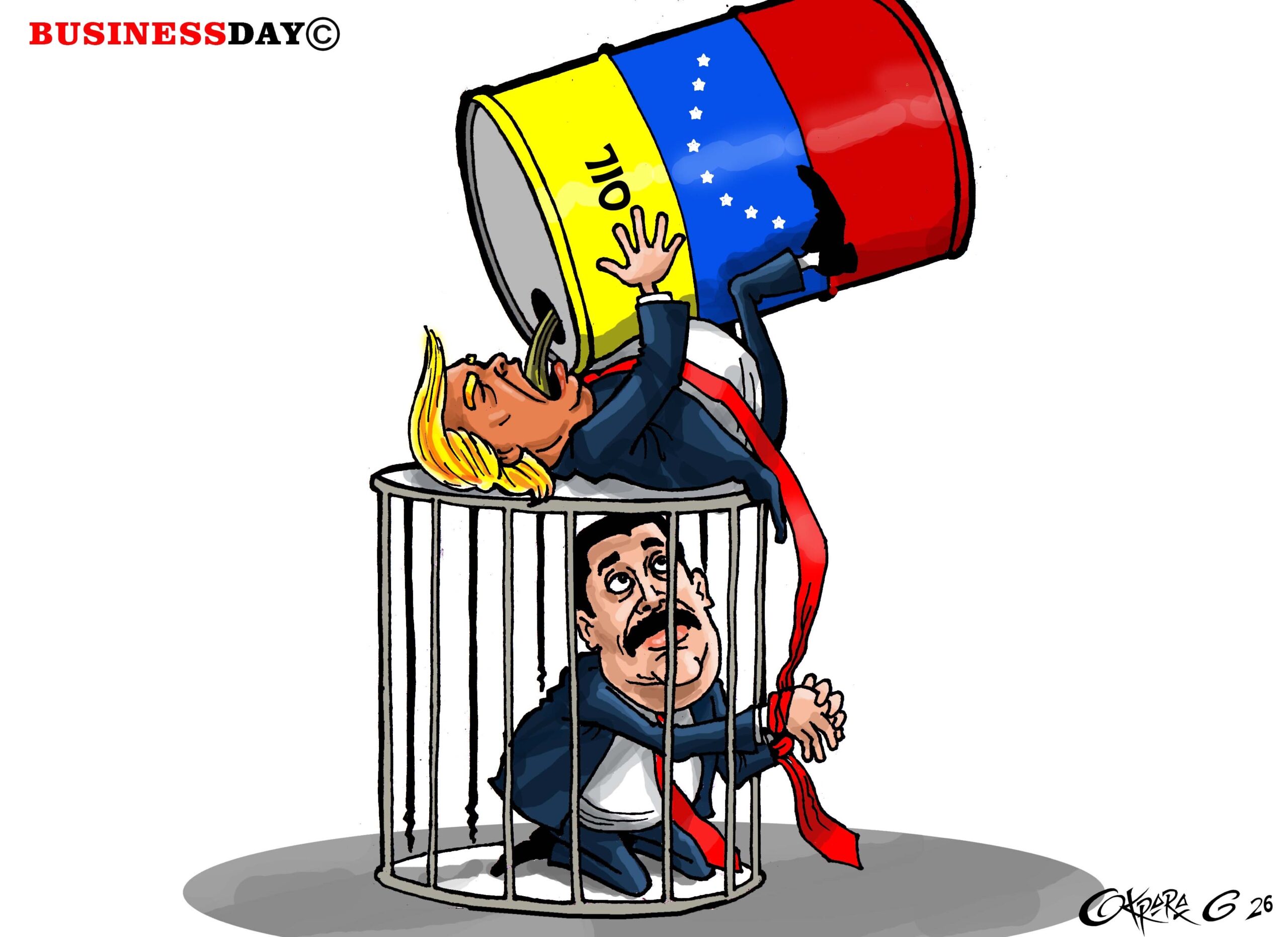
United States President Donald Trump stated that American control of Venezuela and its oil revenues could extend for years, telling the New York Times, “only time will tell” how long direct oversight would last. When asked whether involvement would span three months, six months, a year or longer, Trump responded “much longer” while discussing reconstruction plans for the South American nation following Saturday’s military operation that seized President Nicolás Maduro.
- Trump says US oversight of Venezuela could last years
- Dangote refinery’s fuel deal with marketers collapsed over pricing
- Central Bank projects petrol at N950 per litre in 2026
- Rivers Assembly began a third impeachment attempt against Fubara
- Oxford Dictionary added 22 West African words, including ‘nyash’ and ‘amala’
Trump outlined intentions to rebuild Venezuela’s oil industry profitably, stating the US would use oil, take oil, and provide funds the country desperately needs. He disclosed that Secretary of State Marco Rubio maintains regular communication with interim President Delcy Rodríguez, a Maduro loyalist whom the administration has publicly backed, while warning that she would pay a higher price than Maduro if she fails to meet the demands. The US Senate advanced a war powers resolution, 52-47, to limit further military action in Venezuela, although the measure faces hurdles in the Republican-controlled House and would require a two-thirds majority to override an expected presidential veto. Trump told the Times he held a phone call with Colombia’s President Gustavo Petro, lifting earlier military threats against the neighbouring country, while confirming plans to meet major oil companies on Friday to discuss raising Venezuelan production from current levels below 1 million barrels per day.
Dangote refinery’s fuel deal with marketers collapsed over pricing
The supply arrangement between Dangote Petroleum Refinery and 20 major petroleum marketers to offtake 600 million litres monthly has collapsed following pricing disagreements, triggering a surge in petrol imports to 1.563 billion litres in November 2025. The deal, structured in October as a pilot programme with each marketer lifting roughly 30 million litres monthly, broke down when international prices fell below Dangote’s selling rate whilst the refinery resisted price reviews.
Marketers initially purchased products at N828 per litre in October under an agreement including monthly reviews, but noticed by November that imported petrol landed at approximately N696 per litre whilst Dangote’s gantry remained at N877 per litre. Depot owners who bought at the higher rate suffered losses when Dangote later slashed prices to N699 per litre, the lowest in 2025, though the reduction came too late to prevent damage. Industry sources indicate the dispute contributed to public confrontation between Dangote and former regulatory authority chief Farouk Ahmed over import licence issuances, ultimately leading to Ahmed’s resignation in December. IPMAN confirmed the arrangement no longer operates, with the refinery reverting to open-market sales, accepting orders from 250,000 litres upward. Spot prices for imported petrol at Apapa jetty currently stand at N696 per litre compared with Dangote’s N699 gantry price, with Brent crude trading around $63.75 per barrel.

Central Bank projects petrol at N950 per litre in 2026
The Central Bank of Nigeria has projected petrol pump prices will hover around N950 per litre throughout 2026, according to its Macroeconomic Outlook document released this week. The forecast assumes crude oil averaging $55 per barrel for the year, foreign exchange rates around N1,400 per dollar, and domestic production at approximately 1.5 million barrels daily excluding condensates.
The projection represents an increase from current rates of around N700-N740 per litre following Dangote refinery’s December price reductions that forced competitors to adjust. The CBN stated government expenditure would follow an expansionary fiscal path supporting the $1 trillion economy initiative, while the monetary policy rate and cash reserve ratio remain at 27 per cent and 45 per cent, respectively.
Rivers Assembly began a third impeachment attempt against Fubara
The Rivers State House of Assembly commenced fresh impeachment proceedings against Governor Siminalayi Fubara and Deputy Ngozi Odu on Thursday, marking the third attempt since 2023 amid escalating political tensions with FCT Minister Nyesom Wike. Speaker Martin Amaewhule presided over proceedings where Majority Leader Major Jack read allegations of gross misconduct, including extra-budgetary spending, demolition of the Assembly complex, withholding legislative funds, and failure to present the 2026 budget.
Twenty-six lawmakers signed the impeachment notice, citing Section 188 of the 1999 Constitution, giving the governor seven days to respond, while suspending consideration of the 2026 appropriation bill until investigations conclude. President Bola Tinubu previously intervened twice in the political crisis, declaring emergency rule from March to September 2025 after the second impeachment attempt and brokering peace deals that subsequently collapsed. Wike accused Fubara on 31 December of reneging on a June 2025 agreement reached at the Presidential Villa, threatening political confrontation ahead of formal impeachment proceedings. The APC Progressive Mandate Group condemned the move as undermining Tinubu’s peace efforts, noting Fubara’s December defection from PDP to APC strengthened the ruling party’s presence in Rivers State. Top APC leaders have begun underground moves seeking political solutions to prevent renewed violence in the oil-rich state.
Oxford Dictionary added 22 West African words, including ‘nyash’ and ‘amala’
The Oxford English Dictionary’s December 2025 update added 22 West African expressions to its lexicon, with Nigerian terms including “nyash,” “mammy market,” “amala,” “moi moi,” “abeg,” “biko,” and “Ghana Must Go” receiving formal recognition. The additions form part of over 500 new words, phrases and senses incorporated in the quarterly review.

The dictionary defines “nyash” as a person’s buttocks, particularly a woman’s, derived from Nigerian Pidgin and widely used in casual conversations and social media. “Mammy market” describes markets traditionally run by women, originally in military barracks but now extending to NYSC camps and educational institutions. “Amala” appears as a dough-like staple made from yam, cassava, or plantain flour, whilst “moi moi” is recognised as a bean-based dish popular among Yoruba people. The interjections “abeg” and “biko” express politeness, urgency or emphasis, with the latter originating from Igbo. “Ghana Must Go” refers to the chequered plastic bag, tracing its name to the 1983 expulsion of undocumented Ghanaian migrants from Nigeria. Nigerian English consultant Dr Kingsley Ugwuanyi drafted most entries and provided pronunciation guides on the OED website. Previous updates in January 2025 added terms including “japa,” “419,” “agbero,” and “suya,” reflecting migration, crime and street food cultures.