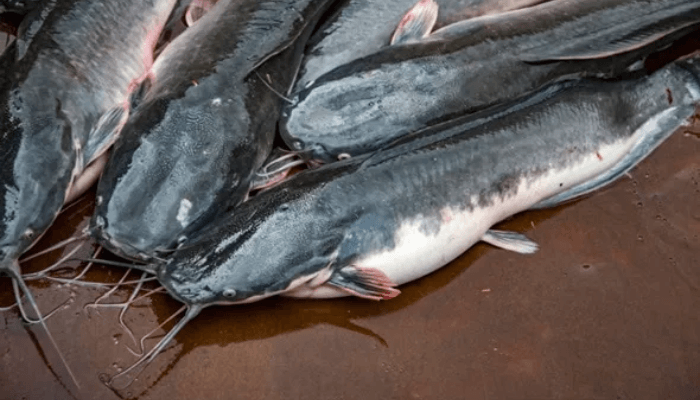
As the new year unfolds, catfish agropreneurs are expected to record strong growth, high profits, and expanding markets, according to stakeholders in the sector.
Despite persistent structural challenges, Africa’s rapidly growing population, increasing focus on tackling childhood malnutrition, and rising global demand for protein-rich foods are driving strong profit projections across the catfish value chain.
Africa’s population is projected to reach 1.5 billion by 2030, with Nigeria’s population expected to hit 230 million, according to the World Bank.
With fish accounting for about 40 percent of Nigerians’ protein intake, and a domestic supply deficit of over 50 percent, 2026 presents a promising outlook for catfish businesses in the country.

The Akwa Ibom Fish Farmers Association (AKWAFAN) has projected significant opportunities for fish farmers in 2026, stressing that unity and collaboration will be crucial to fully harnessing these prospects.
“Members must remain steadfast, united, and committed to their cooperatives, as collective strength remains the key to unlocking greater opportunities in the value chain,” the chairman noted.
Okon Amah, chief executive of ProDave Integrated Farms and Services Limited, highlighted the vast opportunities awaiting catfish agropreneurs in 2026.
“Protein is the new oil, as fish farming remains an agribusiness with high turnover. It continues to offer short production cycles, predictable cash flow, and scalable margins when feed efficiency and biosecurity are properly managed,” he noted.
“Additionally, agro-processing activities such as fish smoking, filleting, packaging, grain milling, and oil extraction reduce post-harvest losses and significantly increase revenue per unit. This is why governments and development banks like the African Development Bank (AfDB) are aggressively investing in Agro-Processing Zones,” he added.

Experts note that agribusiness success is no longer defined by how hard one farms, but by how strategically one positions within the value chain.
Sharing similar views is Elizabeth Uloko, a catfish farmer based in Kaduna, who emphasized the sector’s strong prospects in 2026.
“Currently, a kilogram of catfish is cheaper than beef or chicken, and its affordability, coupled with strong demand for protein source, makes it a profitable venture for farmers in 2026,” she shared with this reporter.
One of the major drivers behind the growing appeal of fish farming is the influx of large-scale investments from institutions such as the African Development Bank (AfDB) and other foreign investors, signaling strong confidence in Africa’s agricultural potential.
In addition, emerging technologies such as aquaponics, agritech solutions, and advanced agro-processing systems are gaining momentum across the sector. These innovations are expected to improve efficiency, lower operational risks, and unlock new profit opportunities for producers, processors, and marketers.
However, on the global front, demand growth may moderate slightly, as China intensifies its push toward food self-sufficiency in 2026, according to reports by Rabobank.
Risks and solutions
Fish production, processing, and marketing are projected to hold strong potential in 2026, however, skill gaps, insecurity, and high feed costs continue to weigh on the sector.
A recent report by the World Aquaculture Society highlights that training farmers could play a significant role in increasing profitability while strengthening food security and helping to curb malnutrition across the continent. However, delivering such training remains challenging, as most farmers operate in rural areas that are often difficult to access.
“The most important component that will make a significant impact at this stage is the provision of skills and information,” the report stated.
“However, sending many African trainers to speak to farmers is certainly a logistical nightmare, as accessibility remains a major challenge,” it added.
Amah (earlier quoted) also noted that insecurity, climate change, and post-harvest losses continue to threaten the sector.
“Most common risks in aquaculture include climate stress, high input costs, post-harvest losses, and insecurity, which remain real threats to the business,” he stated.
“However, these risks can be reduced through cluster production, building cooperatives for scale, and investing in storage, processing, and branding,” he added.
David Yaji, chief executive of DavYaj farms based in Abuja also highlighted the importance of having a ready market before the end of a production cycle.
The easiest way to guarantee profits is to secure a ready market before completing a production cycle, in order to prevent losses,” he stated.