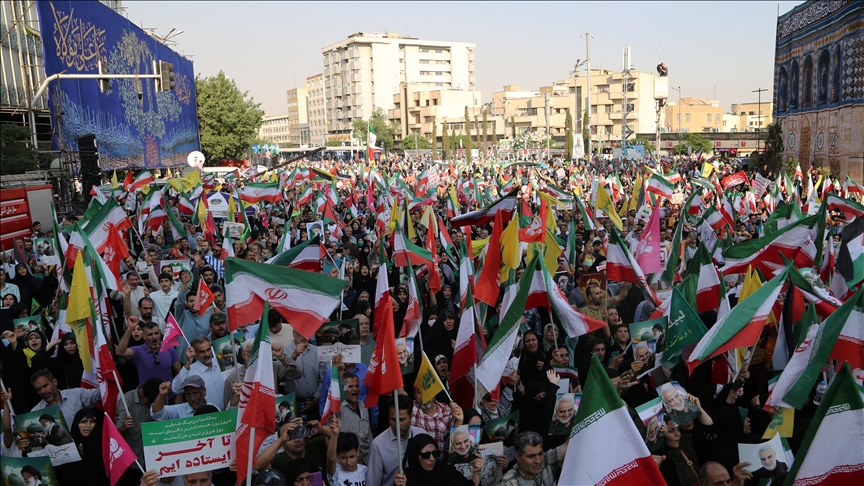
Fresh protests erupted across Iran on Thursday night after the country’s exiled crown prince, Reza Pahlavi, called on Iranians to take to the streets, according to reports.
Residents in Tehran reported shouting from rooftops and gathering in the streets after Pahlavi urged demonstrations at 8 p.m. local time. Internet access and telephone services were cut shortly after the protests began, according to monitoring groups, a step often taken by Iranian authorities ahead of security crackdowns.
The demonstrations represented the first major test of Pahlavi’s ability to influence events inside Iran. His father, the late shah, fled the country shortly before the 1979 Islamic Revolution. In recent protests, some demonstrators have chanted slogans in support of the monarchy — once a capital offence — reflecting the depth of anger driven largely by Iran’s struggling economy.
Protests that began earlier in the week continued on Thursday in cities and rural towns, with markets and bazaars closing in some areas in apparent solidarity. At least 39 people have been killed and more than 2,260 detained so far, according to the US-based Human Rights Activists News Agency.

The unrest has increased pressure on Iran’s civilian government and its supreme leader, Ali Khamenei. Internet firm Cloudflare and advocacy group NetBlocks said the nationwide outage appeared to be caused by government interference. Telephone calls into Iran from abroad, including from Dubai, failed to connect.
Despite the scale of the protests, they have remained largely leaderless. Analysts say it is unclear whether Pahlavi’s call will shape their direction. Nate Swanson of the Atlantic Council wrote that previous Iranian protest movements had faltered because security forces arrested or exiled potential leaders before they could gain traction.
Read Also: Nigeria, Iran move to deepen trade, energy cooperation
When Pahlavi’s call took effect on Thursday evening, witnesses said neighbourhoods across Tehran echoed with chants of “Death to the dictator” and “Death to the Islamic Republic”. Some demonstrators also shouted: “This is the last battle! Pahlavi will return!” Thousands were seen on the streets.
In a statement, Pahlavi urged unity and warned the authorities against repression. “The eyes of the world are upon you,” he said, adding that the leadership of the Islamic Republic and the Revolutionary Guard were under international scrutiny, including from US President Donald Trump.

Iranian officials appeared to be taking the calls seriously. The hardline newspaper Kayhan published a video claiming security forces would use drones to identify protesters. Authorities have not acknowledged the scale of the demonstrations, though state-linked media have reported casualties among security personnel.
The judiciary’s Mizan news agency said a police colonel died from stab wounds outside Tehran, while the semi-official Fars news agency reported that gunmen killed two security force members and wounded 30 others in Lordegan, in Chaharmahal and Bakhtiari province. In northeastern Iran, a deputy governor said an attack on a police station in Chenaran killed five people.
It remains unclear why the authorities have not yet launched a broader crackdown. Trump warned last week that if Tehran “violently kills peaceful protesters”, the United States would intervene. Iran’s Foreign Ministry dismissed the remarks as hypocritical, citing what it called a long history of US interference.
The US State Department has nonetheless highlighted online footage appearing to show protesters discarding subsidised rice and placing stickers naming streets after Trump, underscoring Washington’s attention to the unrest as Iran’s protests continue.