There has never been a more urgent moment for Nigeria to confront the fragility of its future. Today’s Nigeria is weighed down by a toxic combination of economic hardship, galloping insecurity, governance fatigue and a disillusioned youth population desperate for opportunity. The signals are not just worrying but are alarming.
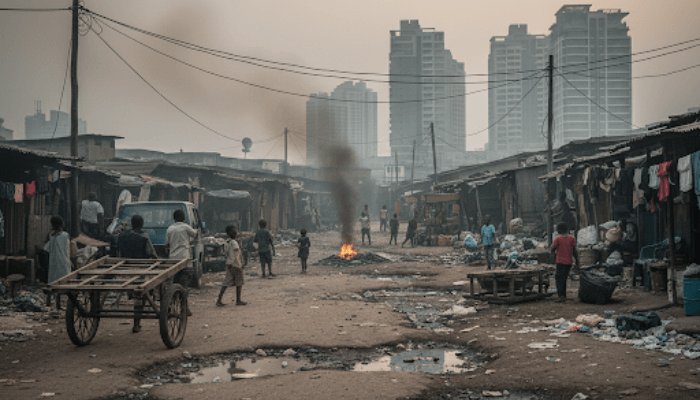
Recent figures from the National Bureau of Statistics (NBS) estimate that Nigeria’s GDP grew by 3.46 percent in Q2’2024, driven partly by services and agriculture. Inflation, however, remains the country’s problem. As of October 2024, headline inflation stood at 31.5 percent, while food inflation hovered above 40 percent, the highest in 20 years. These numbers do not simply reflect economic pressure; they reflect household hopelessness. They mirror the stories of families cutting meals, businesses shutting down, and young people leaving the country in tens of thousands.
Read also: Nigeria’s shrinking window for structural change
Insecurity remains Nigeria’s most destabilising threat. According to the Armed Conflict Location and Event Data Project (ACLED), more than 8,500 Nigerians were killed in violent attacks between January 2023 and October 2024, ranging from banditry and terrorism to communal clashes and kidnapping-for-ransom. The Kaduna-Abuja corridor, parts of Zamfara, Katsina, Niger State, and areas in the Middle Belt continue to bleed. The brutal abduction of students in Kuriga (Kaduna) and recurring mass kidnappings in Borno, Taraba, Niger and Plateau underscore a nation struggling to maintain territorial control.

This is not just instability; it is a slow erosion of national confidence.
While President Bola Tinubu’s administration insists that security operations have been intensified, the outcomes tell a different story. The persistence of attacks raises questions about strategy, political will and institutional coherence. Nigeria, like many African nations, is fighting non-state actors that are better armed, more mobile and increasingly networked. From al-Shabaab in Somalia to Islamist insurgencies in the Sahel, the continent is engulfed in a crisis requiring more than military force.
Nigeria’s reality is not an exception; it is part of a continental pattern. But its scale, population and geopolitical weight mean its failure would be catastrophic not only for itself but also for West Africa.
It is dangerous that Nigerian leaders continue to oscillate between denial and complacency. The government’s public messaging often paints a country on the path of reform and recovery. But reforms without protection, without investment, and without citizens’ confidence amount to little more than talks.
“Nigeria’s reality is not an exception; it is part of a continental pattern. But its scale, population and geopolitical weight mean its failure would be catastrophic not only for itself but also for West Africa.”

The Economist, in a widely discussed 2024 analysis, described Nigeria as ‘a vast crime scene’, arguing that insecurity thrives because government responses are slow, inconsistent, or overly forceful in the wrong places. The critique may be harsh, but it is not baseless.
The Tinubu administration, like the Buhari administration before it, came in promising economic revival, anti-corruption reform, and a secure nation. Yet citizens continue to endure relentless violence and economic decline. Absence of consistent accountability makes the situation even more precarious.
If Nigeria must secure its future, its leaders must first secure clarity. They must resist the temptation to embrace praise-singers and political loyalists who report fictional progress while the country sinks deeper into instability.
President Buhari once argued that the military alone cannot defeat terrorism. President Tinubu echoed similar sentiments in 2024, emphasising community-led security structures and multi-level economic interventions. But the big question remains: where are the alternative strategies?
Invest significantly in community policing and improved intelligence gathering. Strengthen the National Counter Terrorism Centre (NCTC) with technology and inter-agency cooperation. Address rural poverty, which fuels recruitment into terrorist and bandit networks. Collaborate deeply with regional blocs like ECOWAS and the Multinational Joint Task Force (MNJTF).
Security is not only about firepower; it is about hope, and many Nigerians have lost hope.
Ultimately, insecurity feeds on economic despair. Nigeria’s youth unemployment, estimated informally at over 50 percent when including underemployment, remains one of the highest in Africa. Every year, more than 1.5 million young Nigerians enter a job market that offers few opportunities.
Read also: Nigeria’s disinflation dividend comes with strings attached
To change this narrative, the nation must urgently invest in industrialisation and revive abandoned manufacturing corridors. Develop large-scale agro-processing hubs that create jobs and strengthen food security. Build modern infrastructure, roads, rail, and energy systems, which unlock productivity.
Prioritise education reform, especially technical and digital skills, and support MSMEs with credit, tax relief and stable policy environments. These are not luxury items; they are survival requirements.
Nigeria stands at a historic juncture. It can continue drifting, trapped in cycles of violence, inflation and youth disillusionment. Or it can confront its reality and choose bold, evidence-based reforms.
To secure this country’s future, the government must abandon denial and embrace transparency, and policy must be driven by data, not politics.
Also, investments must shift toward people (education, jobs, innovation, and welfare), and security must be intelligence-led and supported by economic opportunity.
Likewise, our leaders must demonstrate moral courage and national vision.
A nation of over 220 million people, with Africa’s largest youth population, cannot afford to gamble its destiny away.
Nigeria’s future is not lost, but securing it requires urgency, honesty, and leadership willing to rise above politics and confront the storm head-on.