2026 will be an unpredictably tough year for many and an unprecedentedly prosperous one for others.
The difference will not be luck. It will be posture.
Not how hard people work, but how deliberately they position themselves.
What they reinforce.

What they allow to compound.
And what they consciously refuse to chase.
For years, women have been encouraged to pursue prosperity the masculine way: harder, faster, louder. But prosperity is not the strategy. It is the outcome.
Prosperity happens when effort meets structure.
When systems replace strain.

When clarity removes friction.
In 2026, prosperity will not reward urgency.
It will reward design.
That shift reframes the real power question for women this year. Not “How much can I earn?” but something more consequential:
What are you designing for—and will it hold when life tests it?
This column is not a prediction.
It is not a resolution list.
And it is not motivational advice.
It is a redefinition of power.
“For years, women have been encouraged to expand networks, build circles, and stay visible. But proximity is not the same as leverage.”
Consolidation: Strength before scale
As the year began, I went through my usual new-year reset. Nothing dramatic — unsubscribing from emails, stepping away from platforms that no longer added value, and clearing out drawers and cabinets.
Then I opened my medicine cabinet.
It was full of expired medication. Once useful. Now ineffective. Some are even risky if used past their time.
That moment stayed with me.
Because many women do the same thing financially and structurally. We keep systems, relationships, and arrangements long after they stop serving us — not because they work, but because they’re familiar. Because “it’s easier to leave things as they are.”
That is not stability.
That is exposure.
A woman recently shared a story that captures this perfectly. After fifteen years with the same insurance company, she missed a payment while dealing with an emergency. She had cancelled her direct debit earlier for legitimate reasons. On the final day of coverage, the company threatened to cut her off.
She paid, but she also decided and informed them her company would leave once the policy expired.
Only then did the calls begin. Suddenly, they wanted to retain her. Fifteen years of loyalty had not translated into flexibility, care, or dignity when she needed it most.
It raises a quiet but important question: how many long-standing financial, professional, or institutional relationships continue to treat women poorly simply because we have “been there a long time”?
In 2026, consolidation is not about shrinking. It is about strengthening. Reviewing what still deserves a place in your life. Renewing what works. Exiting what no longer compounds trust, value, or peace.
Longevity is not the same as loyalty.
History is not the same as care.
Adult power requires governance.
Compounding: The discipline of staying long enough
Compounding is quiet. It doesn’t announce itself or reward impatience. It rarely looks impressive in the early stages, which is why most people abandon it too soon.
In the capital.
In leadership.
In life.
I have met many women, particularly in corporate roles and across the diaspora, who have worked for decades. Intelligent. Capable. Globally exposed. On paper, very successful.
Yet many are still operating in survival mode.
Always liquid.
Always busy.
Always alert.
They earn well, but they don’t invest.
They send money everywhere but build little insulation for themselves.
They keep moving, but nothing is positioned to work without them.
Survival mode is understandable. Many women were shaped by instability — economic, familial, and political. Staying flexible felt like safety.
But survival mode, prolonged, becomes expensive.
It prioritises income over insulation.
Effort over structure.
Motion over momentum.
Compounding requires something survival mode rarely allows: the confidence to stay long enough for systems to work. To let decisions mature. To trust that not everything must be immediately accessible to remain safe.
A recent conversation captured this shift for me. A friend, accomplished, grounded, and financially literate, told me she was starting the year not with a vision board but with estate planning.
Not because something was wrong.
But because she was positioning for continuity.
That is not pessimism.
That is power.
Compounding also changes how women make everyday decisions. In 2026, a useful lens is simple:
Compounding asks:
• Will this decision still benefit me five years from now?
• Does this grow quietly even when I am tired, unavailable, or distracted?
• Am I building something that reduces effort or something that demands constant attention?
These questions are less dramatic than ambition but far more powerful. They separate movement from momentum and activity from agency.
This lens applies far beyond money. To careers, where promotions should be evaluated not just for title, but for leverage and longevity. To family decisions, where generosity must be balanced with sustainability.
To opportunities, where not every “yes” compounds — and some “no’s” quietly protect the future. In 2026, power will belong to women who choose fewer things more deliberately and design their lives to work even when they are not constantly pushing.
Collaboration: Multiplication, not proximity
Not all collaboration creates value.
For years, women have been encouraged to expand networks, build circles, and stay visible. But proximity is not the same as leverage.
In 2026, collaboration must be intentional.
Fewer alliances.
Clearer terms.
Shared values and complementary strengths.
The most powerful collaborations do not drain energy — they focus it. They multiply outcomes instead of fragmenting attention. They protect the long game rather than chase short-term relevance.
This is where consolidation and compounding meet collaboration. When women are no longer overextended, no longer operating from fear, they choose partnerships from clarity, not necessity.
The new power question
Put simply, the new power question for women in 2026 is this:
What are you designing for: survival, success, or freedom?
Freedom to choose without fear.
Freedom to leave without collapse.
Freedom to stay because you want to, not because you must.
2026 will not reward noise.
It will reward posture.
Those who pause to review what stays and what goes.
Those who allow fewer decisions to compound over time.
Those who choose collaboration as multiplication, not access.
This is not a year for frantic pursuit.
It is a year for precision.
For strengthening foundations.
For building systems that hold.
For replacing strain with structure.
Power in 2026 will belong to women who design for what endures — not what merely looks impressive in the moment.
That is how I am moving this year.
With intention.
That is how ‘Power Women’ will move this year.
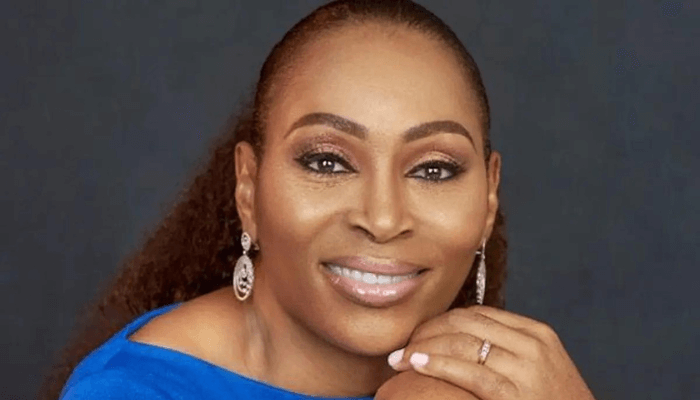
Udo Okonjo is a board director, investor, and founder of Radiant Collective Capital, a women-led investment platform focused on ownership and long-term wealth creation. She is also Executive Chair of Fine & Country West Africa, the luxury real estate advisory firm, and writes the Women, Wealth & Power column for BusinessDay.