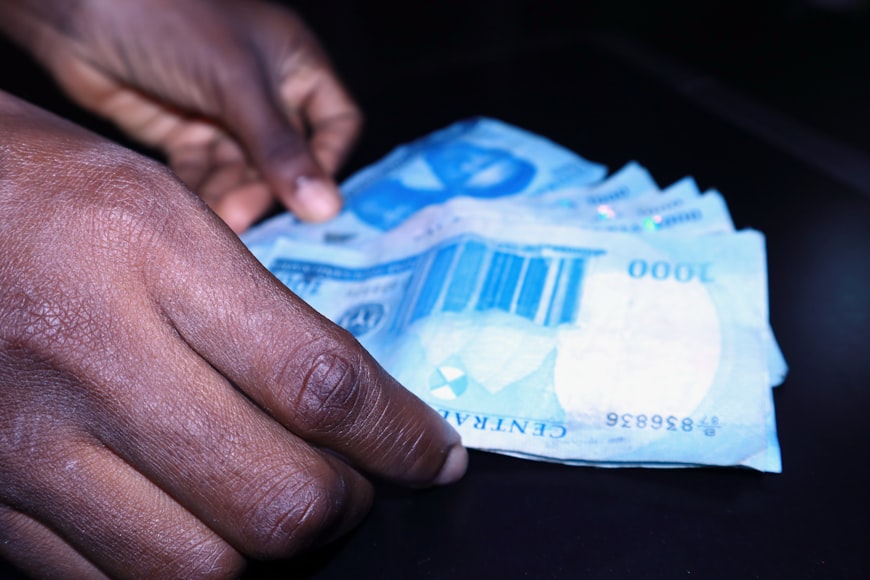
The naira on Wednesday climbed to a record high of N1,418.26 against the dollar in the official foreign exchange (FX) market, marking its strongest level since the introduction of the Electronic Foreign Exchange Matching System (EFEMS), as Nigeria’s external reserves continued their steady ascent.
Data from the Central Bank of Nigeria (CBN) showed that the local currency appreciated by 8.2 percent year on year, strengthening to N1,418.26 on Wednesday, January 7, 2026, compared with N1,534.16 recorded on January 7, 2025 at the Nigerian Foreign Exchange Market (NFEM). On a day-on-day basis, the naira gained marginally, appreciating by 80 kobo from the N1,419.06 at which it closed on Tuesday at the NFEM.
In the parallel market, also known as the black market, the naira traded flat at N1,490 per dollar, unchanged from the levels recorded on both Monday and Tuesday, the first two trading days of the week. The relatively stable pricing across both markets reflects a continued easing of pressure and improved liquidity conditions.
Nigeria’s external reserves, which provide the CBN with the firepower to intervene in the market and moderate exchange rate volatility, also showed a marked improvement. Data published on the CBN’s website indicated that reserves rose to $45.62 billion as of January 6. This represents an increase of 11.6 percent from $40.88 billion at the beginning of 2025, underscoring stronger inflows and reduced strain on the foreign exchange market.

The Proshare economic outlook projects that the official exchange rate could strengthen further to around N1,350 per dollar in the first quarter of 2026. According to the report, this outlook is supported by sustained foreign exchange inflows, higher oil production, portfolio investments attracted by elevated yields, and continued support from the CBN. While no specific forecast was provided for the parallel market, Proshare noted that a firmer official rate typically drives further convergence between both markets, assuming inflows remain stable.
The recent gains in the naira have been linked to structural reforms in the foreign exchange market. On November 26, 2024, the CBN directed all banks participating in the interbank foreign exchange market to adopt the Bloomberg BMatch system. The platform became operational on December 2, 2024, and was designed to enhance transparency and operational efficiency by ensuring that all FX orders are mandatorily submitted and matched electronically under real-time regulatory oversight. This reform laid the groundwork for the improvements recorded over the past year.
The apex bank has maintained that ongoing reforms will help sustain exchange-rate stability, while external reserves are expected to build further. According to the CBN, reserves are projected to rise to about $51.04 billion in 2026 from an estimated $45.01 billion in 2025, supported by easing FX pressures, higher oil earnings, sovereign bond issuance, and increased diaspora remittance inflows.
The CBN also pointed to developments in the domestic refining sector as an additional support factor. The Dangote Refinery’s expansion of its nameplate capacity to 700,000 barrels per day from 650,000 barrels per day in 2025, with a medium-term target of 1.4 million barrels per day, is expected to reduce Nigeria’s dependence on refined fuel imports. This, in turn, should support reserve accumulation and reinforce stability in the foreign exchange market.
Speaking on the reforms, Olayemi Cardoso, governor of the CBN, said the foreign exchange market was largely paralysed when the current leadership assumed office, with a backlog of over $7 billion in unmet FX obligations severely undermining confidence. He noted that the spread between the official and parallel market rates had widened to more than 60 percent at the time, creating distortions and encouraging rent-seeking behaviour.

“Perhaps the most visible sign of renewed confidence in our economy is the transformation of the foreign exchange market,” Cardoso said. He explained that over the past year, the CBN has sustained the unification of multiple exchange-rate windows and fully cleared the once-crippling FX backlog, restoring credibility and enabling businesses to plan with greater certainty.
According to him, the introduction of the Nigerian Foreign Exchange Code has established clear standards for transparency, ethics, governance and fair dealing among authorised dealers. He added that the deployment of EFEMS, powered by Bloomberg BMatch, has fundamentally changed FX trading through mandatory order submission, real-time regulatory visibility and improved price discovery. These reforms, Cardoso said, have reduced opacity and manipulation in the market, restored discipline, and narrowed the gap between the official and parallel exchange rates to under 2 percent from more than 60 percent previously.