The recent dramatic US intervention in Venezuela’s political and energy landscape has triggered seismic debates on global energy security, geopolitical power, and the role of sovereign resources in international relations. In early January 2026, the United States executed a high-profile operation that resulted in the capture of Venezuelan President Nicolás Maduro, asserting charges of drug trafficking and signalling a new chapter in long-strained bilateral ties. President Donald Trump immediately framed this as a legitimate law-enforcement action while also notifying markets and energy firms of plans to revitalise Venezuela’s vast oil infrastructure, a resource once central to global crude supplies.
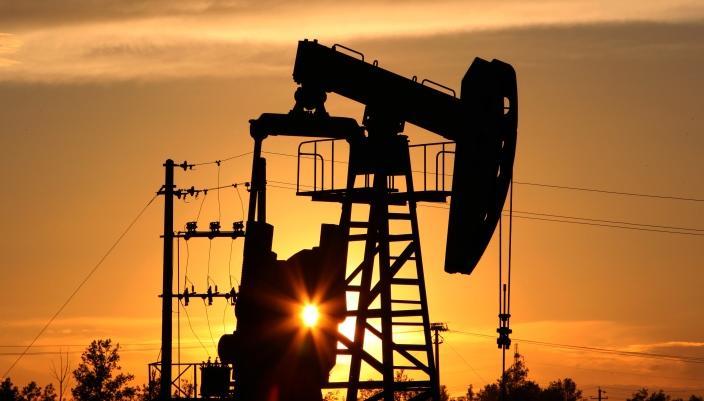
Venezuela sits atop the world’s proven crude reserves, with recent estimates exceeding 300 billion barrels, a potential game changer if production recovers meaningfully. Yet for decades, mismanagement, political instability, economic sanctions, and underinvestment drove production from a peak of more than 3 million barrels per day in the 1990s to under a million barrels daily today.
Proponents of the US action argue that reintegrating Venezuela into global energy markets could expand crude supply, dampen volatility, and enhance long-term energy security, especially for the United States. JP Morgan analysts have suggested that sustained US engagement and investment could one day bring Venezuelan output back toward past levels, which, combined with other holdings, might allow the US a unique influence over global oil pricing and market stability. Supporters also contend that ending the Maduro era might unlock private investment, rebuild dilapidated infrastructure, and open avenues for multinational firms to partner in production and refining efforts.
Yet critics warn of the limits and risks of such a strategy. From an international law perspective, the unilateral nature of the US operation has drawn condemnation at the United Nations, with several countries denouncing the move as a violation of Venezuelan sovereignty and a dangerous precedent for regional interventionism. Energy scholars have also argued that rapid control or extraction of oil resources answers short-term security rhetoric more than it stabilises markets in the long term. Venezuela currently contributes less than 1 percent to the daily global oil supply; even optimistic scenarios project years before output reaches levels material enough to shift global balances.

From a market perspective, news of US involvement lifted energy stocks and broader financial indices, pointing to investor confidence around future returns from an unlocked Venezuelan oil sector. Yet the immediate pricing effects on crude were muted due to existing oversupply conditions, and analysts caution that infrastructure decay, political uncertainty, and financing hurdles could temper any swift turnaround.
For Africa, the Venezuelan saga offers several lessons.
1. Sovereignty and resource nationalism vs investment climate
African energy states like Nigeria, Angola, and Algeria face a perennial tension between asserting sovereign control over hydrocarbons and creating inviting, stable conditions for investment. Venezuela’s past nationalisation and regulatory uncertainty contributed to capital flight and production decline. Africa must balance resource nationalism with clear legal frameworks that protect investor rights without compromising state interests.
2. The importance of market integration and infrastructure

Venezuela’s infrastructure decay underscores the need for African energy producers to invest in maintenance and modernisation. Well-functioning downstream capacity and efficient export systems are prerequisites for energy security and full participation in global markets.
3. Energy security beyond resources
While Africa’s hydrocarbon reserves are substantial, energy security also demands diversification. Reliance on a single commodity exposes economies to external shocks, just as Venezuela suffered. African governments should accelerate energy transition investments, renewable capacity, and regional market integration to broaden security beyond crude.
4. Geopolitics and strategic partnerships
Venezuela has been courted by Russia, China, and Iran, much as African energy exporters have attracted diverse geopolitical interests. Strategic partnerships should fortify, not compromise, national development goals. African states can learn from both the pitfalls and opportunities that arise when global powers vie for influence through energy.
Conclusion
Ultimately, the Venezuelan episode illustrates that energy security is not merely a function of resource endowments but of governance, investment, infrastructure, and geopolitical calculus. The US move, controversial as it is, amplifies a crucial global truth: energy markets are deeply political, and unilateral strategies carry both promise and peril.
Africa’s energy future will be defined not just by how much oil or gas it holds, but by how wisely it manages resources, engages partners, and safeguards sovereignty while promoting stable markets. Whether the developments in Venezuela prove a bold pivot toward enhanced energy security or a cautionary tale of overreach, African policymakers cannot afford to ignore the broader lessons in strategy and stewardship.
Olugbenga Olaoye is a seasoned professional with extensive experience in the oil and gas industry. He has a PhD in economics from Covenant University, specialising in energy economics, and holds a master’s degree in public service from the Clinton School of Public Service, USA, and an executive MBA from the Lagos Business School. He is also a member of the United States Association for Energy Economics (USAEE). He writes from Fort Worth, Texas, USA. Email: olugbenga.olaoye@outlook.com