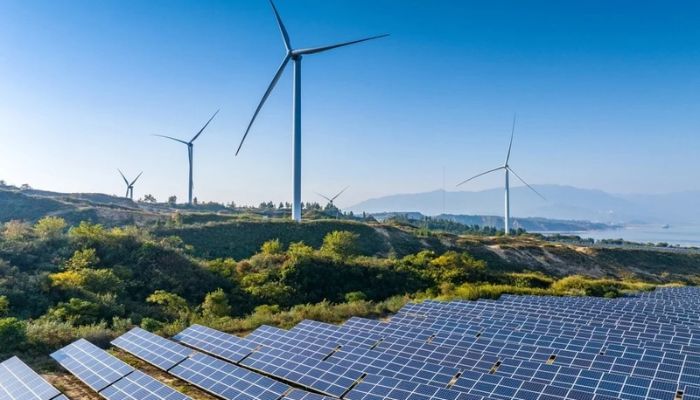
Global push to expand solar and renewable electricity is increasingly being shaped not just by rising energy demand, but by a deliberate effort to close a widening skills gap that experts say could determine the success or failure of the global energy transition.
According to the International Energy Agency’s (IEA) World Energy Employment 2025 report, electricity has overtaken fuel supply to become the world’s largest energy employer, driven largely by solar photovoltaic (PV) technologies.
Yet while jobs are growing at unprecedented speed, shortages of skilled workers, particularly in technical and vocational roles, are emerging as a critical bottleneck.
“The challenge of finding the right skills is no longer a peripheral issue,” said Faith Birol, executive director of the IEA. “It is at the core of global energy security, affordability, and the fight against climate change.”

Birol noted that the energy sector is now functioning as a “job-creating machine”, with employment growing by approximately 2.2 percent last year, twice the pace of overall global job growth.
She added that the shift towards electricity marks a historic turning point for the industry.
“The number of jobs in the electricity sector today is exceeding all other fuels put together. This is a new development,” Birol said. “The electricity sector is today the number one sector in terms of employment.”
Highlighting that energy is no longer just about fuel consumption, but about the livelihoods it sustains, she noted that the sector is behaving as a “job-creating machine,” with growth reaching about 2.2 percent last year.
“The good news is that job growth in the energy sector is very strong. About 2.2 per cent last year… it is two times faster than the global jobs growth.”

Read also: Solar dominates Africa&’s energy investments, but millions remain in dark
Solar surge exposes skills shortages
In a similar vein, Lara Cozzi, the IEA’s director of sustainability, technology and outlooks, said global energy employment has now reached 76 million people, following what she described as a “major shift” after 2020.
“Until 2020, energy was a mature industry trailing the global economy,” Cozzi said. “But since then, we have seen a major shift driven by electricity.”
She said solar had been the single biggest contributor to employment growth.
“Solar has been the largest contributor to the growth, with over two million jobs added, mostly for solar installers,” she said. “This led, in 2024, to the first year in which the power sector had more employees than the overall fuel supply.”
However, Cozzi warned that rapid expansion is colliding with limited training capacity. “Forty-five per cent of the companies we surveyed need to expand internal training programmes to make sure there are the right occupational skills,” she said. “Those shortages are having real impacts, project delays, higher costs and longer lead times.”
Sectoral shift, market pressures
Cozzi provided a granular look at where these jobs are being created, noting that the total workforce has grown to 76 million.
She observed that until 2020, energy was a mature industry trailing the global economy, but it has since seen a “major shift” driven by electricity.
“Solar has been the largest contributor to the growth, with over two million jobs added mostly for solar installers. This has led in 2024 for the first year, the power sector will have more employees than the overall fuel supply.”
“Forty-five per cent of the companies we surveyed need to expand internal training programs to make sure they have the right occupational skills… those shortages are having real impacts either on project delays, higher costs, and longer lead time.”
Brian Motherway, head of the office of energy efficiency and inclusive transitions, warned that the success of the energy transition depends less on hardware and more on the humans required to install it, citing a growing “demographic challenge.”
“The energy workforce is growing and aging faster than the wider economy, particularly in advanced economies. For every young entrant… There are about 2.4 workers nearing retirement on average. Women make up less than 20 percent of energy workers today and less than 5 percent of the technical and vocational categories we have been focused on.”