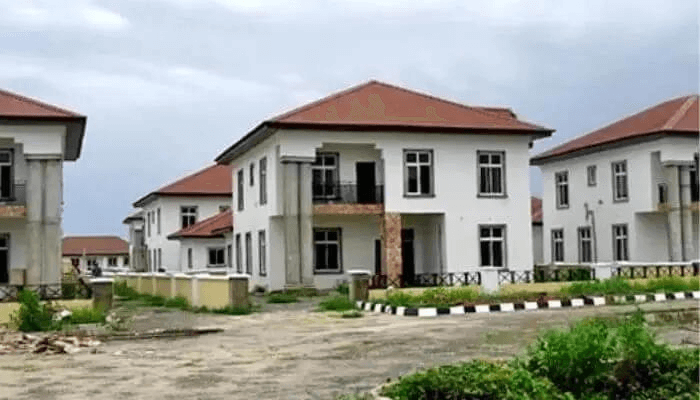
Lagos, Nigeria’s commercial nerve centre, is an investment destination due to the economic opportunities it offers. But as a coastal city, it is prone to a lot of risks associated with changing climatic conditions, otherwise known as climate change.
Climate change, if not checked or mitigated, can destroy the integrity of any viable market, particularly real estate, which is one of the pillars and drivers of Lagos economic growth.
Unarguably, Lagos is a pace-setter at sub-regional level in Nigeria. It has done so much to help its burgeoning economy, but there’s still more to be done differently in this new year, especially with the understanding that the most attractive cities of the future will not be those that deny climate risk, but those that price it honestly and manage it intelligently.
According to Oluwaseun Ajayi, a globally trained real estate economist and climate-risk scholar, to protect the integrity of its market, Lagos should formally embed climate-adjusted valuation into professional and regulatory practice.

Read also: MacMannie Group pledges assistance for businesses to scale sustainably in 2026
“Currently, property values remain stable despite increasing exposure. Flood risk, heat stress, drainage capacity, and infrastructure reliability should be treated as measurable financial inputs, rather than qualitative commentary,” Ajayi suggested, pointing out that this is not about discouraging investment, but about protecting the integrity of the market and the long-term tax base of the state.
He also suggested that adaptation infrastructure must be communicated and governed as a financial commitment, not only an engineering response. He argued that drainage projects, shoreline protection and regeneration schemes preserve value only when markets trust their durability.
“That trust is built through legal permanence, transparent delivery timelines and clear alignment with planning controls, insurance practice and development finance frameworks,” the real estate and sustainability expert said.
Ajayi also recommends the creation of a single, authoritative Lagos Climate Risk Map (LagCRiM) explicitly linked to property taxation, mortgage underwriting and insurance pricing.

He believes that when public authorities, banks, valuers and insurers work from the same risk architecture, capital reallocates efficiently without coercion, and resilience becomes a market outcome rather than a subsidy.
“These steps would not make Lagos less investable. They would make it more credible, more resilient and more competitive in a climate-constrained global economy,” he assured.