…where timely investments meet profits
Agriculture remains one of Nigeria’s most dependable sources of income, employing over 50 percent the country’s workforce.
Across farming, processing, storage, and exports, agriculture continues to provide steady opportunities for income generation.
Experts are projecting strong profit margins for select agro-commodities in 2026, driven by demand growth, supply constraints, and evolving market dynamics.

Read also: Agriculture in 2025: Trends that shaped Nigeria’s food production
Below are five agribusiness ideas experts believe hold strong profit potential for small and medium-scale investors in 2026.
Oil palm business
Oil palm cultivation, processing, and exports remain among Nigeria’s most profitable agribusiness ventures.
Major players such as Presco and Okomu Oil have consistently posted strong returns, underscoring the sector’s long-term viability.

The key drivers of profitability are rising consumption, global supply constraints, and easing regional trade tensions.
According to ReportLinker, “Nigeria’s palm oil consumption is expected to reach 1.44 million metric tons by 2026, up from 1.38 million metric tons in 2021. This represents an average yearly growth rate of 0.7 percent.”
A BusinessDay report further projects a significant price increase. “There are forecasts that palm oil prices will climb to $1,200 per metric tonne (MT) by the end of 2025, up from the current $1000.06/MT,” the report stated.
It attributed the rally to “supply disruptions, intensified biodiesel demand in Southeast Asia, and easing trade tensions between major economies like the U.S. and China.”
With tightening global supply, experts say investors who conduct proper due diligence in the palm oil value chain stand to reap substantial returns.
Sesame seeds storage
Sesame seed storage is emerging as a lucrative short-term investment, particularly for traders with access to capital.
As of December 13, 2025, an 80kg bag of sesame seeds sells for between N98,000 and N110,000, according to Jaytermax Integrated Enterprises. Market players say current prices are low due to seasonal sell-offs.
Read also: NIRSAL guarantees record ₦100bn in agriculture lending
“The current prices are low due to the festive season, so everyone is selling,” said Inelo Peter, a sesame seed aggregator in Benue State. “As soon as festivities are over, the prices are expected to nearly double between the first and second quarter in 2026,” he noted.
He explained that reduced harvests and strong export demand are key factors. In 2022, sesame seeds ranked as Nigeria’s third most traded agro-commodity, according to the Nigerian Export Promotion Council’s academy (NEXA), reflecting sustained international demand across food, oil extraction, and cosmetics industries.
Vegetable farming
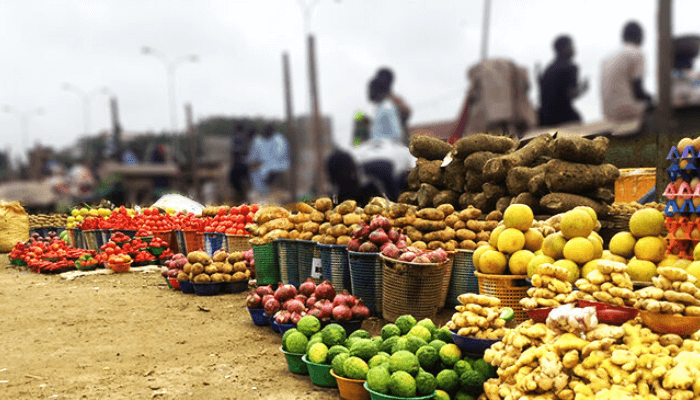
Vegetables such as tomatoes and habanero peppers remain major staples in Nigerian households, ensuring consistent demand. While inadequate storage remains a challenge, it also presents opportunities for investors in processing and value addition.
Vegetable farming is relatively capital-light with quick turnover, especially during the dry season. “Habanero pepper farming is a highly profitable agribusiness that requires less capital if you know your way around it,” said Prosper Nwanoroh, chief executive of Bavaria Farms. “With a small piece of land, the right seeds, and good agronomic practices, habanero peppers, particularly during the dry season, yield strong returns,” he added.
Split ginger exports
Nigeria’s ginger continues to command premium prices globally due to its pungency and high oleoresin content. As of September 2025, a ton of dry split ginger sold for between N14 million and N16 million, according to JetFarms.
Despite supply constraints caused by ginger blight, rising global demand has kept prices elevated. “The prices of dry split ginger will keep rising at least for the next five years, until ginger blight occurrence is curbed to the barest minimum,” said Paul Kato, a ginger farmer. This outlook positions ginger exports as a strong medium-term income earner.
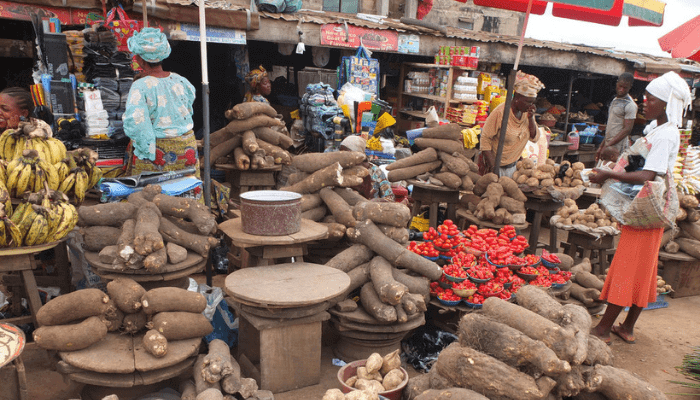
Cassava processing
Although the cassava value chain has experienced alternating cycles of glut and scarcity, experts remain optimistic about 2026, particularly for processors. Demand for cassava starch and high-quality cassava flour (HQCF) is expected to rebound.
“There is no doubt that the demand for cassava tubers will improve significantly in 2026, especially as local demand for cassava starch and HQCF is expected to be reactivated with the anticipated policy review in favour of the industry,” said agro-commodity expert Kazeem Lamidi.
Read also: Tinubu confirms Babangida as Chairman, Bank of Agriculture
He noted that while some farmers may reduce planting due to recent gluts, demand growth will primarily benefit processors. “Year 2026 is positioned to be a favourable year for the cassava value chain. Demand will be strong, supply will remain adequate, and prices are expected to stay balanced for both buyers and sellers,” Lamidi stated.
Echoing this view, John Jeremiah, the chief executive of Jeffy Farms added that “Cassava farmers will most likely smile in 2026, except if the texture company in China aborts their early plan of purchasing cassava from Nigeria next year.”