…says only gazetted tax laws have legal force
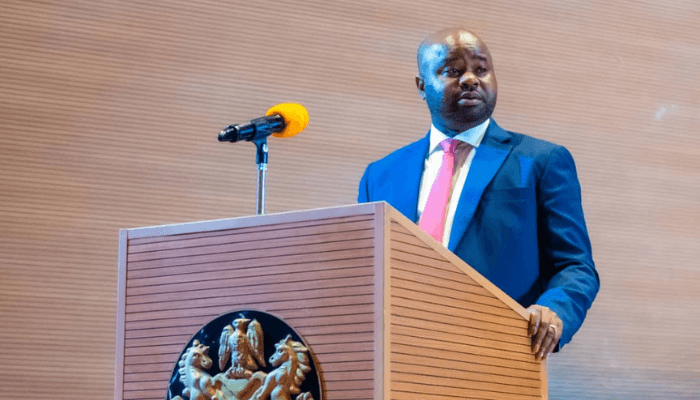
Zacch Adedeji, Chairman, Nigeria’s Revenue Service (NRS), has dismissed allegations that the country’s newly enacted tax reform laws were altered after passage by the National Assembly, insisting that only the officially gazetted Acts carry legal authority and are binding on taxpayers and administrators.
Speaking during an interview on Arise TV, Adedeji said debates comparing draft or Chamber versions of the bills to the final laws were misplaced, noting that revenue authorities are constitutionally bound to implement only what had been passed, assented to, and gazetted.
“The process of lawmaking is very clear,” Adedeji said. “When the President assents to a bill, it goes back to the National Assembly, gets gazetted, and that is what is given to us. Nobody, except the National Assembly, has the authority over the vote book. Our duty is only to implement the law as passed.”

Concerns had emerged from claims by some legislators and commentators that discrepancies existed between versions of the Nigeria Tax Reform Acts debated in the legislature and the copies eventually gazetted, raising questions about transparency and legality.
The NRS Chairman, however, said such allegations lack a verified factual basis and do not reflect the constitutional procedure for enacting laws.
According to the Nigerian Constitution and the Interpretation Act, an Act of the National Assembly takes effect only after a Presidential assent and official gazetting, with the gazetted version constituting the authoritative text in the event of disputes.
Revenue agencies, courts, and taxpayers are therefore guided solely by the gazetted law, not draft bills, committee reports or chamber debates.
Adedeji said that neither the executive nor the revenue authority has any incentive or legal capacity to alter the law after passage.

“On what basis will the executive go and alter a law?” he asked. “To do what? The relationship between the tax administrator and the taxpayer is symbiotic. The more prosperous the taxpayer, the better it is for revenue.”
He added that resistance to reform is not unusual, particularly where changes affect entrenched interests.
Read also: NRS and JRB replace FIRS and JTB in shift toward modern revenue management
“With every reform, you will have people who prefer the status quo and people who do not want change to succeed. That should not distract us from the focus of the reform,” he said.
Beyond addressing the controversy, the NRS Chairman used the opportunity to frame the tax reforms as part of a broader institutional shift rather than a narrow revenue-raising exercise.
The replacement of the Federal Inland Revenue Service (FIRS) with the Nigeria Revenue Service (NRS), he said, reflects a fundamental overhaul of Nigeria’s revenue administration architecture.
“Nigeria Revenue Service is not branding,” Adedeji said. “It is a total institutional upgrade moving from fragmented revenue administration to a modern, digitalised, centralised and intelligence-driven system.”
Under the new framework, multiple tax and revenue-related functions previously spread across agencies have been consolidated, with a stronger emphasis on data integration, automation, and reduced human discretion.
The reforms also collapse dozens of legacy tax laws into a unified system, a move the Government says will simplify compliance and improve efficiency.
Before the reforms, Nigeria operated with more than 60 separate tax statutes, some dating back several decades. For instance, the Stamp Duties Act in use before the overhaul was enacted in 1939, long before the emergence of digital commerce, electronic payments, and cross-border services.
The institutional overhaul is also designed to support the Government’s broader fiscal objectives. Nigeria’s tax-to-GDP ratio has improved in recent years, rising to about 13.5% as at October 2025, but it remains below the African average and well short of levels seen in peer emerging markets.
Authorities argue that further gains should come from improved administration, compliance and system efficiency rather than higher tax rates.
Adedeji reiterated that the reforms are aimed at “taxing rights, not taxing more,” stressing that the focus is on taxing profits and returns rather than capital or investment. “We are not going to tax poverty; we want to tax prosperity,” he said.
As implementation continues, the revenue chief said the real test of the reforms would be whether Nigerians begin to see a simpler, fairer, and more predictable tax system.
“The law is public. It is gazetted. And our responsibility is clear — to implement it as passed, transparently and professionally,” he said.