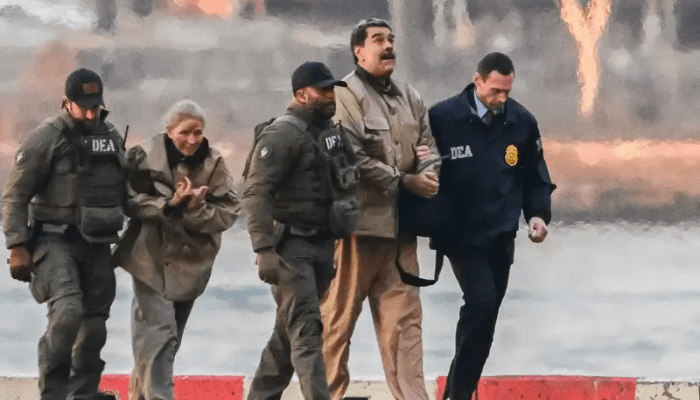
Nicolas Maduro and his wife, Cilia Flores, are due to appear before a United States federal judge in New York, two days after they were seized by US special forces in Caracas and flown to the United States. It will be their first public court appearance since the operation, which has triggered international shock and sharp diplomatic fallout.
The hearing is scheduled for 12:00 local time (17:00 GMT) at the Daniel Patrick Moynihan United States Courthouse in the Southern District of New York. The case will be overseen by Judge Alvin Hellerstein, 92, a veteran jurist appointed to the federal bench by former US President Bill Clinton.
Read also: Shares of US oil companies jump after Venezuela operation
According to court officials, Maduro and Flores are expected to be formally charged and asked to enter pleas. Arraignments are usually brief, procedural hearings, but the political weight of the moment is unusually heavy, according to multiple reports.

US authorities say Maduro faces several federal charges linked to drug and weapons offences. Prosecutors accuse him of leading a long-running conspiracy to traffic cocaine into the United States and of working with armed groups and criminal networks across Latin America.
The indictment includes four main counts, ranging from narcoterrorism conspiracy to the possession and use of machine guns and destructive devices. It also seeks the forfeiture of any assets or proceeds allegedly obtained through the crimes.
Read also: Venezuela’s interim president signals willingness to work with the US after Maduro’s arrest
Maduro has long denied the accusations, describing them as politically motivated and part of a broader campaign by Washington to remove him from power.
“From the north, the empire has gone mad and has renewed its threats to the peace and stability of Venezuela,” Maduro was quoted as saying by Venezuelan media before his capture.

There are also questions about the strength of the evidence. United Nations data shows that most global cocaine production and trafficking routes run through Colombia, Peru, and Bolivia, with Venezuela playing a smaller transit role. Prosecutors insist they have extensive witness testimony and intelligence.
Flores, a former head of Venezuela’s National Assembly and a powerful political figure in her own right, is also named as a defendant. Known within the ruling movement as the first combatant rather than first lady, she has been a central figure in Chavismo politics for decades.
Read also: Five things to know about oil in Venezuela
The legal drama is unfolding alongside mounting diplomatic pressure. Switzerland announced on Monday that it had frozen assets linked to Maduro and individuals associated with him, citing the risk that funds could be moved or concealed. Swiss authorities said the freeze would remain in place for up to four years, pending the outcome of legal proceedings, according to multiple reports.
At the United Nations, diplomats are expected to discuss the legality of the US operation later on Monday, with some countries questioning whether the seizure of a sitting head of state violates international law.
If convicted, Maduro could face decades in prison, potentially spending the rest of his life behind bars. For Venezuela, the case deepens an already severe political crisis.