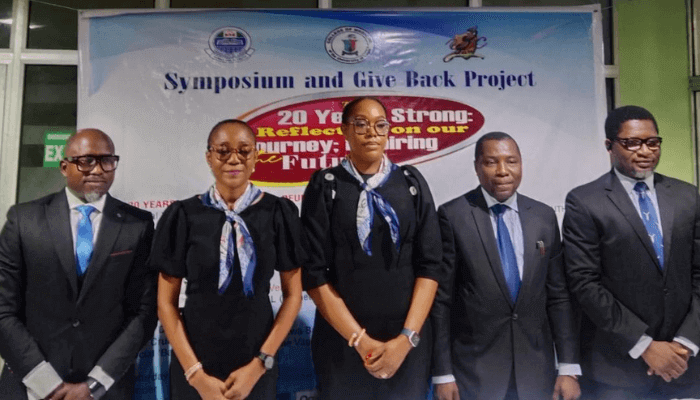
The 2004 set of the College of Medicine University, Lagos (CMUL) has launched a N10 million project in Lagos aimed at upgrading learning facilities, strengthening mentorship, and advancing medical education.
The set, which gathered under the theme, ’20 Years Strong: Our Journey So Far,’ celebrated the 20th anniversary of their graduation with a reunion that was both commemorative and determined.
For the CMUL 2004 set, the milestone was not only about reflecting on two decades of professional practice but also about recommitting to the values of service, resilience, and compassion instilled by their alma mater.
Addressing a press conference to announce the launch of the N10 million project and reunion symposium, Chairman of the Local Organising Committee (LOC), Olayemi Dawodu, affirmed that the project was designed to strengthen infrastructure, mentorship, and role modelling for the next generation of medical professionals.

Dawodu noted that the alumni had practised medicine through periods marked by limited resources, pandemics, systemic pressures, and rapid technological change. She said that the anniversary was an opportunity to look forward, build a legacy, and uplift others.
While describing mentorship as central to the alumni, she said: “Today’s medical students face a more complex healthcare environment than previous generations, requiring guidance and encouragement at local, national, and international levels.
“Mentorship would provide platforms for career building, clinical exposure, research support, wellness advocacy, and leadership development. The alumni are committed to sustaining this initiative by connecting students and young doctors with experienced professionals who can guide them through the challenges of modern medical practice.”
At the symposium, which featured many speakers, the Chairman of the Local Organising Committee (LOC) explained that it was designed to expose students to diverse career journeys both within Nigeria and abroad. It also served as a channel for identifying mentors who could provide long-term guidance.
Speaking at the symposium, the Provost of the College of Medicine, Ademola Ayodele Oremosu, lauded the alumni for their achievement in renovating the Medical School Auditorium.

Oremosu, who is a professor, noted that the project would contribute to a more technologically advanced teaching system and create a conducive environment for undergraduate learning.
He emphasised the importance of providing standard facilities such as laboratory equipment, training resources, and advanced clinical tools, adding that such investments would enable undergraduates to adapt and excel in their academic pursuits.
He also highlighted the broader achievements of the alumni association, including producing two graduates who currently serve as ministers in the administration of President Bola Ahmed Tinubu.
On her part, Vice Chancellor of the University of Lagos, Folasade Tolulope Ogunsola, used the occasion to highlight the challenges confronting the College of Medicine.
Ogunsola, who is a professor, cited limited resources, the impact of the pandemic, systemic crises, and rapid technological change as factors that have strained the institution and affected undergraduate training.
Other challenges, she said, include deficiencies in laboratories, clinical training centres, and teaching facilities, alongside inadequate technological infrastructure.
The Vice Chancellor of the University of Lagos noted that the absence of properly furnished lecture halls and the shortage of mentors had slowed academic progress and hindered effective guidance.
On the other hand, she appealed to the government, private individuals, and organisations to raise the college to the standards it should attain.
However, she urged the undergraduates to remain committed to their studies, emphasising that success requires discipline, sacrifice, compassion, and focus. She encouraged them to build a legacy of excellence that would inspire future generations and bring pride to both the college and the nation.
A member of the Local Organising Committee, Omolara Odunsi, who also spoke at the symposium, highlighted the growing role of artificial intelligence (AI) in medicine.
Odunsi explained that AI had become an inevitable tool and should be embraced responsibly.
Odunsi emphasised that medicine remains an ethical profession and noted that CMUL had already adopted measures to prevent unethical use of AI by students.
While regulations around AI are still evolving, she said the institution had adopted tools to protect academic integrity.
On his part, Adetunji Adenukan addressed the issue of youth migration in the health sector.
Adenukan observed that both push and pull factors, including inadequate investment in healthcare, were driving young professionals abroad.
He argued that improved funding and infrastructure could encourage them to remain in Nigeria and contribute to national development.