Bitter kola, scientifically called ‘Garcinia Kola’, is a species of flowering plant in the Clusiaceae family. It is widely known for its health benefits, as the seeds, nuts, and bark are used in treating various ailments.
In Nigeria, it is an important cultural symbol for many ethnic groups. Ceremonial breaking of the kola nut is relevant for making people feel welcome in gatherings and is usually given to guests at weddings, funerals and naming ceremonies, among others.
The low demand over the years has led to the near collapse of the cash crop. But the narrative is changing as farmers growing bitter kola are now reaping gains for their hard work, owing to the recent demand surge.
“Bitter kola trees were endangered before, as people were cutting them down for firewood, but the high demand is changing all that,” Ayopo Somefun, a bitter kola farmer in Ogun State.

He stated that the improved seedlings take six months at the nursery and four years to commence fruiting.
He explained that the country does not have the volume to meet the current demand but is bridging the supply gap with exports from neighbouring African countries.
Read also: Agriculture in 2025: Trends that shaped Nigeria’s food production
“It is hard to find a bitter kola tree in the country less than 30 years old,” he noted.
Currently, it is a highly sought-after product in countries like China, Indonesia, Thailand, Japan and several other Asian countries. It is exported in different forms – wet, dried or powdered – depending on the specification of the buyer.
Bitter kola’s remarkable level of resilience means that it can be grown in a wide variety of soils. The adaptability of bitter kola trees to harsh climatic conditions and poor soils helped abandoned old trees survive.

It is grown in the South-West, South-South and North Central regions, with Ondo, Niger, Enugu, Osun, Oyo, Imo and Ogun states having the largest production areas.
Nigeria’s bitter kola is usually harvested between April and October, though farmers stock the crop and sell it all year round. It can grow up to between 30 and 60 metres in height.
Currently, there is no production data on the cash crop, not even from the United Nations Food and Agriculture Organisation.
Health benefits
Bitter kola has become a top-notch cash crop in Nigeria, and it is eaten and serves as an industrial raw material in the pharmaceutical and brewery industries.
The nut is a wonderful agricultural product with a wide range of applications in natural and orthodox medicine. Bitter kola is also used for brewing purposes, and that has been the reason why bitter kola is demanded in small and large quantities by the international market.
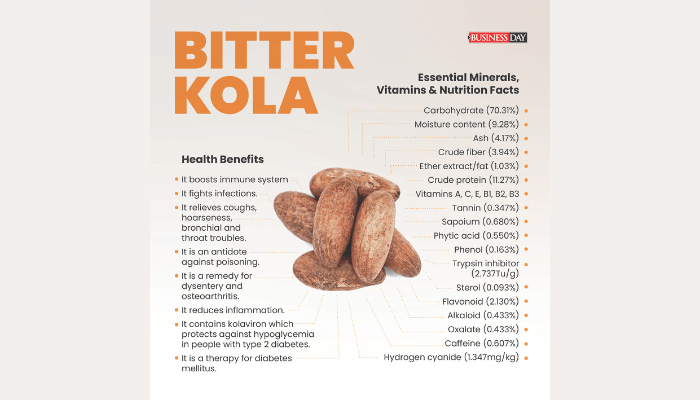
It offers benefits like boosting immunity, fighting infections, improving respiratory and digestive health, and providing antioxidants, thanks to compounds like flavonoids and caffeine, but it’s crucial to consume it in moderation due to potential side effects.
Considerable experimental evidence has been adduced to support its chemical constituents against several ailments in the community, including malaria.