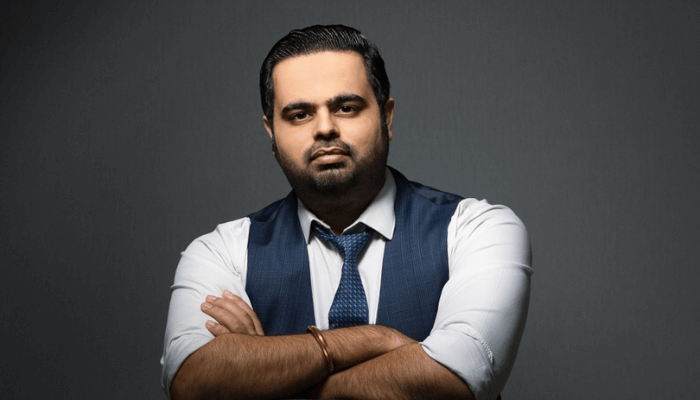
While Silicon Valley dominates the artificial intelligence conversation in 2026, Africa often gets relegated to a supporting role—a market expected to adopt technology built elsewhere. But Prateek Suri, CEO of Maser Group and Africa’s richest Indian, sees a different future unfolding.
Suri has spent decades building one of Africa’s most diversified business empires. From mining operations in Zambia to real estate developments across East Africa, Maser Group’s footprint spans the infrastructure sectors that have defined the continent’s growth story. Now, he’s betting that Africa’s next phase won’t just be about building more—it’ll be about building smarter.
His thesis is straightforward: Africa’s lack of legacy infrastructure isn’t a disadvantage. It’s a competitive edge that could unlock trillions in economic value. He’s not evangelising about AI as some magic wand. He sees it as a practical tool for solving execution problems, and Africa has plenty of those.
Why Prateek Suri thinks Africa’s AI opportunity is different
For decades, African economic growth has centred on physical infrastructure—roads, ports, power plants, mining operations, and logistics. That foundation isn’t going anywhere. But Suri believes the next phase depends on how effectively these assets get planned, monitored, and optimised.

“AI is not a future concept for Africa,” he told investors recently. “It’s a missing layer.”
In capital-intensive sectors across the continent—the same sectors where Maser Group operates—inefficiency carries a heavy price. Delays, weak data, poor coordination, and limited oversight have historically inflated project costs and reduced returns. AI offers tools for predictive planning, real-time monitoring, and better decision-making—capabilities that matter most where margins are tight and risks are high.
The legacy infrastructure problem—and why Africa doesn’t have it
What sets Africa apart from developed markets is timing. Unlike developed economies weighed down by decades-old systems, many African markets are still building at scale. That creates an opportunity to embed intelligence from day one instead of bolting it on later.
“We are not constrained by legacy infrastructure,” Suri explains. “That changes what is possible.”
This advantage extends beyond technology. Africa’s young population, increasing digital adoption, and rapid urbanisation create both demand and data—the two essential ingredients for effective AI deployment. The challenges are genuinely complex: cross-border supply chains, fragmented energy systems, informal economies, and fast-growing cities. Exactly the kind of messy, high-stakes environments where intelligent systems can add real value.

It’s terrain he knows well. His rise from the Indian diaspora business community to becoming Africa’s wealthiest Indian came from navigating exactly these complexities—building businesses in markets where infrastructure was scarce and execution was everything.
Read Also: Why AI and Stablecoins dominated fintech funding in Q3 2025 and what it means for Africa in 2026
Local data, local solutions: Why African AI must be different
But Suri isn’t naive about this. AI systems trained on non-African data, governed elsewhere, and deployed without local context will probably miss the mark. He believes relevance and trust depend on building systems shaped by local data and institutions.
“If the systems don’t reflect local realities, they won’t earn trust—and they won’t work,” he says.
That thinking has shaped how Maser Group invests. The group built its reputation in infrastructure and resource-linked assets, but has increasingly focused on projects that use technology to improve transparency, reduce overruns, and strengthen execution.
Why global investors are paying attention
The shift comes at a critical moment. With higher interest rates and tighter risk tolerance, investors are placing greater emphasis on execution certainty and long-term viability.
“In today’s climate, capital alone is not enough,” Suri says. “Investors want visibility. They want accountability. Technology helps provide that.”
As global capital becomes more selective, AI-enabled monitoring and planning are moving from optional add-ons to core requirements for bankable projects. For investors evaluating multi-year commitments in emerging markets, intelligent systems offer execution certainty that traditional approaches can’t match.
His track record lends weight to this argument. Maser Group’s portfolio has consistently delivered in environments where others struggled—a reputation built on disciplined execution and deep local knowledge.
Africa’s trillion-dollar question
Prateek Suri is clear about what AI should do: help people make better decisions. The goal isn’t automation for its own sake—it’s better decisions by governments, companies, and institutions managing the continent’s development.
As Africa enters another year of economic recalibration, the question isn’t whether AI will arrive. It’s how deliberately it gets applied. The continent’s next growth phase may hinge less on what it builds and more on how intelligently it builds it.
If that shift takes hold, AI won’t be the disruptive force everyone keeps talking about. It’ll be something more practical: a long-overdue upgrade to how Africa builds its future. For investors and operators willing to think beyond imported solutions, that represents a trillion-dollar opportunity hiding in plain sight.