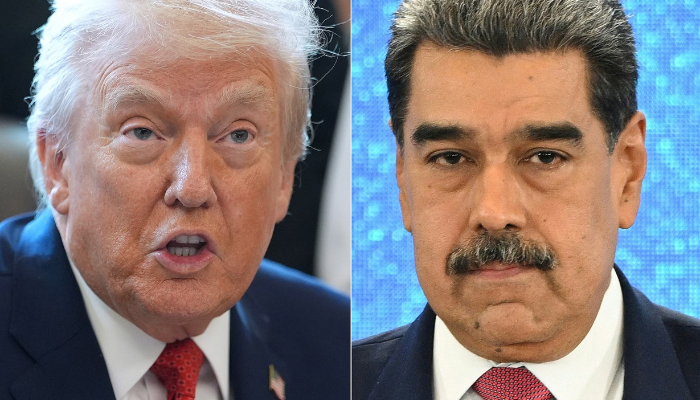
The United States has for years accused Venezuelan President Nicolas Maduro of leading a criminal network linked to drug trafficking, corruption, and violence, placing him among the most wanted foreign leaders in US history.
Maduro, 63, who has ruled Venezuela since 2013, is the subject of a sweeping criminal indictment filed in the Southern District of New York during President Donald Trump’s first term in 2020. US prosecutors charged him with narco-terrorism, conspiracy to import cocaine into the United States and weapons-related offences.
Read also:U.S. forces capture Venezuela’s Maduro, flies him and his wife out of the country
According to the indictment, Maduro allegedly worked with senior members of his government and Colombia’s left wing guerrilla group FARC to “flood the United States with cocaine” and undermine US security. The Venezuelan leader has repeatedly denied the allegations, describing them as politically motivated.

The Trump administration has argued that the case against Maduro is based on evidence, not ideology. Speaking last month, US Secretary of State Marco Rubio said the designation of Maduro’s circle as a criminal organisation was grounded in legal proceedings.
“This claim that the Maduro regime is a narcoterrorist organisation is not based on political talk or speculation,” Rubio said at a press conference, according to CNN. “It is based on evidence presented to a grand jury in the Southern District of New York that returned an indictment.”
Read also: Venezuelan president declares state of emergency after U.S. attack
In parallel with the criminal charges, Washington has steadily increased financial pressure on Maduro. In 2020, the US government announced a $15 million reward for information leading to his arrest. That figure rose to $25 million in January 2025 and was increased again to $50 million in August 2025 after Trump returned to office and designated Cartel de los Soles a foreign terrorist organisation.
US officials allege that Maduro leads Cartel de los Soles, which they describe as a powerful drug trafficking network embedded within Venezuela’s military and political elite. Maduro has rejected the claim and says the cartel does not exist.

Read also: Venezuelan president declares state of emergency after U.S. attack
Maduro’s rule has been marked by deep political division and economic collapse. A former bus driver and trade union leader, he succeeded Hugo Chávez after his death in 2013. Unlike Chávez, Maduro struggled to command popular support and his initial election victory was contested by the opposition.
Venezuela’s economy deteriorated sharply under his leadership, with hyperinflation, shortages of basic goods and the mass migration of millions of citizens. The United States and its allies imposed extensive sanctions, accusing Maduro of dismantling democratic institutions and clinging to power through flawed elections.
His 2018 re-election was widely dismissed by opposition leaders and much of the international community as illegitimate. Similar accusations followed the 2024 presidential contest, after which the United States said it no longer recognised Maduro as Venezuela’s lawful president.
William Barr, former US attorney general once described Maduro’s government as “plagued by criminality and corruption”, accusing him and senior allies of conspiring with armed groups to profit from the drug trade. Maduro responded by accusing Washington of imperialism and of attempting to seize Venezuela’s vast oil reserves, the largest in the world.
Recent developments have heightened international tensions. Venezuela has requested an urgent meeting of the United Nations Security Council following US military activity linked to its pressure campaign against Caracas. Foreign Minister Yván Gil Pinto said the move was necessary to defend Venezuelan sovereignty, according to CNN.
Russia has also voiced support for Venezuela. In a statement reported by CNN, the Russian foreign ministry condemned what it called US aggression and urged dialogue, saying Latin America must remain a zone of peace.
Despite years of sanctions, indictments and diplomatic isolation, Maduro remained in power, backed by the military and key allies including Russia, China and Iran.