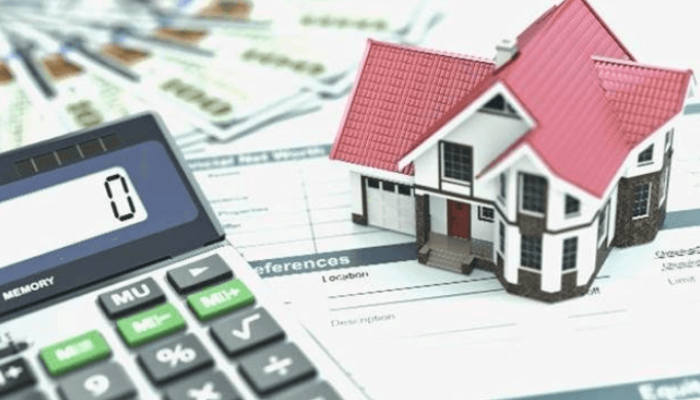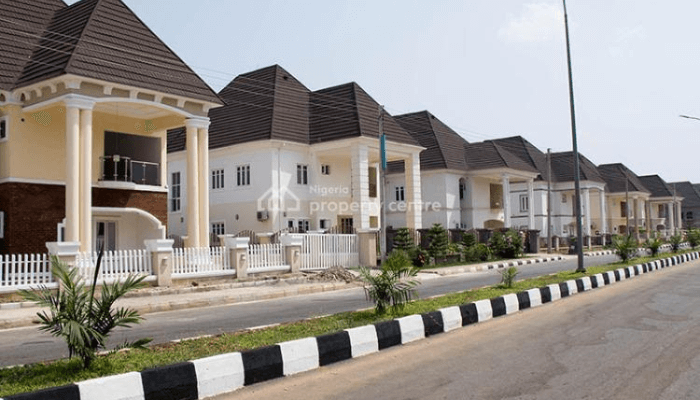
The federal government says it will be launching a national housing data centre that is expected to lay to rest speculations on figures relating to housing deficit, the volume and value of the deficit, and the size of the opportunity.
Since 2006, when the United Nations agency on human settlements (UN-HABITAT) estimated the country’s housing deficit, every other figure that has been put forward after that has been captured as guesswork or estimates.
For instance, at an international housing event in Abuja, Ahmed Dangiwa, Nigeria’s housing and urban development minister, said, “To stem the national housing deficit put at 22 million units, the country will need to produce an average of 550,000 housing units per annum for the next 10 years. The financial outlay for this annual housing target is over N5.5 trillion per annum.”
At the same event, Matthew Ashimolowo, a pastor and real estate investor, cited a World Bank report which says, “Nigeria will need to construct around 700,000 housing units annually for the next 20 years to meet the needs of its growing population,” adding that to produce these units, the country requires an investment of N59 trillion over that period.

Read also: FG raises hope for investors with housing data centre launch
All these were captured at the realm of speculation, which explains why the national housing data is a welcome development expected to harmonise these figures, giving investors and policymakers comfort to make informed decisions.
Investors and professionals in this sector have always expressed concerns on the lack of data that could guide decisions or provide clarity on the opportunities in the sector.
“Nigeria needs dependable data in its housing sector. One of the biggest problems we have is a lack of data. People keep quoting 17 million units because there is no other data to prove or disprove it. We talk of homes demolished, burnt or new ones built, but who is taking record of the houses that are being built and the ones we are losing?” Erejuwa Gbadebo, managing director, Eko Development Limited, queried.
One of the things the housing industry should do, according to her, is to start taking stock of what is available—what house types are there and what they exchange hands for. There must be a way of capturing this data so that we have accurate numbers and should not continue to fight a battle we may have won or lost,” she advised.

Federal Ministry of Housing and Urban Development (FMHUD), which is coordinating the Data Centre, says it will be fully operational by December, a move expected to transform Nigeria’s housing and real estate policy landscape through credible, evidence-based data.
The centre is expected to bring together key public and private stakeholders to harmonise housing statistics across the country, track progress in addressing the housing deficit, and provide accurate information, especially for investment decisions.
Taofeeq Olatinwo, chairman, Technical Committee, National Housing Data Programme (NHDP), was quoted as saying that the Date Centre will operate as a federated system, allowing states, Ministries, Departments, and Agencies (MDAs) to feed data at regular intervals into a unified national platform.
Olatinwo hopes that this approach will ensure both state-level disaggregation and national coordination, enabling the government to identify housing gaps, affordability trends, and emerging urban patterns.
“The target is for the Data Centre to go live in December 2025,” he said, assuring that “it will be a federated system with inputs from states, MDAs, and private developers at defined frequencies, in line with global standards.”
Read also: TAF Africa sees tax breaks, mortgages reducing cost of housing
Property valuation is for redefinition as the firm launches Estimator
In a step towards redefining property valuation in Nigeria, One SquareMetre, a real estate innovation firm, has launched Property Estimator, a web-based automated valuation model (AVM) designed to enhance transparency, accuracy, and professionalism in the country’s real estate sector.
The website, unveiled at a recent event in Lagos, promises to transform the way property assessments are conducted by providing a data-driven, globally accessible platform that bridges the gap between valuers and clients.
Speaking at the launch, Dotun Bamigbola, CEO of One SquareMetre and a past chairman of the Nigerian Institution of Estate Surveyors and Valuers (NIESV), Lagos Branch, described the platform as a “game changer” for property assessment and valuation practice in the country.
“PropertyEstimator.ng ensures accuracy, uniformity, and promotes transparency between clients and valuers. It’s not just a professional tool, it’s a public resource that helps clients understand the logic behind valuations and allows valuers to back up their work with a standardised methodology,” Bamigbola explained.
He added that the app tackles two critical challenges in valuation practice, methodology and data, by standardising processes and encouraging users to input reliable information, which would in turn strengthen the credibility of valuation reports.
“If we have solved the methodology issue here, then definitely the data problem is going to be solved. This tool brings both parties, valuers and clients, to a common ground using uniform valuation principles,” he said.
According to Bamigbola, the app has already attracted attention beyond Nigeria’s borders. “Practitioners from the UK and Australia have tested it, and we are in talks with other African countries. Our goal is to make this a gift from Nigeria to Africa and the world,” he added.
Speaking at the event, Edison Emoabino, managing director and CEO of IHMS HMO, emphasised that integrating technology into valuation practice was no longer optional but essential for maintaining global standards and professional relevance.
“The future of valuation is being written in data, algorithms, and insight, but guided by the wisdom of experienced professionals,” he said. “Technology should not replace the valuer; it should enhance their capacity to deliver faster, smarter, and evidence-based results.”
Read also: 15.2 million housing units in Nigeria structurally inadequate – Minister
Emoabino cited innovations such as Zillow’s Zestimate in the U.S., Kenya’s GIS-based Land Information System, and blockchain-backed land registries in Ghana and South Africa as examples of how digital tools are reshaping global valuation standards.
In his welcome address, veteran valuer L. L. Eso praised the innovation as a landmark achievement that honours the legacy of Nigeria’s estate surveying pioneers while positioning the profession for the future.
“This innovation will radically change the way we work as estate surveyors and valuers, and command more respect in the marketplace as a forward-thinking profession,” Eso stated, urging professionals to embrace digital transformation.
Representing the permanent secretary, Lagos State Lands Bureau, Yetunde Olusegun, director of land services, commended the initiative, describing it as a timely advancement that aligns with the state’s ongoing efforts to digitise land administration.
“This is a welcome development that will bring transparency and uniformity to valuation, acquisition, and compensation matters. By plugging into this innovation, both professionals and government agencies will benefit immensely,” she said.