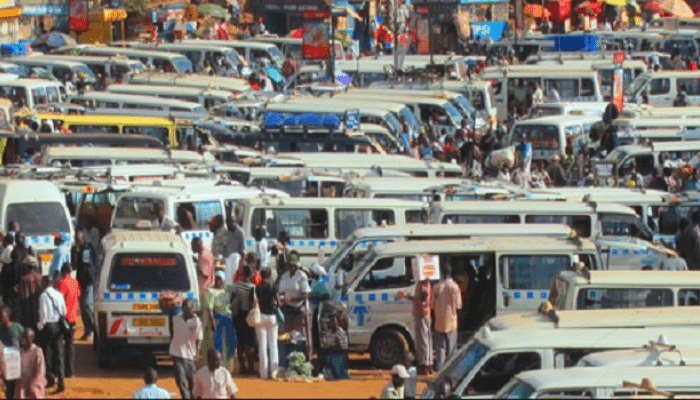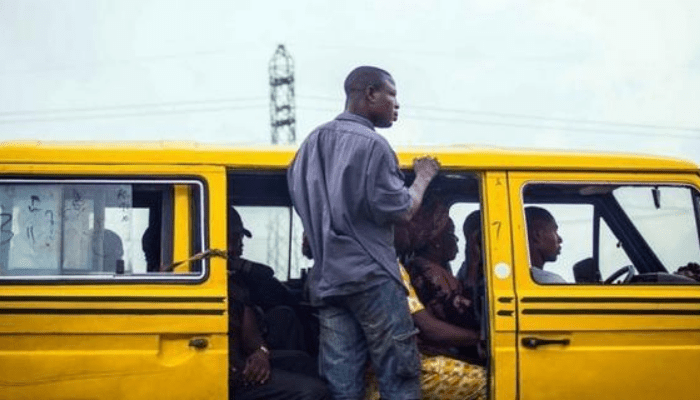
Transport fares have skyrocketed in Lagos, Nigeria’s commercial centre by 60 percent despite a drop in fuel prices, sparking outrage and frustration among commuters.
BusinessDay findings showed that commuters going to CMS from Mile 2 in Lagos state now pay between N800 and N1,000 owing to the festive season, a trip that usually costs between N500 and N600 depending on the time.
Also, the price of a big commercial bus from Toll Gate, along the Lagos-Sango-Ota expressway, to Onihale in Ogun state usually costs N300 to N500; transporters now costs N800, while Abulegba to Tollgate currently costs N1,000 from N400 commuters pay on the same route.
Read also: Key trends that shaped Nigeria’s transport sector in 2025

Passengers going to Iyana-Iba from Iyana-Ipaja now pay N1,200, from N700, indicating a 71.43 percent increase in the price of fares on that route.
Despite the current drop in the price of petrol in the country by Dangote Petroleum Refinery, these fares continue to rise, causing commuters to spend more on transportation.
Dangote Refinery recently cut its ex-depot petrol price to N699 per litre, which many thoughts would offer relief to motorists, however, the costs of commuting within the state of residence continued increasing.
The latest reduction in petrol prices represents a 15.58 percent drop from N828 per litre, and marks the refinery’s 20th price adjustment this year.
“The price reduction follows a recent meeting between refinery chairman Aliko Dangote and President Bola Tinubu on December 6, during which the billionaire industrialist reaffirmed his commitment to maintaining competitive domestic fuel prices despite global market volatility and persistent cross-border smuggling,” a BusinessDay report showed.

“The price is just too much, and it’s because of the festive season, but the people are not happy. Some are even carrying themselves in the bus so that they can split the money among themselves,” a passenger in a bus going to CMS said.
Chinonye Isidienu, a corper, told BusinessDay that the surge in transport fares in Lagos is affecting her financially, as she’s spending more than what she budgeted for transportation in one month.
“Tell me why I’m entering from Orile to IyanaIba for N800, is that not greed, when there’s no increase in fuel price? I don’t know why bus drivers are wicked.
“It’s affecting my transport budget for the month as a corper, these drivers are collecting N1,500 from Iyanaiba to CMS, and they are even threatening to call higher fares if people don’t enter,” Isidienu said.
Kenneth Athekame added that the roads are free, but drivers are collecting N1,500 instead of N1,000, which was the former price from Obalende to Lekki.
Commuters stated that transport operators were expected to reduce fares, especially during this festive season, as petrol retailers are already reducing pump prices at their fuelling stations, but a bus driver, identified as Ifeanyi, explained that the rising transport fares are driven not just by fuel costs but by the sharp increase in vehicle parts, maintenance, daily extortion payments, and union levies.
Ifeanyi, a shuttle (Korope) bus driver who frequents Iyana Era to Orile bustops, transporting passengers on that route, told BusinessDay that the heavy financial burden of daily payments to touts, unions, and multiple police checkpoints along the roadcontributes to the surge in fares.
The driver said that these compulsory payments, which can run into several thousands of naira daily, significantly reduce drivers’ earnings and contribute to higher fares.
Read also: Unexplained fare hikes unacceptable, FCCPC cautions road transport operators
“If you calculate agbero, police, and all the money we are paying on this road, it’s actually a lot. People don’t know.
“From junction to junction, you are paying the police, 200 here, 200 there, if you calculate all the money a day, you will be surprised,”
He said that tyres that once cost N4,000 to N5,000 now sell for about N18,000, while the price of buying a new bus has increased fivefold.
“The parts are very expensive. Imagine now, for example we were buying this tyre for N4,000 or N5,000. But now it’s N18,000.
“When I started this transport business, they were selling this bus for N1 million but now it’s N5 million,” the driver said.
He also stated that although fuel prices have dropped, the quality has worsened, requiring more fuel to cover the same distance, noting that fare increases are not due to greed but the cumulative cost of keeping buses on the road and supporting their families, urging commuters to understand the pressures drivers face.