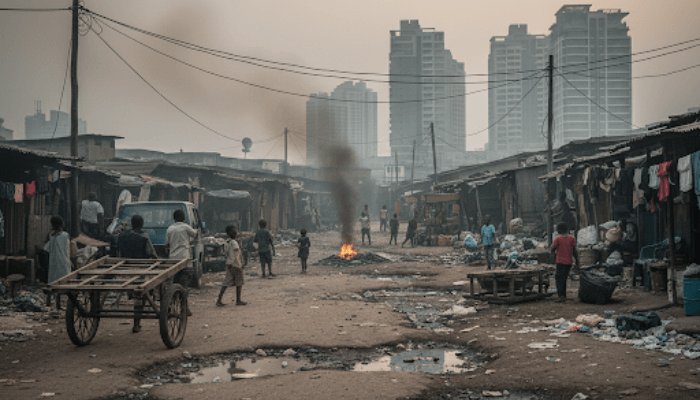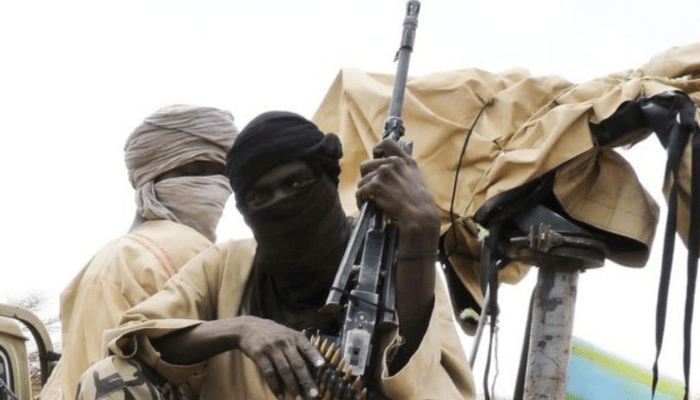
In Nigeria today, violence (abduction, bandit raids, mass kidnappings) is no longer exceptional. It has become disturbingly common. Once shocking headlines now read like everyday news. In recent weeks alone, dozens of civilians, including schoolchildren, have been abducted or killed, placing the country deeper into a state of insecurity and collective trauma.
On November 17, 2025, armed gunmen raided a girls’ boarding school in Maga, Kebbi State, before dawn and abducted 25 students, killing at least one staff member. In the same week, more than 300 pupils and teachers of St Mary Catholic School, Papiri, Niger State, were kidnapped, making it one of the worst mass abductions in recent times.
“When kidnapping becomes routine, families no longer feel safe, parents pull children from school, farmers abandon their land, and entire communities flee their ancestral homes. Economic and social life collapses.”
Meanwhile, in yet another remote community, 13 women and an infant were seized during a nighttime raid, as gunmen stalk villages with impunity.
These incidents are not isolated. In mid-2025, a report recorded 2,266 fatalities in the first half of the year alone, higher than all of 2024.

According to security monitors, between July 2024 and June 2025, no fewer than 4,722 people were kidnapped in 997 incidents, with at least 762 killed.
In some zones, the violence has taken on the character of war. On July 18, 2025, bandit raids on a community in Zamfara State reportedly killed six people and uprooted entire villages, abducting over 100 residents in a single attack.
In August, a dawn massacre at a mosque in the Malumfashi Local Government Area of Katsina State left dozens dead and many more displaced when gunmen invaded during prayers.
This scale of violence paints an ugly picture.
What was once considered unacceptable has become ordinary. For many Nigerians, the expectation that terror can strike anywhere, anytime, is now part of everyday life.

In the past, abduction and banditry were seen as problems confined to particular ‘hot zones’.
Today, insecurity has spread across multiple regions – the north, the middle belt, and even parts of the south – and targets have diversified.
It is no longer only travellers or herders who are vulnerable; students, women at home, entire communities, and even worshippers are at risk.
The attackers may come from different factions, opportunistic bandits, jihadist insurgents, or criminal syndicates. Yet the effect is the same; ordinary Nigerians live under siege.
This new normal is especially sad because it undermines foundational trust. When kidnapping becomes routine, families no longer feel safe, parents pull children from school, farmers abandon their land, and entire communities flee their ancestral homes.
Economic and social life collapses.
Moreover, the cycle of violence appears self-reinforcing. According to recent human rights data, for example, in April 2025 alone, there were 278 reported kidnappings and 570 killings.
The scale of such numbers suggests not occasional criminality but systemic collapse (of security, justice, and governance).
Perhaps more tragic than the killings themselves is the silence that often follows. The state’s response repeatedly amounts to condemnation and promises, public denunciations of these dastardly acts, followed by little real action.
Many Nigerians have come to view such statements as ritualistic. When the victims are poor, powerless or unknown, the response tends to weaken further. Too often, abduction, killing and displacement end with no arrests, no prosecutions and no closure.
That is why many view this as more than incompetence; it is abandonment. The implication of this chronic inaction is chilling: the more the state fails to deliver on its core duty of protecting life and property, the more emboldened the criminals become. And the more civilians internalise fear and despair as everyday conditions.
When mass abductions target schools, education is suspended. Parents lose confidence. Many schools in Niger State closed indefinitely after the Papiri abduction. Entire generations risk growing up deprived of formal education, training and opportunity.
Agriculture, once the mainstay of rural economies, is stalled. Farmers no longer dare to tend their farms. Markets shrink. Food production declines. Hundreds of thousands of internally displaced people strain fragile systems. According to humanitarian assessments, armed violence and banditry have displaced over 2.1 million people across Nigeria since 2019.
This insecurity ravages trust between citizens and the state, between neighbours, and between communities. Foreign investors, tourists, and development agencies all begin to view Nigeria as an unstable zone, too risky to engage with. Vital sectors (education, agriculture, health, and infrastructure) collapse under fear, loss and neglect.
Nigeria cannot afford to treat banditry, kidnapping, and killing as unfortunate but inevitable features of society. They are symptoms of a failed social contract. Addressing them must go beyond statements.
Accountability and justice must return. Arrests must be made. Prosecutions and convictions must follow. Impunity is the oxygen on which banditry thrives.
A comprehensive, decentralised security architecture is needed. The state must collaborate with communities, local vigilantes, forest guards and civil society to establish local intelligence networks, early-warning mechanisms and rapid response systems, particularly in vulnerable regions.
Protect education as a non-negotiable public good. Schools under threat should be prioritised for protection. Mobile schooling, secure transport for students, safe dormitories and community alert systems must become standard where risks exist.
Rescue, rehabilitation and support for victims. Those rescued or released must receive psychological care, education and reintegration support. The state must also track missing persons and provide transparent updates to families.
Address underlying drivers of violence: poverty, displacement, and hopelessness. Economic hardship, land conflicts, displacement and marginalisation fuel banditry recruitment. Unless these root causes are addressed, enforcement alone will fail.
When abduction, banditry, and mass killing become routine, not rare, we lose more than lives. We lose hope; we lose the sense of shared humanity and civil order; we lose confidence in the ability of the state to protect us.
The rising death toll, the expanding shadow of fear, and the daily intrusions of violence into public spaces are not accidents. They are the outcome of collective neglect, a failure to honour the social contract between government and citizens.
Let the recent spate of horrifying kidnappings and killings not go down as mere statistics. Let them be a wake-up call.
If the state cannot guarantee the safety of its people, if ordinary citizens live in constant fear, then governance has failed. If schools close their doors, farms lie fallow, markets empty out, and citizens flee their homes, then the country’s future lies in ruins, not because of external forces, but because of internal failure.
Nigeria must demand more than condolence statements. We must demand action, justice, protection, and restoration of dignity. This new normal must end; we must restore life, not accept fear.