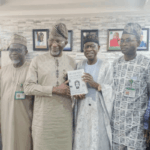
Gerald mamman, the Catholic Bishop of Katsina Diocese, has called on the Federal Government to urgently provide targeted support for farmers and rural workers and to strengthen micro, small and medium enterprises (MSMEs) through grants and soft loans, warning that taxation must not become “a punishment for being poor.”
The Bishop made the appeal in his Christmas message titled “Let Peace Be Born Again in Nigeria,” delivered on Wednesday at a press conference held at the Katsina Catholic Church. He urged government at all levels to align economic policies with compassion, justice and the welfare of the most vulnerable Nigerians, especially during the Christmas season.
According to the bishop, while Nigerians continue to struggle with insecurity, inflation and the lingering effects of fuel subsidy removal, public resources are increasingly diverted away from pressing social needs. He cautioned against fiscal measures that place additional burdens on ordinary citizens without addressing deeper structural leakages in governance and revenue management.
Read also: High taxation may worsen poverty, unemployment, economist advisies FG

“Taxation must not become a punishment for being poor,” Bishop Musa said. “Before tightening belts for the poor, government must first cut its own excesses and recover revenues lost to illegal mining, oil theft, reckless borrowing and waste.”
He argued that policies lacking a “human and compassionate face” undermine social cohesion and contradict the moral foundations of leadership. The bishop stressed that Christmas is a reminder of God’s solidarity with the poor and vulnerable, noting that leadership divorced from this spirit risks widening inequality and social unrest.
Musa lamented that communities across the country continue to cry out for basic needs such as food, security and jobs, even as public funds are “quietly redirected into political machinery.” He warned that neglecting the plight of ordinary Nigerians, particularly those at the grassroots, threatens peace and stability.
In his message, the bishop highlighted the central role played by farmers, market women, artisans, self-employed citizens and small business owners in sustaining the Nigerian economy. He noted that these groups have been hardest hit by rising costs of living, insecurity in farming communities and limited access to affordable credit.
“The backbone of the Nigerian economy is under severe strain,” he said, adding that without deliberate intervention, poverty and frustration could deepen across rural and urban communities alike.

Read also: FG not targeting bank deposits for taxation, NOA clarifies
To address these challenges, Bishop Musa called for targeted agricultural support, improved security for rural areas, and accessible financing for MSMEs through grants and soft loans. He said such measures would not only ease economic hardship but also stimulate productivity, employment and peace.
The bishop also emphasised the need for responsible governance, transparency and accountability, urging leaders to remember that authority is a trust meant to serve the common good. He appealed to policymakers to reflect on the true meaning of Christmas by placing the poor and marginalized at the center of national priorities.
Musa concluded by calling on Nigerians to embrace peace, solidarity and hope, praying that the Christmas season would inspire renewed commitment to justice, compassion and inclusive development across the country.