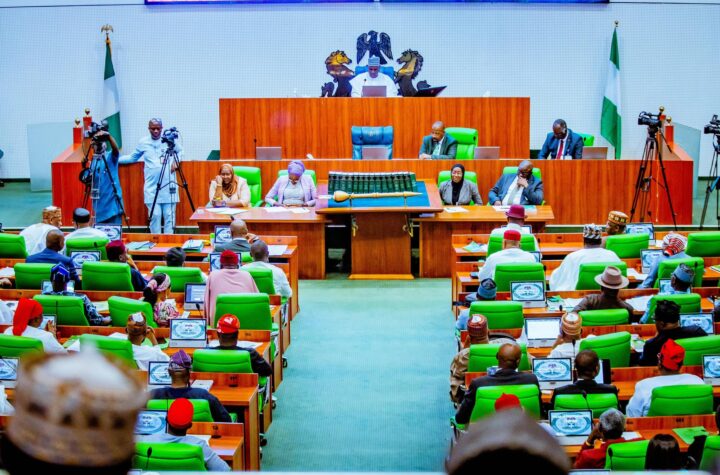
The House of Representatives has passed a bill to amend the Electoral Act, 2022, introducing further reforms to regulate the conduct of federal, state and area councils in the Federal Capital Territory.
The Bill, sponsored by Julius Ihonvebere passed Third Reading during plenary session on Tuesday following consideration of its provisions at the committee of the whole.
The Bill will now be transmitted to the Senate for concurrence before transmission to the president for assent.
A major provision of the amendment is to make the real-time electronic transmission of election results mandatory as well as the use of BVAS or any other technological device prescribed by the Independent National Electoral Commission (INEC).

Read also: Cost of Christmas menu drops 18% in rare boost to households
Under this provision, presiding officers would be required to electronically transmit results from each polling unit to the INEC Result Viewing Portal (IReV) immediately after results are recorded.
The proposed law also increased the campaign spending limits for candidates contesting elective offices across the country. For instance, the ceiling on campaign expenditure for presidential candidates was doubled to ₦10 billion, up from the ₦5 billion, while the limit for governorship candidate was increased to ₦3 billion from the current ₦1 billion.
The maximum amount senatorial candidates are permitted to spend on campaigns was increased fivefold to ₦500 million, compared with the ₦100 million allowed under the Electoral Act 2022, while andidates contesting seats in the House of Representatives can spend upbto ₦250 million, up from ₦70 million.
The Hosue, however, rejected a proposed clause seeking to criminalise vote-buying during party primaries.

The rejected provision had proposed that any person who financially induces a delegate to influence the outcome of party primaries be sentenced to two years’ imprisonment without an option of fine.