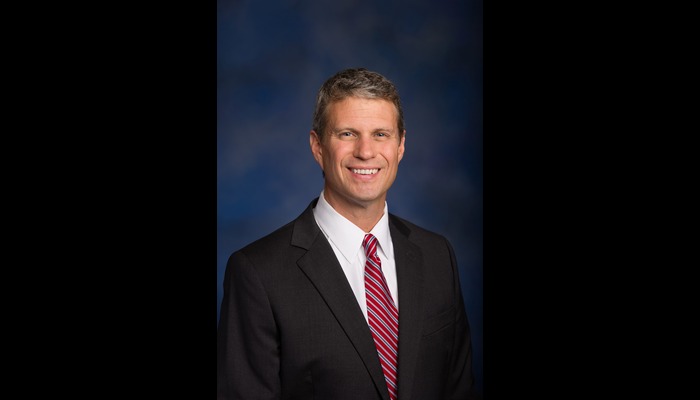
Bill Huizenga, US Congressman has emphasised in a TV interview, that “Nigeria has a friend in the United States (US)” , emphasising the value of frank dialogue between allies, concerning Nigeria’s mounting insucurity situation.
He spoke about the security situation in his recent visit to Nigeria, particularly ongoing violence across parts of the country, which remains at the centre of US concern.
Nigeria has a friend in the United States,” Huizenga said. “And true friends can have difficult conversations, in fact, they often must”, he said.
For weeks, senior Nigerian officials have been holding closed-door meetings with their US counterparts, both in Abuja and in Washington, as diplomatic engagement between the two countries intensifies. While the discussions have largely taken place away from public view, new details have emerged.

Read also: EFCC urges Nigerians to embrace accountability as key to tackling corruption, insecurity
Asked whether the Nigerian government was now doing enough to address US concerns, Huizenga said. “They seem to be coming into this with an attitude of wanting to work with and find common ground with the US government. That is a very good first step. The time we have spent with elected officials and other government representatives has been positive, but we still need to see how that manifests in action.”
Huizenga was asked to respond to comments by Reverend Ezekiel Dromo, who has repeatedly drawn attention to reports of mass graves and burials, most recently saying he had buried 12 people.
“I think the key issue is taking those reports seriously,” the congressman said. “Many of us feel that what has been undeniable has also been denied. Whether the victims are moderate Muslims or Christians, and whatever the motivation, religious or otherwise, it is tragic. That reality is a call for the Nigerian government to address the situation, because even if it is an indirect threat, it is still a threat that must be confronted.”
Huizenga’s visit marked the second time this month that senior US officials have travelled to Nigeria, underscoring Washington’s growing engagement. He pointed to recent measures such as Nigeria’s designation under the US Commission on International Religious Freedom (USCIRF) framework and visa-related restrictions as interim steps, while suggesting further actions remain possible.

“We may not have boots on the ground, but we have a lot of shoes on the ground,” he said, explaining that the US is prepared to support programmes that demonstrate clear impact. “If we see a willingness and a plan that has the potential for significant results, that could warrant serious investment of US taxpayer dollars.”
Read also: Trump recalls US envoy to Nigeria as part of “America First” diplomatic overhaul
Such support, he noted, may not come directly through US government channels. “It could be through the World Food Programme, UNHCR, non-profits or faith-based organisations,” Huizenga said. “But people like myself will be looking for clear mile markers, what is the Nigerian government doing to warrant that level of help?”
Despite speculation about possible military intervention, Huizenga stressed that such decisions rest with the US President. “I can’t speak for President Trump’s options,” he said. “He keeps all options open.”
He also addressed perceptions that US attention had shifted from focusing narrowly on violence against Christians to a broader concern about insecurity affecting all communities.
“There has always been an acknowledgement of the Boko Haram conflict in the north-east,” he said. “But there was a dramatic shift in attention towards violence specifically targeting Christians, particularly after the horrific church attack in Plateau two years ago. There is no denying a religious component to some of the violence, especially in the Middle Belt, even though violence elsewhere is driven by different factors.”
On Nigeria’s internal debate over negotiating with armed groups, Huizenga aligned himself with the country’s new, General Christopher Musa, Defence Minister who has ruled out talks with terrorists.
“As a general rule, you don’t negotiate with terrorists,” he said. “I can’t tell local officials what to do, but I can encourage the federal government to take a hard line. As a student of history and politics, I think General Musa is probably right.”
General Musa himself has called for unity in the face of insecurity, urging Nigerians to stand together. “The enemy is relentless,” he said at a recent church service. “But together as brothers and sisters serving one God, we shall overcome.”
Huizenga, who attended that service alongside the defence minister, described the moment as symbolically important.
“The fact that Minister Musa and his wife attended the Christian Reformed Church service just outside Abuja was significant,” he said. “It was received very positively by the Christian community and their leaders. It sends a message that the federal government is willing to engage and listen.”