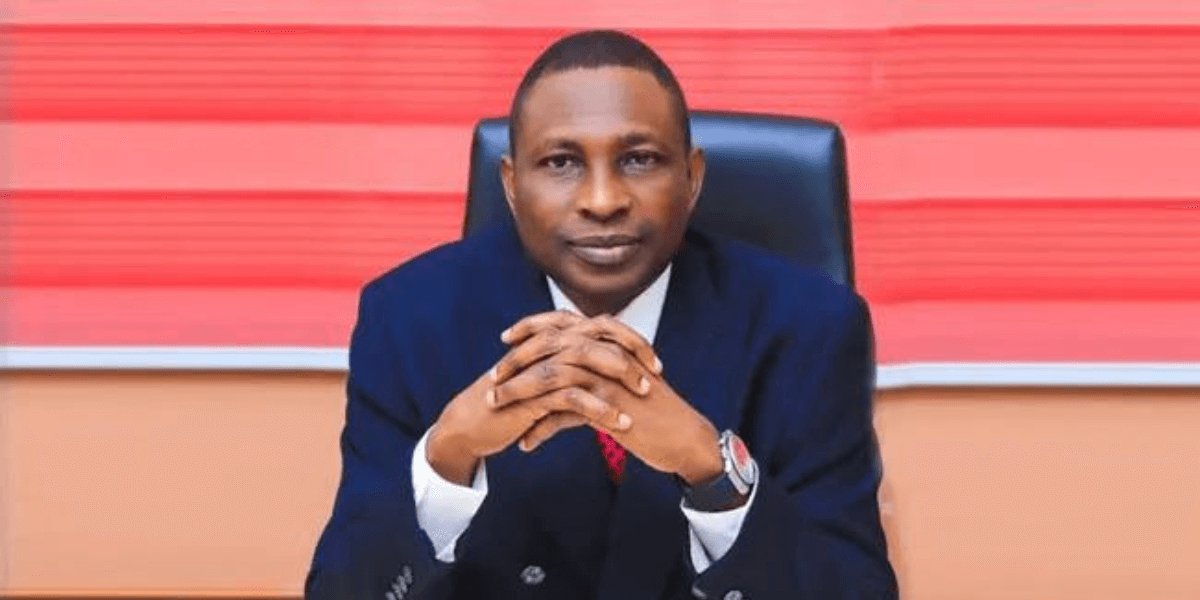
The Economic and Financial Crimes Commission (EFCC) has called on Nigerians to embrace greater accountability as a critical step toward curbing corruption and restoring order, stability and economic prosperity in the country.
The appeal was made on Friday, December 19, 2025, by Ola Olukoyede, Executive Chairman of the EFCC, during the Annual Lecture Series of the Nigeria Air Force Officers Mess Honorary Members’ Forum (NAFOM-HMF) held in Lagos, according to a statement by Dele Oyewale, Commission’s Spokesman on Monday.
Read also: EFCC arraigns three Indians, Nigerian over alleged N1bn steel diversion in Kwara
Olukoyede, who was represented by Wilson Uwujaren, EFCC’s Director of Public Affairs, Commander of the EFCC, CE , delivered a paper titled “Corruption, National Security and Economic Prosperity.”

He warned that poor accountability in the management of resources in both the public and private sectors continues to deepen the country’s corruption challenges.
While acknowledging that factors such as religious extremism, ethnic rivalries and agitations for self-determination, often linked to real or perceived marginalisation are commonly cited as drivers of insecurity, the EFCC chairman stressed that corruption remains the underlying issue.
“The real elephant in the room is corruption,” he said, noting that insecurity thrives when funds meant for national security are stolen or when resources that should be invested in lifting citizens out of poverty are diverted into private pockets.
Olukoyede also criticised the abuse of security votes, describing them as largely unaccountable channels used to siphon public funds.
He cited the case of a former governor currently facing prosecution over the alleged theft of more than N4 billion from security votes.

According to him, the EFCC supports the fight against terrorism and violent extremism through non-kinetic measures aimed at cutting off illicit financial flows to criminal and insurgent groups.
“These efforts include monitoring designated non-financial institutions and Bureau De Change operators to prevent money laundering and other illicit financial activities”, he stated.
He added that the Commission also monitors the operations of international and local non-governmental organisations, particularly in the North-East, to ensure they are not used as covers for subversive activities.
At the regional level, the EFCC collaborates with sister anti-corruption agencies across West Africa under the Network of Anti-Corruption Institutions in West Africa (NACIWA) to strengthen anti-money laundering frameworks and enforcement.
The EFCC chairman further highlighted the Commission’s asset recovery efforts, noting that the recovery of large sums of money and valuable properties has contributed to Nigeria’s economic recovery.
He said that investing part of the recovered assets in social intervention programmes, such as the students’ loan scheme and the consumer credit scheme, has the potential to lift many Nigerians out of poverty.
Other interventions by the Commission, he explained, include efforts to support the Central Bank of Nigeria’s monetary policies by combating currency racketeering, mutilation of the naira and the dollarisation of the economy.
According to him, enforcement actions against illegal foreign exchange dealers in major cities helped ease pressure on the naira and contributed to exchange rate stability.
Olukoyede also revealed that upon assuming office, the Commission deliberately decided not to shut down businesses under investigation in order to preserve jobs and livelihoods.
Although the impact of the policy may be difficult to quantify, he said it has positively affected hundreds of households during a period of severe economic turbulence.
In addition, he noted that the EFCC promotes efficiency in public spending by tracking budget releases and utilisation in key ministries, departments and agencies through its Department of Fraud Risk Assessment and Control.
Blocking avenues for fund diversion, he said, ensures that more resources are available for infrastructure development and broader economic growth.
In his remarks, Goke Akinrogun, Chairman of NAFOM-HMF, Ikeja, commended the EFCC chairman for an insightful and thought-provoking lecture.
Ewejide Akintunde, Chief Host of the event also praised the organisers for sustaining meaningful discussions over the past six years.