From my secondary school days, I became aware of plantain that is fried as unripe and dry and packaged in a way that is quite affordable for all and sundry.
Well, I knew this fried unripe plantain as Ikpekere, but two senior colleagues, Lekan Sote and Kunle Gbenro drew my attention to a name I was not so familiar with, even after eating this plantain snacks for over two decades.
They clearly told me a couple of days ago that “It is not Ikpekere but Igbekere”. Well, this has prompted me to run a content on this lovely healthy snack, rather than argue over the name.
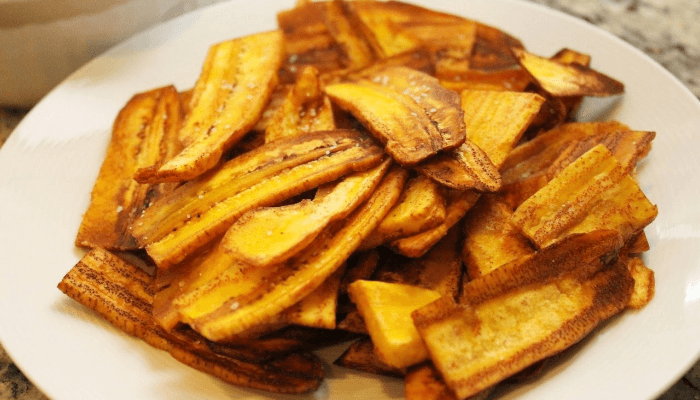
Igbekere, also commonly referred to as plantain chips, is a popular, crunchy snack from Nigeria made from deep-fried unripe plantains. The name “igbekere” is specific to the Yoruba tribe of Western Nigeria, while it is known as “kpekere” by the Igbo tribe in the Eastern part of the country.

It is a widely beloved snack often sold by many street vendors who are trying to eke out a livelihood. It can be found in various forms and packaging, ranging from simple plastic wraps to more commercially sealed and labeled bags.
In terms of its cultural significance, beyond being a popular snack, Igbekere is a significant agricultural product in many plantain producing Nigerian towns and communities. For example, in Odogbolu, Ogun State, plantain is a major source of income, and the town even celebrates an annual “Igbekere Night” festival. Away from Odogbolu, in many bustling markets, busy traffic junctions and roadside stalls of different South West Nigeria, Igbekere shines as a familiar golden snack, crackled in hot oil.
This traditional plantain chip has become much more than a casual bite, it is now known widely across the country as plantain chips. Suffice it to say that this humble snack as a staple of Nigerian food culture, cherished for its crunchy texture, rich flavour and deep roots in local culinary heritage has moved from the south to the east and the north.
Igbekere , also called ikpekere or kpekere in local parlance is made by slicing plantains into thin rounds or strips and deep frying them until crispy. The snack can be seasoned simply with salt or enhanced with spices for added flavor. It is enjoyed by children and adults alike and is sold by street hawkers and in markets nationwide.
From Lagos to Ibadan, Abeokuta to Ilorin, Ijebu Ode to Ore, especially when travelling by road, the snack is as familiar as the morning sun, a companion for commuters, market traders, a – take – home – snack for school children and families as well as a simple snack for festivals and everyday meals.

Plantains are nutrient rich staple, often mistaken for bananas. Plantains are a source of complex carbohydrates that deliver sustained energy, and they contain important nutrients like dietary fiber, potassium and vitamins A, B6 and C naturally. These components support digestion, nervous system function, immunity and skin health.
In looking at the nutrition behind the crunch, it is pertinent to note that the way plantains are prepared matters. Deep frying increases calorie and fat content, and while Igbekere delivers a satisfying crunch, moderation is key, especially for those watching calorie intake. Healthier preparation methods like baking or air frying can reduce oil absorption while preserving much of the plantain’s nutritional benefits..
Beyond the plate, Igbekere’s cultural significance goes beyond its simple ingredients. It represents a living culinary tradition that ties generations together, from grandmothers teaching children how to slice plantains to street vendors perfecting their frying technique. Its preparation and sale support micro entrepreneurs and small scale food producers, contributing to local economies and livelihoods.
This cultural footprint aligns with the purposes of the UNESCO Convention for the Safeguarding of Intangible Cultural Heritage, which calls for recognition of practices that embody traditional knowledge, community identity and social continuity. Nigeria has already engaged with this framework and encouraged the listing of its traditional cuisines as part of world heritage dialogue.
There is growing cultural momentum for Nigeria to nominate its rich culinary traditions, including these crunchy plantain snacks, for inclusion on the UNESCO Intangible Cultural Heritage (ICH) list. UNESCO has encouraged member states to present traditional cuisines that reflect cultural diversity and heritage. In my opinion, I make it bold to say that Igbekere qualifies on several count because it reflects traditional food processing knowledge passed down through generations., it plays a role in social life and identity, enjoyed at markets, celebrations and everyday meals. The preparation methods and local variations also represent community creativity and culinary wisdom.
Recognition by UNESCO would help preserve this everyday cultural practice, boost tourism, and provide opportunities for documentation and heritage education.
The preparation of this snack is simple…
Recipe for 4 servings, use 8 plantains, unripe or slightly ripened…
• Get some unripe or slightly ripened plantains
• Wash and dry with a clean napkin
• Peel the plantains and slice thinly
• There is no need to add salt
• Some dry ground pepper or ground ginger can be sprinkled on them
• You can use your electric or manual airfryer to air fry the snacks
• If you have to deep fry, after slicing, hit up the oil and fry both sides until golden or slightly brown
• Remove from heat dab with kitchen tissue to remove the excess oil from the snacks
• Serve alongside some fresh juice
• The best healthy method is the use of airfryer