…Nigerians relive experiences of a difficult year
By the second quarter of 2025, the numbers began to tell a calmer story about Nigeria’s economy. Inflation slowed, the naira steadied, and investors tiptoed back into a market they once fled. But beyond the charts and press briefings, everyday Nigerians were still counting losses, adjusting habits, and learning, often the hard way, how to survive an economy that improved on paper but remained punishing in practice.
For many households, 2025 was not the year of relief; it was the year of endurance.
Read also: Eight events that shaped Nigeria’s economy in 2025

A calmer storm, but a storm nonetheless
After the economic freefall of 2024, triggered largely by fuel subsidy removal and foreign exchange unification, the shockwaves lingered well into 2025. The difference, many Nigerians say, was not that life suddenly became affordable, but that they had grown used to hardship.
“Last year nearly broke us,” said Aishat Olawale, a Lagos-based trader. “In 2024, prices were changing every week. You wake up and garri has jumped again. In 2025, things were still expensive, but at least they stopped jumping overnight.”
Official data supports that sentiment. Headline inflation, which peaked at 34.8 percent in 2024, slowed sharply following the rebasing of the inflation basket, settling at 14.45 percent by the end of November. Food inflation also eased significantly, dropping from 26.08 percent in January to 11.08 percent in November.
Yet for families whose incomes remained frozen, the relief felt limited.
Food prices eased, hunger did not
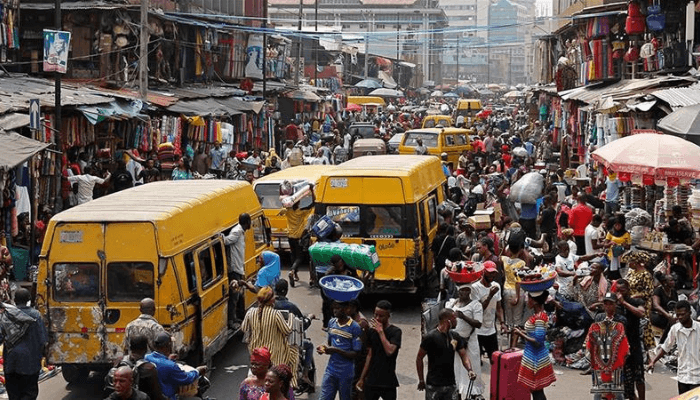
Across markets in Lagos, Ibadan and Onitsha, traders confirm that prices of local staples eased compared to last year. A 50kg bag of rice that sold for N100,000 in late 2024 now goes for under N70,000. Yam prices fell, bread prices softened, and some bakers even dared to reduce costs, slightly.

“It’s better than last year, no doubt,” said Samuel, a worker said. “But my income didn’t increase. So what has really changed?”
For many Nigerians, stagnant wages erased the gains from falling prices. Food still consumed a larger share of monthly income than ever before, forcing painful trade-offs.
“I stopped buying meat regularly,” said Sunday Ojo, a civil servant. “We eat it on Sundays now. You adjust quietly, so your children don’t notice.”
Read also: A 2025 review of AI key moments in Nigeria
Survival became a skill
By mid-2025, survival strategies had become almost universal. Informal savings groups, ajo or esusu, were no longer just financial tools; they became lifelines.
“I used ajo to pay my rent,” said Ojo, earlier quoted. “My salary cannot handle food, school fees and rent again. Without ajo, I would have been on the street.”
Loans from cooperatives and digital lenders, support from extended family, and assistance from religious groups filled the gaps where government safety nets were thin or absent. Many workers took on side hustles, selling clothes online or driving ride-hailing cars on weekends.
Hustling went digital
For younger Nigerians, the internet became both refuge and opportunity. Social media platforms, Facebook, TikTok, X, YouTube, TikTok, turned into economic lifelines as monetisation schemes expanded.
“I never planned to be a content creator,” said Ridwan, a 26-year-old graduate. “But after two years without a job, TikTok started paying me small money. It’s not stable, but it’s something.”
Students, too, joined the hustle, combining lectures with small businesses, freelancing, and online sales to supplement shrinking allowances from home.
“My parents are struggling, so I can’t ask for more,” said Mustafa Akano, a university student. “I sell clothes in school. That’s how I survive.”
Millions of unemployed youths found ways, legal or informal, to stay afloat, even if those efforts barely scratched the surface of their needs.
A tale of two economies
While households tightened belts, the macroeconomic picture brightened. The naira, once in free fall, stabilised around N1,458 to the dollar at the official market, supported by improved foreign reserves and tighter Central Bank policies. Manufacturers began planning again. Investors returned cautiously.
But for many Nigerians, the recovery felt distant.
As 2025 draws to a close, expectations for 2026 are mixed with anxiety. Nigerians want the gains to translate into real relief, lower prices, better wages, and policies that protect the vulnerable.
“Disinflation should continue,” said Michael, a small business owner. “Not just small drops. We want real relief.”
Read also; Nigeria leads Africa’s 2025 influential business leaders list
There are also fears that the new tax regime scheduled to take effect in January could deepen hardship.
“We also hope that the new tax law won’t add another burden,” Michael added. “People are already stretched.”
For most Nigerians, 2025 was not about prosperity; it was about adaptation. They endured by sharing burdens, hustling harder, leaning on community, and redefining what survival looks like.
As the country prepares for another year, Nigerians are clear about one thing: economic recovery must be felt in kitchens and pockets, not just in statistics.