From history, culinary delights, culture, tourism and human capital, Akwa Ibom has so many things to be proud of.
The South-South Nigerian state is truly blessed by nature, amid huge tourism potential, which in recent times, has been drawing visitors to the state.
While in the state for a visit, there is no dull moment as the enthralling tourism attractions are adventures on their own, the beautiful nature is enticing, history is retold and the very hospitable people are at your service.
From the sprawling Ibeno Beach, historical sites like the Amalgamation House, Aba Women Riot and Bridge of No Return (slave trade history), Ikot Ekpene Forest Reserve, an ecotourism reserve and to the Ibibio Museum, there are enough to feed the eyes, enough to learn and enough to enjoy.

Lovers of lifestyle, sports and city life can always enjoy a piece of the excitement at the Ibom Plaza, Godswill Akpabio International Stadium, among many other cultural centres.
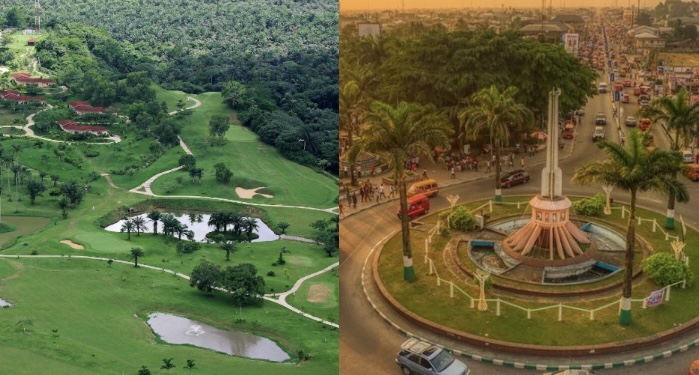
Of course, the state has some of the best accommodation offerings in the South-South geopolitical zone including the iconic Ibom Hotel and Golf Resort, a sanctuary of tranquility, luxurious living and especially, nature’s well-kept secret in the state.
Yet, guests are further spoilt at the Four Point By Sheraton at Ikot Ekpene, a city, which is better known for raffia craft and exciting cultural heritage.
Again, the state has emerged as the gateway of the South-South geopolitical zone with Ibom Air, the state-owned airline, growing in service, passenger turnover and fleet acquisition. As of today, the airline flies beyond the Nigerian skies to Ghana, amid more routes in the West African region.
Read also: Africa gears up for stronger presence at FITUR 2026 as continental participation expands

“I enjoy Ibom Air. They are always on schedule, offering necessary updates to passengers and better services. They are giving the elephants in the aviation space a run for their money,” Micheal Ogar, a passenger, once said in a review.
For many, the efficient airline is the reason Ibom tourism is booming in recent times. Before, we used to fly into Calabar and access Uyo, Eket and Ikot Ekpene by road.
“Now, most people, even government people, fly into Uyo to access Calabar. It is a drastic change, and I must give credit to Godswill Akpabio, the senate president, who started the move when he was the governor of the state. He engaged Dana Air to fly people into Uyo until Ibom Air gained ground,” Ofio Edem, a Cross River-born marine engineer said.
Well, following the success of Ibom Air and the efficient handling at the Uyo Airport, that once small airport has been designated with an international status and now Victor Attah International Airport.
Speaking on the development, Nkereweum Onung, president, Experience IBOM and chairman, Board of Trustees of the National Association of Nigeria Tour Operators (NATOP), said that airports are major enablers of Nigeria’s cultural tourism growth, hence the upgrade of the Victor Airport to an international status, will further Akwa Ibom State’s efforts at positioning the state as a major tourism destination in Nigeria.
Onung, who is also the immediate past president of the Federation of Tourism Associations of Nigeria (FTAN), noted that the Victor Attah International Airport would attract travellers from across the world, expanding cultural tourism opportunities within the South-South region, creating jobs, and stimulating socio-economic and tourism-related trade.
“Pastor Umo Eno has shown that he is a professional, a cultural tourism ambassador, and a strategic reformer. His infrastructure initiatives will not only enhance tourism and hospitality in Akwa Ibom State but also serve as sustainable drivers of economic growth and improved security. At Experience IBOM, we are proud and eager to partner with the state’s airport management authority to ensure these facilities are effectively utilized and protected,” Onung said.
He revealed that Experience IBOM, a tourism promotion company, will soon roll out marketing campaigns with local and international partners to promote Akwa Ibom— and by extension Nigeria—on the global tourism stage. According to him, infrastructure investments such as the Akwa Ibom International Airport intentionally open populous nations like Nigeria to expand travel, commerce, and tourism opportunities, thereby boosting local community development.
With all these going for the state, Onung, who is the Special Adviser to the Akwa Ibom State Governor on Culture and Tourism, has extended an open invitation to the world to visit Akwa Ibom this December for the Experience Ibom Tourism Concert.
He described the Experience Ibom initiative as a transformative project designed to position Akwa Ibom as a world-class tourism destination.
He said the event would connect visitors to the very soul of the state through a unique blend of creativity, culture, and hospitality.
“Every destination has a heartbeat, and that rhythm is shaped by its people, culture, and stories,” Onung said. “Experience Ibom will blend creativity, culture, hospitality, and innovation, redefining how destinations are discovered, experienced, and remembered.”
According to him, the project aims to inspire pride, create prosperity, and position Akwa Ibom as the preferred gateway to African tourism, commending Governor Umo Eno for his commitment to consolidating the achievements of past administrations.
“Our goal is to make the state the preferred gateway to African tourism through the hard work of the dynamic Governor Umo Eno, who has built on the solid foundation laid by his predecessors,” he noted. “Each governor since 1999 has contributed to Akwa Ibom’s development, from Obong Attah’s pioneering projects to Governor Udom Emmanuel’s legacy with Ibom Air. Now, Governor Umo Eno, whom we call the Experience Governor, is bringing that vision to life.”
Onung said the governor’s approach prioritizes stakeholder empowerment and collaboration, emphasizing that tourism development thrives when both government and private players work together.
“Getting stakeholders involved is critical. The Experience Ibom project will connect government initiatives with real experiences that engage visitors and empower local communities,” he explained.
He stressed that while the state government is providing enabling infrastructure, the private sector must take ownership to ensure sustainability.