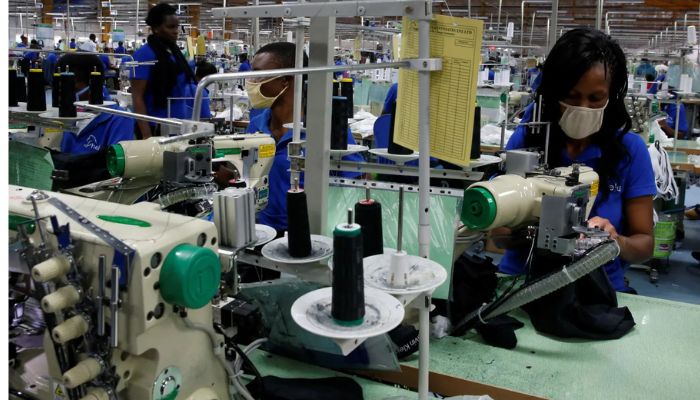
Textile imports into Nigeria have surged 47 percent in one year as the industry remains in stagnation despite the federal government’s policies aimed at reviving local production.
Data from the National Bureau of Statistics trade report showed that Africa’s most populous nation imported textiles and textile articles worth N814.3 billion in the first nine months of 2025 from N552.3 billion imported in the corresponding period of 2024.
The sector’s real growth rate also contracted by 2.4 percent in the third quarter of the year, compared to a contraction of 1.3 percent in the previous quarter.
Since 2018, the federal government, through the Central Bank of Nigeria (CBN), has rolled out several intervention programmes, including the provision of financial support, training and foreign exchange restrictions for all forms of textile materials.

Recently, the government has reaffirmed its commitment to building a robust and responsive policy framework to support the growth of Nigeria’s cotton, textile, and garment sector, despite the efforts, textiles imports have been on an upward trajectory.
Read also: Threads of opportunities in textile revival by region
NBS data show that the importation of textiles and textile articles has continued to rise despite being one of the top contributors to the manufacturing sector and potential to create huge employment for both skilled and unskilled labour, generate export earnings, attract foreign direct investment and reduce poverty.
“The decline of Nigeria’s textile industry serves as a cautionary tale and underscores the urgent need for policies that prioritise domestic manufacturing,” said Aliko Dangote, president of the Dangote Group, at the 5th Adeola Odutola lecture.
Dangote noted that revitalizing the sector does not just require protectionist measures, but also strategic investments in inputs and skills development to restore competitiveness and drive sustainable growth.

Read also: From cotton fields to retail shelves – Why Nigeria must recover its textile legacy
Dying textile mills
In the 70’s and 80’s, Africa’s most populous country had robust textile manufacturing with a large domestic market along with exports to the West African region, recording the highest contribution to the country’s gross domestic product and employment in the manufacturing sector.
The sector recorded about 180 textile mills employing over one million direct labourers. It also supported huge backward integration with the cotton production value chain during the period.
However, the industry suffered under intense competition and has struggled since the 90’s despite its growing market size owing to the rising population.
In a 2023 interview with BusinessDay, Hamma Kwajaffa, director-general of Nigerian Textile Manufacturers Association, said the country has at least 24 textile industries, but only three are functioning properly because some ministries are patronising them; otherwise, they would have closed down long ago.
Textile mills across the country disappeared in the 1990s as they were unable to compete in an atmosphere of smuggling, unbridled importation, inadequate power supply, inconsistent government policies and insecurity.
To revive the industry, the country banned the importation of textiles and other fabrics in 2008. However, in 2015, the ban was lifted while a 35 percent import duty was placed on it.
Four years later, the CBN imposed FX restrictions on the importation of textile and textile materials into the country. In 2023, the country lifted the restriction.
Gabriel Idahosa, former president of Lagos Chamber of Commerce and Industry, attributed the textile mills’ collapse to the country’s lack of competitiveness in cotton production.
“The country is not producing cotton, the primary raw material, at a competitive price relative to countries like China, Bangladesh and several other countries that produce cotton at a far lower price than Nigeria,” Idahosa said in a 2023 interview.
He added that the cost of textile production is very high because it is energy-intensive.
“Also, the depreciating value of the naira made the importation of machinery and cotton much higher than the price of textile products of other countries,” he said.
According to Idahosa, these factors completely knocked out the industry’s capacity to compete worldwide.
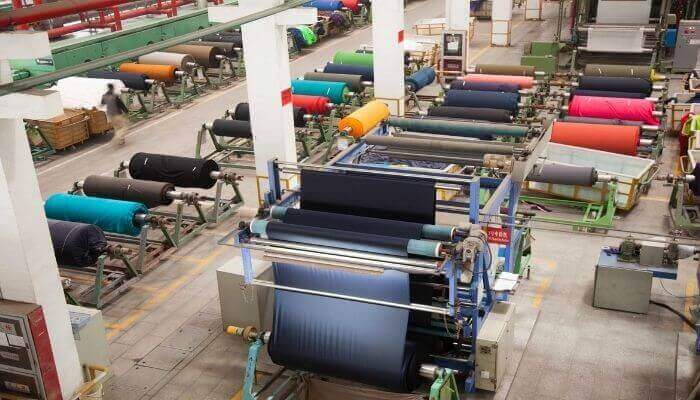
Experts say Nigeria can compete in printed fabrics among textile product categories. Rolls of bright and patterned cloth have a huge market in Nigeria and Africa.
The Africa Continental Free Trade Area (AfCTA) provides the platform for Nigerian manufacturers to access markets across the continent and 1.5 billion people.
Nigeria can capitalise on its potential for raw material production and manufacturing skills, particularly in textiles. However, the government must learn from Asian economies and how they grew their textile manufacturing.