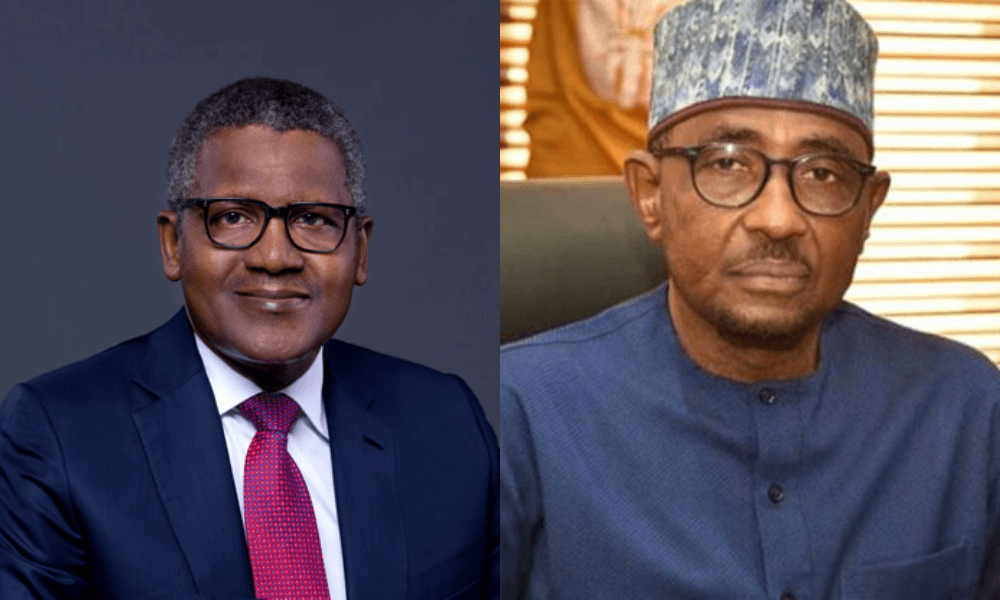
When Africa’s wealthiest man publicly challenges a Nigerian regulator, the moment transcends a personal dispute. It becomes a test of the country’s institutions, their resilience, and the way power is exercised in the public sphere.
Last week, Aliko Dangote issued a series of pointed public statements directed at Farouk Ahmed, the Chief Executive of the Nigerian Midstream and Downstream Petroleum Regulatory Authority (NMDPRA). The criticisms, delivered in strong and uncompromising language, quickly drew national attention. Beyond the immediate dispute, the incident underscores broader questions about influence, accountability, and institutional independence in Nigeria.
Disagreements between regulators and business leaders are neither new nor inherently problematic; they are part of the checks and balances that keep markets functional. However, the public nature and intensity of these exchanges can have consequences beyond the individuals involved. When a figure of Dangote’s stature questions the integrity of a regulator in the public domain, the impact is amplified. Words of such prominence can influence markets, shape public perception, and, unintentionally or not, place pressure on institutional decision-making.
In response, Mr Ahmed clarified that personal allegations, including references to his children, were unfounded. He explained that personal funds, including long-term savings and scholarship schemes, accounted for the reported expenditures. By inviting scrutiny and asserting compliance with regulatory standards, he highlighted the need for evidence-based evaluation over assumption or speculation.

The confrontation also occurred against the backdrop of an ongoing policy debate concerning a proposed 15 percent import duty on refined petroleum products. Analysts have noted that such a measure could favour dominant market players while disadvantaging smaller operators. The NMDPRA’s opposition on regulatory grounds illustrates the complexity of balancing policy, market competition, and fairness.
This episode illustrates a broader challenge: Nigeria’s institutions must withstand the influence of extreme wealth without compromising their integrity or independence. Regulatory bodies do not fail only because of corruption; they fail when officials anticipate retaliation or fear reputational harm, leading to overly cautious decision-making. Ensuring that regulators can operate freely and fairly is crucial for sustaining confidence in governance and markets.
It is also a reminder that power comes with responsibility. Public figures wielding significant influence, whether political or economic, carry a duty to engage with evidence, process, and legal frameworks rather than relying on public spectacle.
Constructive criticism is vital, but it must not unintentionally undermine the institutions that support national progress.
Nigeria benefits from ambition, investment, and industrial scale. But the effectiveness of these contributions depends on respecting the structures that enable a functional economy. Wealth does not exempt anyone from accountability, and influence should be exercised with restraint and clarity. The proper avenues for dispute resolution, consultation, regulatory review, and judicial processes, exist precisely to ensure fairness and protect both individuals and institutions.
Ultimately, this is not solely about a billionaire or a regulator. It is about the principle that institutions matter more than individuals. The legitimacy of regulatory authorities rests on law, evidence, and process, not on the approval of the most powerful voices. Nigeria’s development will be measured not by the volume of opinions, but by the resilience of its institutions and the judicious use of influence.

In a society where influence and authority are unevenly distributed, restraint is a form of leadership. Constructive engagement between industry and regulators strengthens governance; public vilification weakens it. The nation’s progress depends on both the strength of its institutions and the responsible exercise of power by those who shape its economic future.
Festus Okunola (Esq.), barrister and entrepreneur, Lagos.