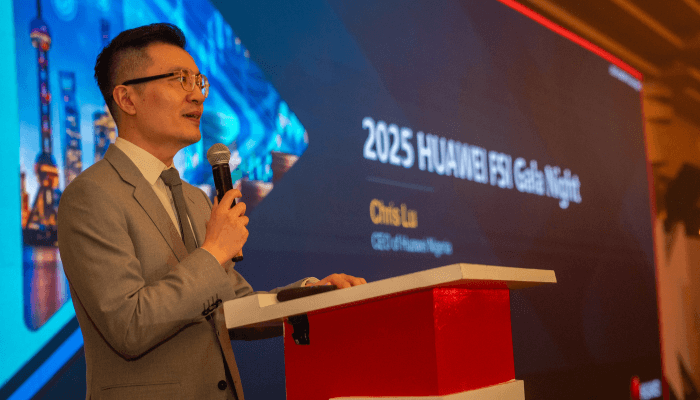
Huawei Technologies, on Friday, December 12, hosted its Financial Services Industry (FSI) Gala Night in Nigeria, bringing together banking leaders, policymakers, economists, and technology executives to reflect on the country’s economic journey in 2025 and the future of digital finance.
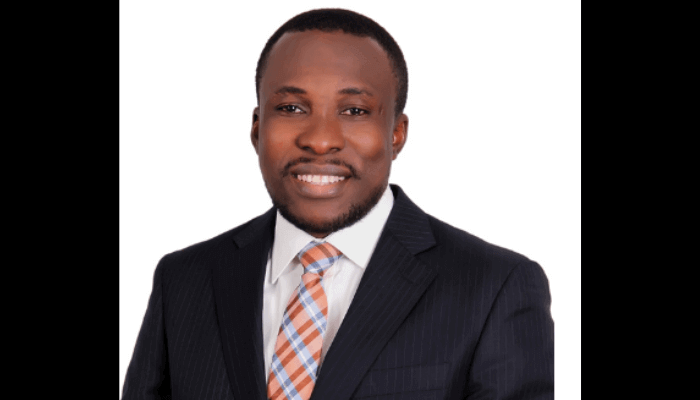
Speaking at the event, Chris Lu, managing director and CEO of Huawei Nigeria, described 2025 as a “remarkable year” for Nigeria’s financial sector despite global uncertainty.
“Even with all the disruptions happening globally, Nigeria’s financial industry has shown resilience, vibrancy, and innovation,” Lu said, pointing to a more stable foreign exchange market and the rapid acceleration of digital transformation across banks and financial institutions.
He credited industry leaders for embracing change and steering institutions through reforms, noting that Huawei remains deeply committed to supporting Nigeria’s financial ecosystem through infrastructure, cloud, digital finance solutions, and artificial intelligence.

“Together, we will continue building a smarter, more inclusive, and more prosperous financial ecosystem in Nigeria,” Lu said, while extending goodwill messages ahead of the Christmas season and the new year.
The gala also featured Jason Cao, CEO of Huawei Global Digital Finance, who shared insights into Huawei’s global strategy and experience in transforming financial systems across continents.
Cao said Huawei has spent nearly 15 years building solutions for the financial industry and now serves more than 5,600 financial customers in over 80 countries, including 53 of the world’s top banks.
He explained that Huawei’s financial services journey has evolved from providing core hardware infrastructure to software platforms and now to what the company calls “intelligent finance” — integrating cloud, data, and AI into end-to-end banking operations.
“Our focus today is on four areas: resilient infrastructure, application modernization, data capability, and artificial intelligence,” Cao said. “Huawei is no longer just a hardware company. We are building systematic, intelligent solutions for the future of finance.”

He cited examples from China, Brazil, Singapore, and other markets where Huawei has supported banks to migrate from legacy mainframe systems to cloud-based, microservices architectures, as well as large-scale deployment of AI agents across multiple business domains.
According to Cao, China’s rapid shift to mobile and digital payments offers valuable lessons for emerging markets like Nigeria, particularly in driving inclusion, efficiency, and customer experience.
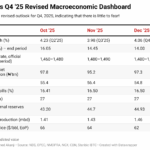
Providing a macroeconomic outlook, Segun Zaccheaus, Chief Economist at PwC West Africa, represented by Akolawole Odunlami, Director and Deputy Chief Economist, said Nigeria is currently between the reflection and stabilisation phases of economic reform.
He explained that while early reforms such as fuel subsidy removal and foreign exchange liberalisation initially pushed inflation and unemployment higher, key indicators began to stabilise in 2025.
“Inflation has started to ease, and the exchange rate has largely stabilised around the N1,450–N1,500 range,” Odunlami said. “For investors, stability matters more than absolute levels, because it allows planning and forecasting.”
He noted improvements in government revenue collection and projected stronger fiscal performance in 2026 as new tax laws take effect, although challenges remain around inflation, high interest rates, and debt sustainability.
On geopolitics, Odunlami said a potential easing of global tensions, including a possible Russia-Ukraine peace agreement, could influence commodity prices and global liquidity, with mixed implications for Nigeria.
Looking ahead, PwC projects Nigeria’s economy to grow between 4 and 4.2 percent in 2026, driven by sustained reforms, capital market expansion, and deeper collaboration between financial institutions and technology providers.
Odunlami highlighted the capital market as a major growth lever, noting that potential listings, including the Dangote Refinery, could significantly boost market capitalisation beyond N100 trillion.
He also underscored the increasing role of technology, drawing parallels with the United States, where technology accounted for over 90 percent of economic growth in early 2025.
“Technology is no longer just an enabler of business,” he said. “Technology is the business.”
In her remark, Huawei’s Director of FSI, Glarie Gao, expressed deep gratitude to all customers and partners for their unwavering support towards the company, while looking forward to conquering new heights in the new chapter.