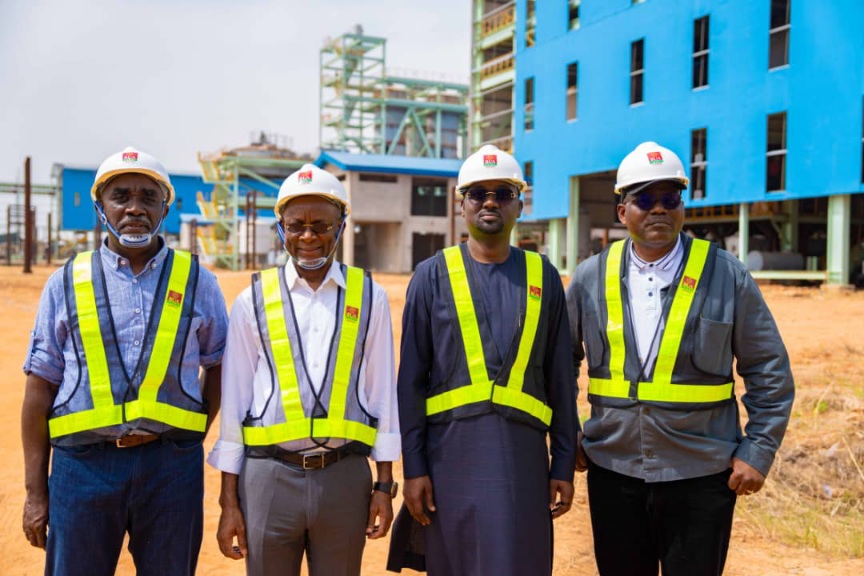
The Federal Government has called on BUA Foods to urgently complete its expansive sugar factory in Lafiagi, Kwara State, as part of efforts to accelerate Nigeria’s attainment of self-sufficiency in sugar production.
According to a statement issued by National Sugar Development Council (NSDC) on Thursday in Abuja, the call was made by John Owan Enoh, Minister of State for Industry, during a strategic inspection of sugar projects across the country.
The tour began with the Lafiagi Sugar Company (LASUCO), a flagship project under the Backward Integration Programme.
During the visit, Enoh conducted a comprehensive assessment of LASUCO’s integrated sugar complex, which includes a 10,000-tonne cane-per-day sugar mill, ethanol plant, power infrastructure, irrigation systems, and over 700 hectares of existing sugarcane cultivation.

Once fully operational, the facility is expected to produce up to 220,000 metric tonnes of refined sugar annually.
While commending Kamar Bakrin, the Executive Secretary/CEO of NSDC for his efforts in motivating and monitoring operators under the programme, the Minister stressed that the scale of infrastructure and investment at LASUCO demonstrates a strong commitment to the federal government’s industrial objectives.
Enoh emphasised that the President had mandated him, in collaboration with the NSDC, to ensure operators transition from planning to full production. He also highlighted the urgent need for accelerated sugarcane cultivation to match the factory’s capacity, noting that farm expansion is critical for achieving full operational readiness.
“While acknowledging progress at the Lafiagi facility, the Minister stressed the urgent need for accelerated sugarcane development to match factory capacity, reiterating that farm expansion remains critical to achieving full operational readiness,” the statement read.
Reaffirming the federal government’s commitment, the Minister pledged sustained engagement with serious investors, traditional institutions, and host communities to boost the sugar industry, conserve foreign exchange, create jobs, and strengthen Nigeria’s industrial value chains.