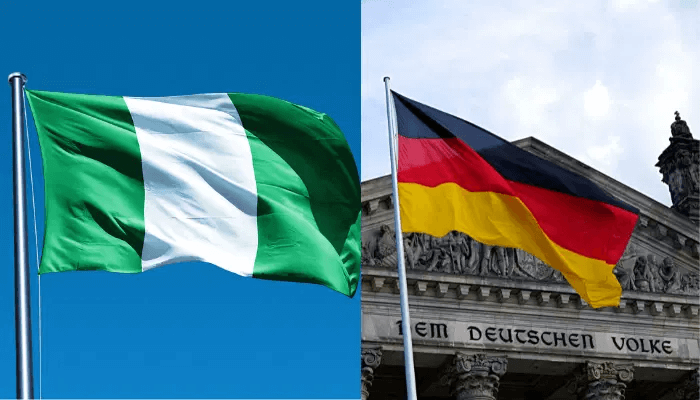
Germany and Nigeria have moved to deepen cooperation on green hydrogen development, with the formal presentation of Nigeria’s draft National Hydrogen Policy at the third German–Nigerian Hydrogen Symposium, a move aimed at laying the groundwork for investment, industrial decarbonisation and future energy exports.
The two-day symposium, held in Nigeria and jointly hosted by the German Federal Foreign Office and Nigeria’s Federal Ministry of Budget and Economic Planning alongside the Ministry of Petroleum Resources, brought policymakers, industry players and development partners together to align policy and market priorities around hydrogen.
At the centre of discussions was Nigeria’s draft National Hydrogen Policy, which sets out a framework for developing green and low-carbon hydrogen as part of the country’s broader energy transition and industrial strategy.
The policy is intended to provide regulatory clarity, attract long-term capital and support the decarbonisation of energy-intensive sectors, while positioning Nigeria as a potential hydrogen hub within West Africa.

Annette Günther, Germany’s ambassador to Nigeria, said the partnership reflects growing alignment between both countries on clean energy development, noting that hydrogen remains a key component of Germany’s own decarbonisation plans, particularly for hard-to-abate industries.
“Nigeria brings significant renewable resources and a growing base of technical capacity to this partnership,” she said, adding that Germany’s updated hydrogen and import strategies continue to prioritise international cooperation.
Read also: Germany backs Nigeria’s push for hydrogen needs, green energy transition
Officials involved in drafting Nigeria’s hydrogen policy said the framework was designed to balance climate goals with economic development.
According to the hydrogen policy technical working group, made up of officials from the budget and planning ministry and the Ministry of Petroleum Resources (gas), the policy is expected to support job creation, energy security and industrial growth alongside emissions reduction.

Private-sector participation featured prominently at the event, with speakers stressing that policy direction alone would not be sufficient to build a viable hydrogen market.
Bastian Lidzba, delegate of AHK Nigeria, said investment mobilisation and commercial partnerships would determine how quickly hydrogen projects move from concept to execution.
“The hydrogen economy will only scale if policy is matched with capital and market-led solutions,” he said.
The symposium also highlighted the role of the German–Nigerian Hydrogen Office, implemented by GIZ, in coordinating technical support and knowledge exchange.
Markus Wagner, country director of GIZ Nigeria and ECOWAS, said the office builds on decades of bilateral energy cooperation and is intended to help Nigeria compete in emerging clean energy markets.
From a local innovation perspective, Emeka Oguzie, a professor at the Federal University of Technology, Owerri, cautioned that Africa’s energy transition would ultimately depend on domestic technical capacity.
“Policy may enable, but the transition itself will be engineered through indigenous innovation,” he said.
The engagement forms part of Germany’s H2-diplo initiative, which uses diplomatic channels to support international green hydrogen partnerships.
Participants at the symposium agreed that translating Nigeria’s draft policy into implementable projects would be the next critical test for the partnership.