..Modern careers are increasingly non-linear, characterised by zigzags, pauses, and total pivots.
…Roles now emerge, evolve, and disappear within cycles far shorter than half a decade, making long-term predictions less of a strategy and more of a gamble
…professionals should focus on short-term learning goals
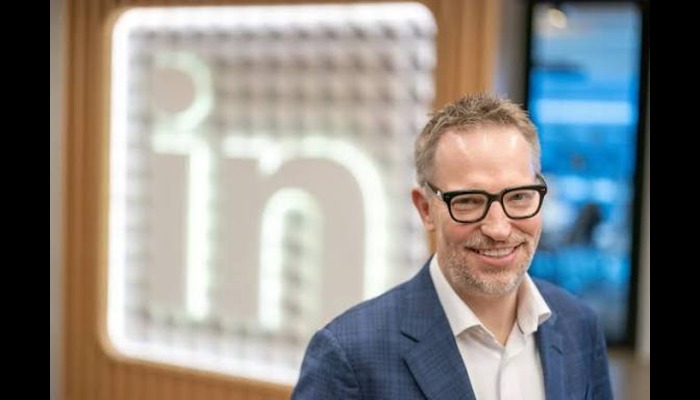
Ryan Roslansky, the chief executive of LinkedIn, has described the traditional five-year career plan as “a little bit outdated” and, more bluntly, “a little bit foolish.”

Discussing with AdvicewithErin, he noted that it is a sharp reality check to the modern workforce, as those long-term roadmaps are now effectively obsolete.
For a long time, the hallmark of a serious professional was the “five-year plan”, which is a meticulously charted blueprint detailing every promotion and milestone from graduation to the boardroom.
Read also: Nine ways to build credibility on LinkedIn fast
However, Roslansky has argued that the staggering pace of technological advancement, spearheaded by artificial intelligence, has rendered the future too unpredictable for such rigid forecasting.
The death of the linear path

The linear career, a notion that one moves in a straight line from university to a specific role, then an MBA, and upwards through a single hierarchy, is a relic of the past, according to Roslansky.
“That’s not how it happens at all for most people,” he observed. Instead, modern careers are increasingly “non-linear,” characterised by zigzags, pauses, and total pivots. Roles now emerge, evolve, and disappear within cycles far shorter than half a decade, making long-term predictions less of a strategy and more of a gamble”, he said
A new mental model: Skills over destinations
Rather than fixating on a destination five years down the line, the LinkedIn chief suggests a shift in mindset.
Professionals should focus on short-term learning goals and the accumulation of specific experiences.
Read also: Staying ahead of career curve via WISCAR mentoring programmes
“The right mental model in this environment is to ask what you want to learn next,” Roslansky explained. By focusing on immediate skill-building, he suggests that a more diverse and rewarding career path will naturally reveal itself.
For those entering an unstable workforce, Roslansky’s advice is practical: Get comfortable with change.
He urges workers to experiment with AI tools immediately, whether using them to draft marketing messages or generate presentations, not necessarily to become experts, but to foster a mindset of adaptability.
However, he was quick to note that the rise of the machines does not signal the end of human value. On the contrary, as automation becomes ubiquitous, “soft skills” such as empathy, communication, and human judgment will become more critical than ever.
“In a world where everyone is focused on technology, if you really work on those human skills, it can be a great differentiator for you,” he said.