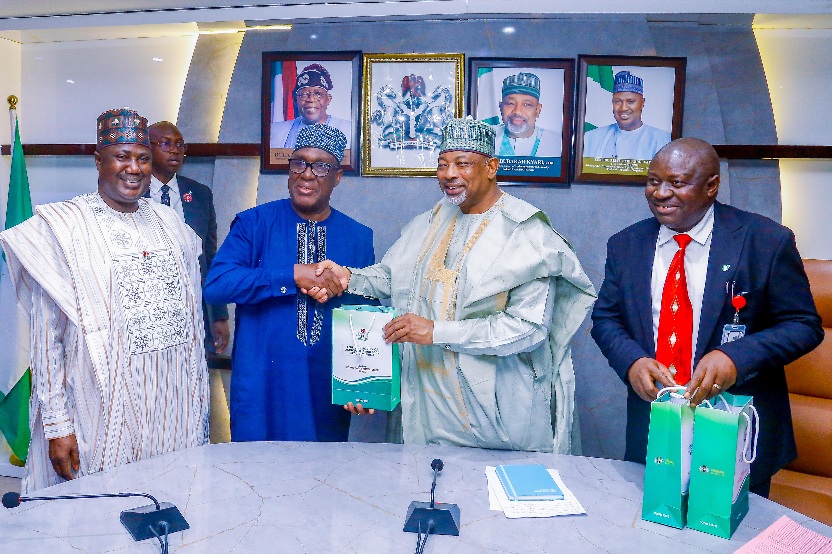
Abubakar Kyari, Minister of Agriculture and Food Security, has said that internal appraisal and the refocusing of sectoral initiatives will accelerate growth in Nigeria’s agricultural sector.
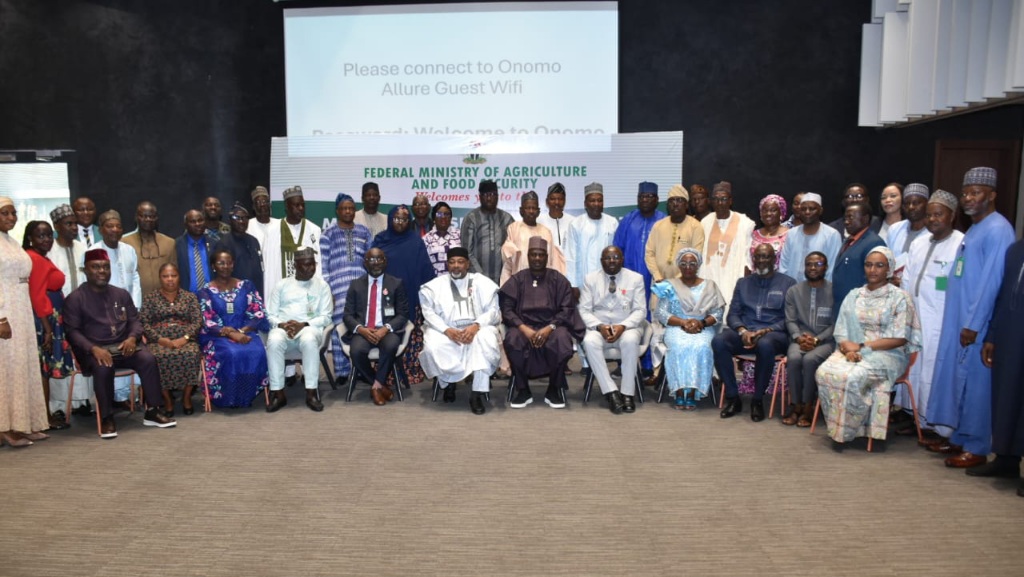
Kyari spoke on Tuesday at the ministerial sectoral retreat themed “Performance Improvement and Strategic Alignment”, held in Abuja.
He said the Federal Government is intensifying efforts to reposition agriculture as a major driver of economic growth, job creation, and investment. He listed mechanisation, value chain development, agribusiness financing, and market expansion as key policy priorities.
Kyari said the ministry was committed to leveraging technology innovation and climate smart agriculture to boost productivity and resilience. He said sustainable agriculture was central to food sovereignty, job creation and economic growth.

Read also: Young agripreneurs will drive Nigeria’s agricultural transformation – Kyari
He disclosed that the ministry was working with international partners to secure funding and technical expertise for agricultural initiatives.
The minister emphasised that government priorities included farmers’ safety, agricultural landscape management, rural infrastructure research and innovation extension services and agribusiness ventures nationwide.
Kyari said policy direction was focused on unlocking agriculture’s business potential by transforming farming from subsistence to commercial scale operations. He said agriculture must deliver productivity income jobs and wealth creation.
He said the Federal Government was implementing mechanisation partnerships with equipment manufacturers from Belarus and Brazil as well as global firms including John Deere and Origin to close Nigeria’s tractorisation gap.

He said the initiative would reduce production costs increase yields and attract private investment into farming and agro processing.
Kyari said the ministry was expanding public private partnerships through Special Agro Industrial Processing Zones, Agro Industrial Estates, Agro Processing Centres and Cottage Processing Mills.
He said the facilities would boost value addition reduce post harvest losses and deepen agro industrial activity nationwide.
He said the ministry was implementing a National Food Reserve Programme to stabilise markets and reduce price volatility by absorbing excess production during peak seasons.
He said this would ensure steady supply and predictable pricing for farmers and consumers, adding that other initiatives included Commodity Market Hubs Farmers’ Markets and Rural and Cooperative Markets to expand demand and improve farmers’ access to profitable outlets.
He said youth and women focused programmes were key to unlocking Nigeria’s demographic dividend and stimulating rural economies.
Aliyu Sabi Abdullahi, minister of state for agriculture and food security, in his remarks said the ministry was restructuring to support private sector participation data driven decision making and performance management.
He said new departments had been created including Agricultural Mechanisation, Agricultural Data and Analytics, Agricultural ICT, Horticulture Plant Health and Development Partners Projects to sharpen focus and improve efficiency.
He said financing windows were being strengthened through the Bank of Agriculture and the National Agricultural Development Fund to support farmers processors and agribusiness investors across the value chain.
Didi Esther Walson Jack, head of the civil service of the federation, represented by Alfred Abba, senior special assistant to the President on civil service matters, said the retreat would deepen leadership cohesion reinforce institutional discipline and align the ministry and its agencies with public service reforms.
Marcus Ogunbiyi, permanent secretary, said the retreat provided an opportunity to reflect and reposition the ministry and its agencies for greater effectiveness.
He said a key focus was the validation of the Performance Management Systems automation and the Electronic Content Management platform ahead of its scheduled go live on December 18 2025.
He said the validation exercise was strategic and transformational for the ministry.