The Federal Government has intensified efforts to bridge Nigeria’s annual fish consumption deficit of about 3.6 million metric tons, following an increase in local fish production from 1.1 million metric tons to 1.4 million metric tons in 2025.
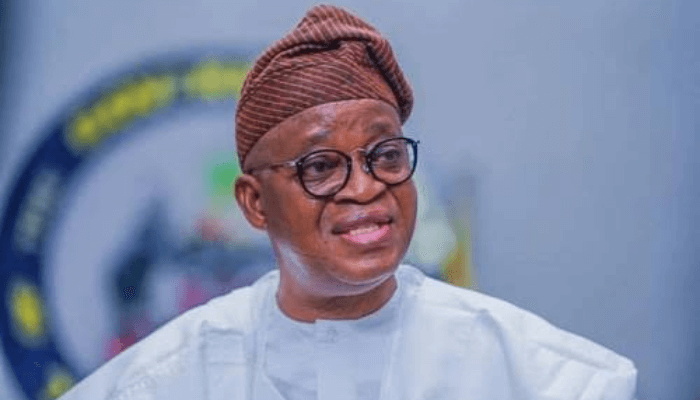
Adegboyega Oyetola, Minister of Marine and Blue Economy, disclosed this on Wednesday in Abuja while speaking at the 4th Quarter 2025 Citizens and Stakeholders’ Engagement of the ministry.
Oyetola said the improvement in local output reflects targeted interventions by the ministry and its agencies aimed at boosting domestic production, reducing dependence on fish imports, and strengthening national food security.
He noted that despite the gains, Nigeria still consumes far more fish than it produces, underscoring the need for sustained reforms and investments in the sector.

Read also: FG committed to indigenous shipping growth – Oyetola
“In the area of fisheries and aquaculture, we are working deliberately and with unique agency to boost local fish production, reduce our dependence on imports, and strengthen food security.
“I’m pleased to report that local fish production has increased from 1.1 million metric tons to 1.4 million metric tons so far this year. While this is still a far cry from the 3.6 million tons consumed annually, the progress reflects targeted interventions to strengthen local capacity, to improve coordination, development of appropriate technologies, and better sectoral planning,” the minister said.
According to him, the ministry is deliberately pursuing policies to strengthen coordination across the fisheries and aquaculture value chain, promote the adoption of appropriate technologies, and improve sectoral planning to close the widening supply gap.
To further accelerate growth, the minister revealed that the government has commenced engagements with relevant financial institutions to provide single-digit interest loans to fish farmers nationwide.

He explained that the initiative is designed to expand access to affordable financing, empower artisanal and industrial operators, and boost productivity across the sector.
Oyetola added that the financing programme would also support the government’s broader efforts to combat illegal, unreported and unregulated fishing in Nigerian waters, which continues to undermine local production and revenue.
“In addition, the ministry has commenced engagements with relevant financial institutions to facilitate single-digit interest loans for fish farmers across the country.
“This initiative is designed to expand assets to affordable finance, empower artisanal and industrial operators, boost productivity, and support our broader efforts to combat illegal, unreported, or regulated fishing in Nigerian waters,’ he added.
He reaffirmed the Federal Government’s commitment to positioning the marine and blue economy as a key pillar of Nigeria’s economic diversification strategy, leveraging the country’s extensive coastline, inland waterways and strategic geographic location to drive inclusive growth, job creation and regional trade.
The minister assured stakeholders that ongoing reforms in fisheries, maritime security, port operations and institutional governance would be sustained to attract private sector investment and close the country’s fish supply gap in the coming years.
Also speaking at the event, Pius Akutah, Executive Secretary of the Nigerian Shippers Council (NSC), said the ongoing reforms are focused on positioning Nigeria’s marine and blue economy sector for investment, innovation and expansion.
“We are talking about positioning the Nigerian marine and blue economy for investment, innovation and expansion, which is very critical to our advancement to the next level,” Akutah said.
He noted that many of the initiatives being implemented by the ministry are already yielding positive results, attributing the progress to policy consistency and sustained engagement with stakeholders.
“As the year comes to an end, we are renewing our commitment to push forward a marine and blue economy sector that can turn around the fortunes of this country and reduce its dependence on oil,” he added.
The event also featured the official launch and go-live of the Ministry of Marine and Blue Economy’s digital service delivery platform, a move aimed at improving institutional efficiency, transparency and service delivery to stakeholders and investors.