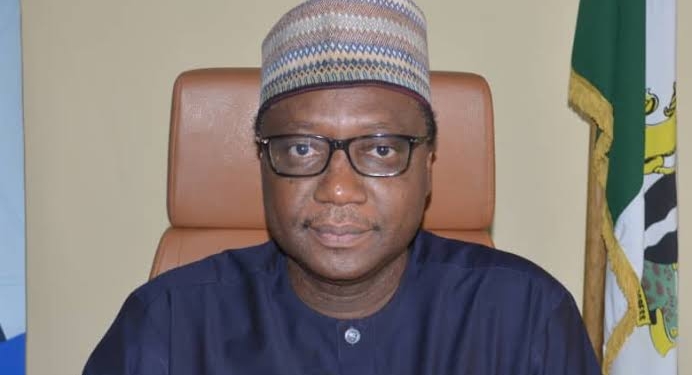
Nigeria’s federation account inflows climbed above N23 trillion in the first ten months of the year, underscoring the fiscal impact of reforms introduced by President Tinubu’s administration, according to Mohammed Bello Shehu, chairman of the Revenue Mobilisation Allocation and Fiscal Commission (RMAFC).
Shehu said on monday that stronger coordination among revenue agencies, improved audits and digital tracking systems had driven a sharp rise in government receipts, easing pressure on public finances after years of volatility tied to oil prices and mounting debt service costs. He spoke in Abuja at a two-day national stakeholders’ discourse on fiscal efficiency and revenue growth under the Nigeria Tax Act, 2025 convened by RMAFC.
Since taking office in May 2023, Tinubu’s administration has rolled out reforms under its Renewed Hope agenda, including fuel subsidy removal and changes to fiscal and tax policy, aimed at stabilising the economy and broadening revenue sources. Those efforts, Shehu said, are beginning to show results in the flow of funds into the federation account, which is shared among federal, state and local governments.
Read also: FAAC shares ₦1.92 trillion November revenue among federal, state and local governments

According to figures presented by the RMAFC chairman, gross accruals into the federation account stood at about N11.9 trillion in 2023 and rose to more than N21.4 trillion in 2024. Between January and October 2025 alone, inflows reached N23.06 trillion, surpassing the full-year total of the previous year and marking a significant acceleration in revenue performance.
“The continued growth in the inflows is due to fiscal reforms, tracking and coordination among revenue agencies, stronger audits, digital tracking, and fiscal reforms,” Shehu said, adding that the measures had strengthened discipline and expanded the revenue pool available for distribution across the three tiers of government.
The gains come as Nigeria seeks to reduce its dependence on oil earnings, which still account for the bulk of export revenue but contribute less than 10% to gross domestic product. Shehu noted that recent economic data show growth led by services and non-oil sectors, alongside a moderation in inflation and greater stability in the naira exchange rate, even though many households have yet to feel the full benefits.
Central to the government’s strategy is the Nigeria Tax Act, 2025, which will take effect in January 2026 and consolidate previously fragmented tax laws into a single framework. The legislation, alongside three related acts signed into law in June, is designed to cut duplication, lower compliance costs and create a more predictable fiscal environment for businesses and taxpayers.
Shehu said the commission, which is constitutionally mandated to advise governments on fiscal efficiency and revenue mobilisation, would continue to align with reform initiatives while intensifying oversight of collections and disbursements. “The Commission… will remain steadfast in safeguarding the federation’s revenue profile,” he said.

The stakeholders’ meeting brought together policymakers, labour groups and tax experts to shape implementation of the new law, as Nigeria seeks to lock in reform-driven gains and build a more resilient and sustainable public finance system.
In his welcome address, Desmond Akawor, who is the chairman, Fiscal Efficiency and Budget Committee, RMAFC described the national stakeholders’ discourse as a pivotal moment in Nigeria’s fiscal reform agenda.
He said the discussions would influence the country’s public finance framework for years, noting that decisions taken now would determine its long-term stability, sustainability and resilience.
Akawor explained that the Nigeria Tax Act, 2025 is designed to modernise tax administration, strengthen compliance mechanisms, eliminate revenue leakages and expand the revenue base across federal, state and local governments.
Olayemi Cardoso, governor, Central Bank of Nigeria (CBN) said the new tax framework would help widen the tax net.
Represented by Philip Ikeazor, deputy governor, financial system stability, Cardoso said it would also improve compliance and reduce Nigeria’s reliance on oil revenue, while enhancing transparency through a more digitalised and efficient tax administration system.