As the boundaries of work continue to dissolve, a new urgency is shaping conversations around how African graduates can be prepared to compete and thrive in a global digital labour market.
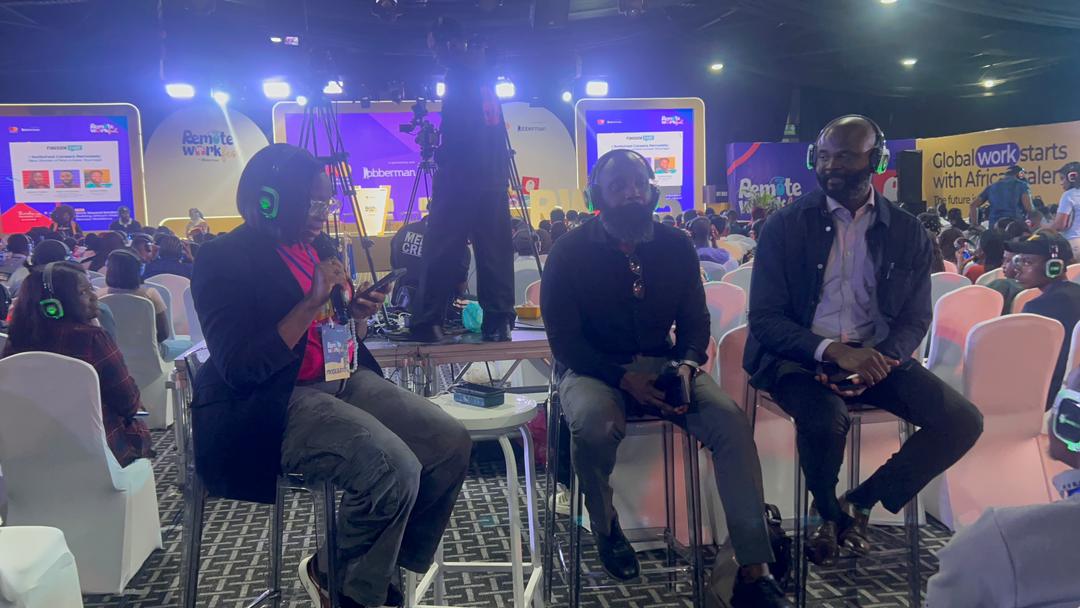
These issues were discussed at Jobberman’s Lagos Remote Work Fest 2025, where industry leaders, educators and technology experts gathered to discuss how African talent can work beyond borders and build the global remote workforce.
The event spotlighted the widening disconnect between traditional classroom learning and the realities of remote work. A fire side chat titled, ‘From classroom to cloud: Making graduates truly remote-ready’, brought this challenge into sharp focus. Moderated by Chineyenwa Adeleye, the discussion explored practical pathways for transforming fresh graduates into professionals who are not just employable, but genuinely remote-ready.
At the heart of the conversation was Babatunde Olaifa, country head of edtech start-up GoMyCode and Daniel Emenahor, head of Higher Education at the British Council Nigeria.

Olaifa said that working beyond borders had little to do with geography or internet access. Instead, he argued, readiness begins with a mental shift, a willingness to see beyond local opportunities and measure oneself against global standards. To think remote, he suggested, is to recognise that the world is now the job market, and that graduates must be prepared to compete within it.
Read also: Can a remote work strategy curb Africa’s brain drain problem?
Being ‘virtually fluent’
Olaifa outlined several essential components for achieving this state of readiness, emphasising practical proficiency in digital collaboration.
“The first one is to be virtually fluent, also being able to send emails, booking a calendar, that sort of thing. How proficient are you when it comes to project management tools and collaboration tools? How many of you here know about Slack? Notion? It’s about collaboration. How proficient are you with your skills? If you don’t know how to master those skills, then you’re not ready.”

He also stressed the necessity of self-management and emotional resilience for remote success: “As a remote worker, you have to be self-motivated, because there are no managers around to micromanage you.” He concluded by noting the need for cultural communication awareness and routine communication clarity when working with distributed global teams.
Read also: Why education, industry must collaborate to shape tourism’s future
The education gap: From theory to practical experience
Emenahor on the other hand, addressed the shortcomings of traditional higher education in preparing graduates for this new working reality.
Based on his work which champions institutional growth and employability, he insisted that the problem lies in the student experience, not just the curriculum. He emphasised the importance of real-world exposure and transferable skills.
“Most of us don’t have remote jobs now and we can’t wait to get one. Don’t forget that where you are, you’re learning skills which you’re going to transfer.”
Emenahor argued that universities must move beyond theoretical learning and create practical, collaborative experiences that mimic the professional environment.
“Education should not necessarily focus on putting the course on the screen, how to do a module, how to do collaboration, how to do this experience… We need to look for these experiences within school that will give you the advantage after school”, he said.
He proposed two concrete solutions: Promoting practical, collaborative learning opportunities for students and lecturers, and bridging the gap with alumni and industry. “My next caution is bringing alumni back to school… We need to connect alumni back to the institution… And lastly, there needs to be that industry and academia collaboration.”
Read also: Why global employers should trust and embrace African talent – Adewoye
The ‘Soft Skills’ superpower: Autonomy and emotional intelligence
Speaking on specific skills for international remote jobs, Olaifa elaborated on the essential soft skills required for entry-level remote workers. He focused on the need for absolute self-drive, referencing feedback he receives from employers.
“I think one of the first skills, probably one of the most important, is autonomy… You have to have autonomy and accountability.”
He warned that many young people struggle because they wait for direction. Alongside accountability, Olaifa highlighted crucial skills for self-management and team interaction, which are:
Time management and prioritisation: The ability to tackle complex tasks first and manage one’s own workflow.
Clear communication: The ability to write clearly so that people can understand what you are saying
Emotional intelligence: The ability to read a room, understand cultural nuances, and approach conversations appropriately, especially in a diverse global setting.
Adeleye echoed the notion of emotional intelligence, noting that it is key to navigating cross-cultural communication. She said, “…especially when you’re working with people that are not in the same country as yours… the way they behave and think is totally different.”
Read also: Network outages every three hours frustrate remote working
Improving virtual communication confidence
Emenahor also explained that verbal communication can be improved in a virtual setting by building confidence through practice.
“Many of us are still shy to turn on your screen, but the internet is working…And how do you become confident? You need to keep doing the same thing over and over again,” Emenahor advised. “If you’re in virtual meetings, turn on your camera, make your background very nice… Do videos online, do Instagram videos and the rest… If you want to reach the issues of the world and you’re in a sector… you need to speak about your fashion style, your whatnot. That’s how you improve your communication.”
The session concluded with a powerful reminder from Adeleye that the experiences and skills gained through extracurricular activities, volunteering, and even previous jobs, much like her own journey from studying Guidance and Counselling are invaluable assets that can be transferred directly to success in the remote global workforce.