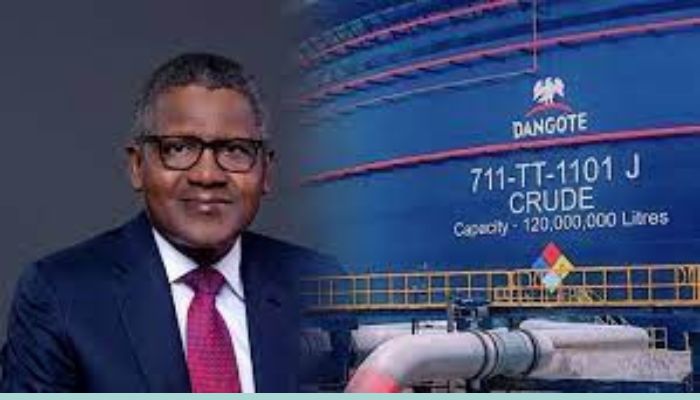
Dangote Petroleum Refinery has cut its minimum fuel purchase threshold to 500,000 litres from two million litres, a move aimed at broadening market access while retail prices at affiliated stations fell sharply in Africa’s largest economy.
MRS Oil Nigeria Plc, the refinery’s lead distributor with over 2,000 outlets nationwide, began selling Premium Motor Spirit at N739 per litre in Lagos on Monday, down from N885, ahead of an announced Tuesday rollout by Aliko Dangote, president of Dangote Group.
The billionaire industrialist said Sunday that pump prices would not exceed N740 per litre starting this week, with ex-refinery pricing now at N699.
The reduction marks the second consecutive year the 650,000-barrel-per-day facility has eased seasonal fuel shortages while undercutting import-dependent competitors.

Read also: Relief for motorists as Dangote petrol sells at N739/litre in Lagos
“Nigerians have a choice: to buy better-quality fuel at a more affordable price, or to buy blended PMS at a higher rate,” Dangote told reporters in Lagos. “Importers can continue to lose, as long as Nigerians benefit, I am happy.”
The lowered offtake requirement opens participation to smaller marketers, including members of the Independent Petroleum Marketers Association of Nigeria, who previously lacked the capacity to meet the two-million-litre minimum.
The refinery emphasised that its product is straight-run fuel rather than blended imports.
Dangote said the company would deploy Compressed Natural Gas trucks “in the coming days” and stands ready to acquire additional vehicles beyond its existing 4,000-unit fleet to support nationwide distribution.

He dismissed concerns from import-dependent competitors facing margin pressure.
“Anyone who chooses to continue importing despite the availability of locally refined products should be prepared to face the consequences,” he said, describing the $19 billion refinery as “a strategic national asset” that “must not be allowed to fail.”
At MRS stations across Lagos, including locations in Alapere and Victoria Island, motorists welcomed the price reduction. A university lecturer purchasing fuel described the development as significant relief during the festive period, calling on authorities to reassess import licensing given expanding domestic capacity.
The pricing shift comes as Nigeria seeks to reduce foreign exchange pressure from fuel imports while leveraging local refining capacity to stabilise supply in a market long plagued by volatility.