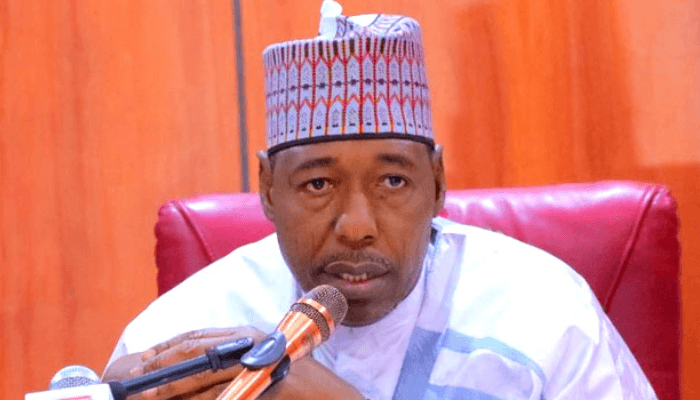
The transformation currently taking place in the education sector in Borno State is indeed unprecedented despite devastation caused by the Boko-Haram terrorists.
The sector is witnessing what could be described as a tsunami of transformation as a result of the commitment and the zeal of Governor Babagana Zulum to leave behind a society that not just values education but one that has standard infrastructure in its educational sector.
Consequently, the governor has highlighted Borno’s significant investments in rebuilding educational infrastructure destroyed by insurgency, including the construction of over 104 new schools and the recruitment of thousands of teachers in the last six years.
Zulum stated this while declaring open the 28th Quarterly Meeting of the Universal Basic Education Commission (UBEC), stating that the State Government invested over N53.6 billion in education sector in 2025.

The meeting, which brings together Executive Chairmen and management of State Universal Basic Education Boards (SUBEBs) from across the federation, is held at Maiduguri.
In his opening address, Governor Zulum underscored the critical role of education in fostering peace and development.
According to him, “This administration has prioritised the strengthening of our teaching workforce, with an investment of Four Billion (₦4 billion) in teacher training. This effort includes a comprehensive verification and professionalisation exercise, the recruitment of four thousand (4,000) qualified teachers and the provision of large-scale training for over eleven thousand (11,000) basic-level teachers.”
Zulum pinpointed that, “The state promptly implemented the minimum wage and improved teacher welfare through measures such as rural posting allowances, the construction of teachers’ quarters across senatorial zones, and the settlement of outstanding gratuities.”
He also disclosed that “In the current year alone, the state has invested eighteen billion, nine hundred and eighty-seven million, sixty-nine thousand, six hundred and seventy-five-naira, thirty-three kobo (₦18,987,069,675.33) in some major educational infrastructure alone across all local government areas. Two of these projects are among those commissioned by the honourable minister”.

He further maintained that, “In the tertiary education sector, the state recorded notable progress through major infrastructure upgrades, expanded staffing and sustained accreditation efforts. We invested six billion, nine hundred and sixty-three million, one hundred and fifty thousand naira only (₦6,963,150,000) in capital projects across key institutions.
“We approved an additional One Billion Naira (₦1billion) to support the transition of the College of Education, Bama, into the new Federal University of Agriculture and Entrepreneurship. To enhance institutional capacity, 567 academic staff were recruited across tertiary institutions.”
Read also: FG hails Zulum’s investment in education, commissions schools in Borno
Zulum’s pledges to strengthen technical, vocational education
Additional expenditures cover infrastructure upgrades to support technical and vocational education, investments in ICT and Digital literacy, scholarships, and support for Arabic and Almajiri education.
Also, Zulum reaffirmed his administration’s commitment to education, describing it as the foundation for development and prosperity.
“We must ensure that adequate accommodation is provided for teachers, and very soon, the Borno State Government will roll out incentives to motivate them,” he said.
Zulum added that the state would introduce deliberate measures to strengthen technical and vocational education, including plans to increase teachers’ salaries.
He noted that his administration has already fully implemented the minimum wage for primary and secondary school teachers in the state.
Borno’s primary, and senior secondary schools blew me away – Alausa
Maruf Tunji Alausa, minister of Education, has said that many universities and polytechnics approved for other states lacked the quality of infrastructure now found in Borno’s primary schools.
Alausa made the remark on Wednesday during the commissioning of two newly constructed mega schools by Borno State governor in Maiduguri.
“As the Minister of Education and the chief education officer of the country, I was humbled yesterday. The quality of Borno’s primary, junior, and senior secondary schools blew me away.
“I have visited many institutions—universities and polytechnics approved in other states—and they do not have the kind of infrastructure I saw in a Borno primary school,” he said.
He commended Governor Zulum for what he described as a transformative investment in educational infrastructure, calling the governor “a pacesetter.”
Alausa, accompanied by senior federal and state officials, led the symbolic tape-cutting to commission the two mega schools, which comprise 48 and 60 classrooms respectively.
He also commissioned the new Federal Government School in the Ngarannam area of Maiduguri Metropolitan Council.
The project was funded by the Islamic Development Bank (IsDB) and executed by the Federal Ministry of Education through the Universal Basic Education Commission (UBEC).
Alausa, charged delegates to engage in purposeful and productive discussions. He emphasised that the outcome of the meeting must translate into actionable policies that address current challenges, such as out-of-school children, teacher development, and infrastructure deficits.
Similarly, the Executive Secretary of UBEC, Aisha Garba, called for an insightful deliberation. She stressed the importance of the quarterly meeting as a vital platform for peer review, experience sharing, and strategic alignment between the federal and state levels.
Before the opening ceremony, the minister of education, alongside Governor Zulum and the UBEC executive secretary, commissioned three newly completed mega schools in Maiduguri.
Two of the schools, located in Bulabulin and Kaleri, were constructed by Borno State Government. At the same time, the Bilingual Education Boarding School Ngarannam was built by the federal government and funded by the Islamic Development Bank (IsDB).