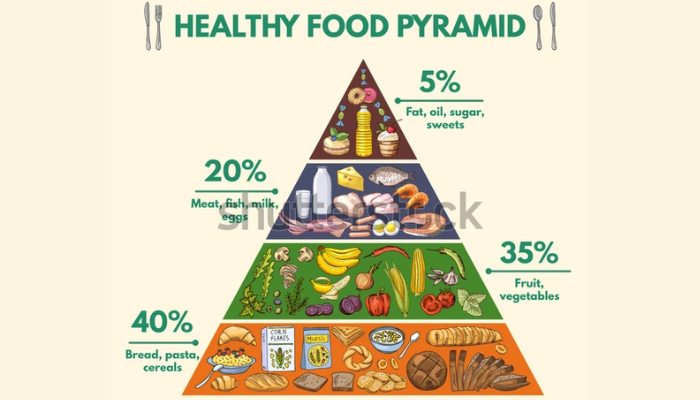
By definition, a food pyramid is a visual representation (in the shape of a pyramid) of the optimal number of servings of food a person should eat daily from each basic food group. It is also explained a pyramid-shaped depiction of recommended daily servings for different food items. According to the Centre for Health Protection the Food Guide Pyramid is defined as a visual representation that illustrates the recommended proportions of foods and beverages within a healthy diet, emphasizing a mostly plant-based, low-fat approach, with a strong foundation on daily physical activity.
It categorizes foods into layers, indicating heavier consumption at the base and lighter consumption at the top. It is therefore, advisable for us to follow the Food Pyramids as guideline in choice of foods.
A balanced diet for any age group is as recommended by nutrition societies. The recommendations are based on scientific evidence, while that of vitamins are updated based on new research findings.
There are more than 40 different kinds of nutrients in food and they can generally be classified into the following 7 major groups: including carbohydrates. proteins,
fats, vitamins. minerals, dietary fibre and water.

Food items to eat sparingly include
fats, oils and sweets Those to be taken as 2-3 servings in moderation are milk, yogurt and cheese, while
2-3 servings of meat, poultry, fish, dry beans, eggs and nuts.are recommended. So also are the 3-5 servings of vegetable group and 2-4 servings of fruit group.
But you can eat more of these food products. These include 6-11 servings of bread, cereal, rice and pasta group.
DAILY SERVINGS: (Courtesy of Olu Akinkugbe Child Nutrition Centre, Wholesome Living Pyramid,2008)
a. FATS and SWEETS-Eat less of these b. MEAT GROUP-2-3 pieces of cooked lean meat, poultry or fish. Half milk tin of cooked beans or one egg.c. FRUIT GROUP-Generous amount of any fruit in season. One cup of fresh fruit juice
d. MILK GROUP-One cup of milk and One serving of cheesee. VEGETABLE GROUP-One serving of chopped raw or cooked vegetables. One serving of leafy vegetables.
f. GRAIN GROUP-One slice of bread
One milk of cooked/prepared rice
Half a cup of cooked cereal.
The food pyramid for the general population
The pyramid for mature adults considers their reduced energy requirement.Fats, oils and sweets to be used sparingly..3 servings of milk yoghurt and cheese group≥2 servings of meat, poultry, fish, eggs, nuts and dry beans

≥3 servings of vegetable group.≥ 2 servings of the fruit group.≥ 6 servings of bread, cereal, rice and pasta≥ 8 servings of water equivalents.
Modified food pyramid for people above 70 years of age
The requirement for calcium, vitamins D and B12 is difficult to meet. Supplements are therefore recommended.
As a general rule, always try to see what you are eating. It is advisable you put your food on a plate instead of eating it from inside a bag or jar.
Do not bath immediately after a meal as it reduces blood flow to the stomach and slows digestion.
Best foods for breakfast
According to www.healthline.com
the 12 Best Foods to Eat in the Morning include:
Eggs. Eggs are undeniably healthy and delicious. …
Greek yogurt. Greek yogurt is creamy, delicious and nourishing. …
Coffee. Coffee is an amazing beverage to start your day. …
Oatmeal. Oatmeal is the best breakfast choice for cereal lovers. …
Chia Seeds, Berries, Nuts and Green Tea.
Best foods for lunch here in Nigeria should include rice and beans, ‘swallow foods’ such as pounded yam, eba, fufu, wheat taken along with vegetable soup.
BEST foods for DINNER should include roasted chicken, vegetables, beans, egg stew, pepper soup, spicy fish and beef.
In general, older adults “need to make sure they’re getting lots of fruits and vegetables, eating lean meats if they are eating meat, chicken or fish, and avoiding saturated fats and sugars,” says Marie Bernard, M.D., chief officer for scientific workforce diversity at the National Institutes of Health (NIH ).
The food pyramid, in relation to prostate enlargement shows that the risks can be reduced with a few intentional lifestyle choices. A major step is the right type of diet. For instance, men who focus on fruits, leafy vegetables, whole grains, and lean proteins often maintain better prostate health. Foods rich in antioxidants, especially tomatoes and berries, offer extra protection.
The consumption of these food items along with regular walking, jogging, swimming, or light strength training helps manage weight and supports hormone balance. Excess weight, heavy alcohol use, and smoking all increase the chances of prostate problems.
Doctors recommend routine check-ups from age 40 onward, as early detection prevents complications.Managing stress and staying hydrated also play a role, while limiting caffeine and alcohol helps reduce bladder irritation.
On a general note, to enjoy a healthy diet, emphasis should be placed on plant-based, low-fat, low salt, low sugar, low alcohol and low processed
food items.The daily consumption of organic food items, without chemical additives, along with regular exercise is the best way to go, similar to how our forefathers enjoyed.