Since last Sunday, when the attempted coup d’etat was foiled in the Republic of Benin, many individuals and governments have risen to claim credit for the dislodgement of the dissidents. But the most important point is being missed: that President Patrice Talon, and indeed, all African leaders, must begin to get serious with governance. Times have changed!
Politics is an exciting game. It is sweet like honey when the road is smooth, but it stings like an adder when it chooses to turn its back at you. That seems to be the current colour of the game when looking at the trajectory of Iyiola Omisore in politics and his lamentation at the moment. You may wonder why.
Time is running out on renegade presidents.
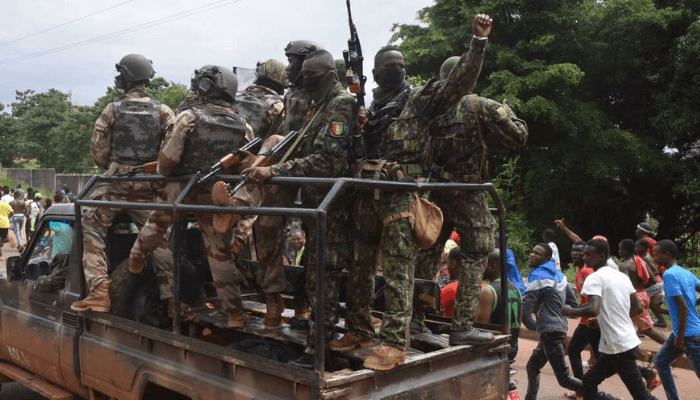
Patrice Talon is a lucky man. His colleagues in Mali, Niger, Burkina Faso, and, most recently, Guinea-Bissau were not as lucky. He was saved at the nick of time by big brother Nigeria.
Ibrahim Boubacar Keïta of Mali was overthrown in August 2020 without any external help.

Roch Marc Christian Kaboré was removed as president of Burkina Faso in a January 2022 coup. No intervention came for him.
Niger President Mohamed Bazoum was ousted in July 2023. He was not saved.
Guinea-Bissau’s president, Umaro Sissoco Embaló, was ousted last November without any help. He has since fled the country.
In the West African sub-region, and indeed, across the continent of Africa, since 2020, there have been attempted and successful coups in some countries.
The reasons for the violent overthrow have been the same. They range from bad governance to high-handedness to worsening poverty, insecurity, collusion with outside influence to undermine the sovereignty of their countries, destruction of institutions in an attempt to perpetuate themselves in power, and their inability to manage ethnic tensions.

Although the swift intervention of the Nigerian government was apt to help a neighbour in need, and commendable too, the point that must not be lost on the Economic Community of West African States (ECOWAS) and indeed, African leaders, is that the people of their countries are becoming more impatient with the high level of incompetence and lacklustre governance in many member nations.
Social media has made it very easy these days for people to compare notes about what is going on elsewhere and what is the case in their home countries.
Leaders cannot be self-servers, serving the interest of their families and cronies while the masses of their countries are deprived of basic amenities.
The penchant for ECOWAS leaders to rally to protect a president who has manifested obvious incompetence and has destroyed every vestige of opposition and of democracy just to perpetuate themselves in power must be reviewed.
The ECOWAS Charter must not support anti-democratic policies of so-called democratically elected presidents who preside over their countries with an iron fist.
Part of the reason the soldiers struck in the Republic of Benin was the allegation that President Talon made a nonsense of governance in the country. The people are wallowing in abject poverty, yet he was busy plotting an amendment to the constitution and the Electoral Act to enable him to continue to sit on the power seat indefinitely.
His tenure is expected to end next year, but he is changing the constitution for a single term of seven years. The plot is for him to, after serving out his current tenure, contest again and rig the election to continue for another seven years!
And what happens after seven years is left to the imagination.
Those supporting him must advise him to be a true democrat. The soldiers in the Republic of Benin believe that there is no democracy in place.
The attempted coup in Benin, according to Al Jazeera, was late in coming, going by the level of despondency in the country. The citizens had become so disappointed with Talon’s style of leadership and his undemocratic decisions that they were even wishing that the military would take over.
The truth is that coups do not just happen; rather, they follow the systematic erosion of democratic institutions through judicial capture, election manipulation, and constitutional changes that entrench incumbents.
It would seem that in many parts of Africa nowadays, confidence in the military now exceeds trust in political institutions, amid declining faith in elections and democratic governance.
In many African countries, elections are now being held as a formality. Courts still convene, but they no longer function as “instruments of accountability”. They only serve as the procedural shell of a system that has been emptied of political competition and choice.
Courts across Africa are now being viewed as politicised, and polls stripped of credibility have eroded voters’ sense of trust.
The military exploits the vacuum only when civilian institutions collapse. That’s what seems to be happening in Africa.
These were the sins listed against Talon. Those who saved him must begin to drill it into his mind that he must urgently make a change. He must return the tenets of democracy in Benin and offer the leadership that the people truly deserve.
African leaders, who rise only to scream “foul” when a coup takes place anywhere on the continent, should be alarmed at Afrobarometer’s latest survey across 39 African countries, which found that while 66 percent still prefer democracy, more than half now consider military intervention acceptable when leaders abuse their power.
And Omisore wept!
Omisore was the governorship candidate of the People’s Democratic Party (PDP) in 2014 and lost to the All Progressives Congress (APC)’s candidate, Rauf Aregbesola. He dumped the PDP before the party’s primary election for the 2018 off-cycle gubernatorial election in Osun State. He defected to the Social Democratic Party (SDP), on whose platform he contested but came third. He garnered 118,000 votes, whereas Ademola Adeleke of the PDP polled 254,699, and Adegboyega Oyetola of the APC got 254,345 votes.
The Independent National Electoral Commission (INEC) had declared the election inconclusive, saying that the margin of win was less than the 3,498 registered votes in the polling units where the election was cancelled by the Commission. So, no return was made. Following the declaration, Omisore easily became a bride courted by the two parties, as his support was crucial to win the runoff. Recognising that fact, the then President Muhammadu Buhari dispatched the then national chairman of the party, Adams Oshiomhole, and Kayode Fayemi, who had just been elected governor in Ekiti State, to meet with Omisore to seek his cooperation. He was also visited by Bukola Saraki, who was the Senate president at that time, to plead with him to throw his support behind the PDP. But in the end, he emptied his structure into the APC in full support of Oyetola, who went ahead to win the election.
Seven years after that political alignment, it would seem that a gaping crack has appeared on the wall of that robust relationship to prove the age-long saying that “in politics, there are no permanent friends and no permanent enemies, only permanent interests.”
Today, Omisore is screaming at the top of his voice, alleging that the only blockade he is having to realise his gubernatorial ambition in the off-cycle election billed for next year is the same Oyetola he helped years back.
He alleges that Oyetola’s interference to favour one of the aspirants, Munirudeen Bola Oyebamiji, CEO, National Inland Waterways Authority, was inimical to the spirit of transparency that should guide the selection of candidates.
Omisore and six other aspirants were recently dropped in what the screening panel explained was a result of irregularities in their nomination forms.
The committee also explained that the aspirants failed to provide evidence of sponsorship from, at least, five fully registered and financially up-to-date party members in each Local Government Area of the state, as required by Articles 9.3(i) and 31.2(ii) of the APC Constitution and Paragraph 6(c) of party guidelines.
But Omisore strongly believes that his ordeals were being masterminded by Oyetola, who is the minister of Marine and Blue Economy. For him, what is playing out is simply the proverbial “hand of Esau and voice of Jacob”.
It is safe to conclude that Omisore’s current ordeals are all part of the shifting nature of political interests, just like the barber’s chair that never stays steady but swirls.